• العربية
  • فارسی
BrandBrand
  • Iran Insight
  • Politics
  • Economy
  • Analysis
  • Special Report
  • Opinion
  • Podcast
  • Live TV
  • Iran Insight
  • Politics
  • Economy
  • Analysis
  • Special Report
  • Opinion
  • Podcast
  • Live TV
  • Theme
  • Language
    • العربية
    • فارسی
  • Iran Insight
  • Politics
  • Economy
  • Analysis
  • Special Report
  • Opinion
  • Podcast
  • Live TV
All rights reserved for Volant Media UK Limited
volant media logo

Iran Plans To Make Billions More By Raising Gasoline Prices

Dalga Khatinoglu
Dalga Khatinoglu

Oil, gas and Iran economic analyst

Dec 30, 2021, 20:29 GMT+0Updated: 17:43 GMT+1
A gas station in Tehran, Iran.

Iran plans to change the pricing system for subsidized gasoline it sells to citizens in a way, which will generate around $5.5 billion more revenue annually.


All carbon fuels are produced and distributed by the government in Iran with extremely low prices. The lowest price is 6 US cents per liter or 22.7 cents a gallon. Each car receives monthly 60 liters of gasoline at the lower price and beyond that, drivers must pay 12 cents a liter.

The new plan is to give subsidized gasoline not to each vehicle but to each citizen, reducing the volume to 15 liters per month. People who have cars and need more gasoline than their allotment have to pay 60 cents a liter ($2.27 per gallon), which is the gasoline bulk rate in the Persian Gulf region.

People who have no cars but receive their coupon for the 15 liters of 6-cent gas from the government can sell it to others on a mutually agreed price.

Now, let us see how the government will make a minimum of $5.5 billion profit by changing the gasoline pricing system.

Currently, 85 million liters of gasoline is consumed per day in Iran. Around 60 million liters is sold for the discounted price of 6 cents and the rest for 12 cents a liter. The government’s income from this is $7.8 million a day or $2.84 billion a year.

In the new system, each one of the 83 million citizens will receive half a liter of gasoline per day for 6 cents a liter, or about 41 million liters. The rest of the daily 85-million-liter consumption will be sold for 60 cents per liter, or ten times more than the discounted price. This will boost government revenue from gasoline 3.7 times to $29 million per day, or $8.32 billion annually. This means the minimum additional revenue will reach $5.5 billion a year.

Reforming the huge fuel subsidy system, which has been a drag on the economy might be a good idea, but amid an economic crisis it will contribute to inflation, as business and transportation costs will rise.

The fuel subsidy is not just for gasoline. Price for one liter of diesel will remain at one cent a liter or 4 cents a gallon, compared to almost $6 in Europe or $3.60 in the United States. The same huge difference applies to natural gas and electricity, bringing the total fuel subsidy to near $60 billion annually, or more than Iran’s oil exports if there were no sanctions.

The $5.5 billion-dollar additional profit is a minimum estimate. In fact, millions of Iranians have left the country and will never use the 6-cent gasoline and many others who are in the country who have no cars or access to internet will not be able to exchange their 15-liter monthly allotment for money. Therefore, the government will sell much more gasoline for 60 cents a liter, making up for some the oil revenues it has lost because of US sanctions.

Most Viewed

US and Israel threaten renewed Iran strikes, Tehran warns of response
1

US and Israel threaten renewed Iran strikes, Tehran warns of response

2

Iran rolls out regional Data Authority amid threats to Mideast tech infrastructure

3

Iran threatens stronger response to new US attack as Lavrov visits Tehran

4

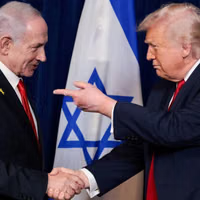
Trump says US may ‘soon finish the job’ on Iran, Netanyahu vows to topple regime

5
VOICES FROM IRAN

Iranians report mass security warnings over social media activity

Banner
Banner
Banner
Banner
Banner

Spotlight

  • Iran deal remains elusive amid risk of renewed strikes
    ANALYSIS

    Iran deal remains elusive amid risk of renewed strikes

  • Ex-president's remarks expose divide over costs of Iran’s Palestine policy

    Ex-president's remarks expose divide over costs of Iran’s Palestine policy

  • Teenager killed by gunshot to eye after arrest in Iran, source says

    Teenager killed by gunshot to eye after arrest in Iran, source says

  • Soaring medical costs and staff shortages strain Iran’s hospitals
    VOICES FROM IRAN

    Soaring medical costs and staff shortages strain Iran’s hospitals

  • Architect of Guards' missiles becomes Iran's defense minister

    Architect of Guards' missiles becomes Iran's defense minister

  • Iran risks losing ground as East-West trade routes expand
    ANALYSIS

    Iran risks losing ground as East-West trade routes expand

  • Tehran’s diplomatic paralysis leaves Iran caught between deal and escalation

    Tehran’s diplomatic paralysis leaves Iran caught between deal and escalation