• العربية
  • فارسی
Brand
  • Iran Insight
  • Politics
  • Economy
  • Analysis
  • Special Report
  • Opinion
  • Podcast
  • Iran Insight
  • Politics
  • Economy
  • Analysis
  • Special Report
  • Opinion
  • Podcast
  • Theme
  • Language
    • العربية
    • فارسی
  • Iran Insight
  • Politics
  • Economy
  • Analysis
  • Special Report
  • Opinion
  • Podcast
All rights reserved for Volant Media UK Limited
volant media logo

Government Frustrated Over Inability To Stop Exodus Of Iranians
Iran International Newsroom
Dec 5, 2022, 23:47 GMT+0Updated: 18:11 GMT+1
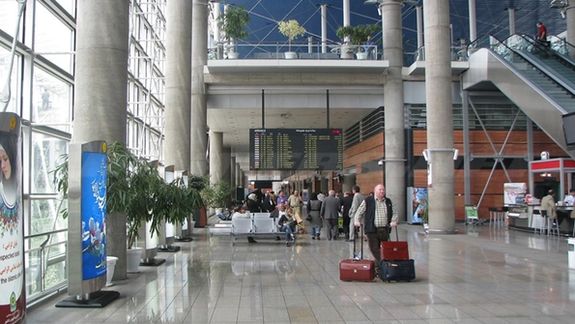
A view of Tehran’s Imam Khomeini airport

Amid nationwide protests, economic hardship and uncertainty about their future, more Iranians are emigrating, with Oman as a new favorite destination. 

The accelerating exodus is not limited to medical and engineering professionals anymore as many business owners have also started to transfer their businesses to nearby countries where trade transactions are easier, especially to the Persian Gulf littoral states. 

According to a recent article in the Tehran newspaper Arman Melli, during the past year about 30,000 personnel of different medical professions, including doctors, nurses, and paramedical technicians, have applied for Certificates of Good Standing with intent to immigrate to Oman. The paper claimed that within the last four years, 16,000 general practitioners have left the country. The high number of emigrations has become so alarming that the officials of medical organizations have warned of serious shortages of doctors in the near future. 

In April, Iran's Medical Council said about 4,000 doctors have applied for Certificates of Good Standing in the previous 12 months with the intent to leave the country. Council spokesman Reza Laripour said that the annual number of such applications was less than 600 between 2013 and 2015.

Head of the Medical Council of the Islamic Republic, Mohammad Raeeszadeh, said, "The medical community faces fundamental challenges in some specialties, so that we may not have graduates in some fields in the future.” He warned of the risk of regression to 40 years ago when it had to hire foreign doctors to meet domestic needs.

Head of the Medical Council of the Islamic Republic, Mohammad Raeeszadeh (file photo)
100%
Head of the Medical Council of the Islamic Republic, Mohammad Raeeszadeh

Lack of a promising future is the main reason why professionals decide to leave. Incomes have sharply declined in the past years as Iran’s currency has lost its value by more than tenfold, and the state seems to become more inept and arbitrary in governing the country.

On the backdrop of Iranian doctors emigrating in droves, the health ministry in September increased the exit permit bond for medical, dental and pharmacy students to $5,000 per year. Deputy minister for education at the health ministry, Abolfazl Bagherifard, said that students in graduate levels should provide 1.5 billion rials ($5,000) to leave the country for a year and undergraduate levels should provide bonds worth $2,000. Students must provide an official letter of commitment to return as well as another person's guarantee by depositing a real estate bond or a bank guarantee.

Experts and social scientists in Iran and abroad have told the media that the brain drain in the past few decades, beginning with the 1980-88 war with Iraq, has been accelerated by lack of social freedoms in the clerical-dominated system, political upheavals, deterioration of the economy, and government repression.

The government has stepped up pressures and restrictions on students and graduates. Late in November, the parliament presented a proposal to ban students who participate in protests from traveling abroad for ten years. Recently, the Ministry of Science Research and Technology has also approved regulations that would increase the costs of receiving university degrees six to 10 times. 

All Iranians who study in government universities must work about twice the duration of their studies for a state institution before they can get their certificates. If they opt out of working for the government, they should pay the cost of their education to get their document. As per recent regulations, the fees to get their degrees have increased up to 10-fold. 

However, even those measures are not enough to stop Iranians from leaving the country, with many families deciding to either send their children abroad before starting university or forgetting about getting a degree altogether. Ali Sharifi-Zarchi, a professor at Tehran’s Sharif University of Technology, believes that the new measures would even accelerate emigration, saying that the new fees mean that the government is urging students to forget about Iranian universities and study abroad where they can find a job and help pay for their expenses.

Almost half of Iranian youth want to leave the country amid pessimism about their future, a recent opinion survey conducted from abroad shows.
Most Viewed

US blockade enters murky phase as tankers spoof signals and buyers hesitate
1
ANALYSIS

US blockade enters murky phase as tankers spoof signals and buyers hesitate

2
INSIGHT

Ideology may be fading in Iran, but not in Kashmir's ‘Mini Iran'

3
INSIGHT

Hardliners push Hormuz ‘red line’ as US blockade tests Iran’s leverage

4
VOICES FROM IRAN

Hope and anger in Iran as fragile ceasefire persists

5

US sanctions oil network tied to Iranian tycoon Shamkhani

Banner
Banner

Spotlight

  • Hardliners push Hormuz ‘red line’ as US blockade tests Iran’s leverage
    INSIGHT

    Hardliners push Hormuz ‘red line’ as US blockade tests Iran’s leverage

  • Ideology may be fading in Iran, but not in Kashmir's ‘Mini Iran'
    INSIGHT

    Ideology may be fading in Iran, but not in Kashmir's ‘Mini Iran'

  • War damage amounts to $3,000 per Iranian, with blockade set to add to losses
    INSIGHT

    War damage amounts to $3,000 per Iranian, with blockade set to add to losses

  • Why the $100 billion Hormuz toll revenue is a myth
    ANALYSIS

    Why the $100 billion Hormuz toll revenue is a myth

  • US blockade targets Iran oil boom amid regional disruption
    ANALYSIS

    US blockade targets Iran oil boom amid regional disruption

  • Iran's digital economy battered by prolonged blackout
    INSIGHT

    Iran's digital economy battered by prolonged blackout

•
•
•

More Stories

UN Rapporteur Wants Prosecutions Over Iran Human Rights

Dec 5, 2022, 17:58 GMT+0
•
Iran International Newsroom

In an Iran International interview Javaid Rehman has outlined his plans for a UN probe into an “unprecedented level of violence and state brutality in Iran.”

Rehman, the United Nations Special Rapporteur on Human Rights in Iran, said the “independent and international” fact-finding mission established by a UN Human Rights Council vote November 24 would focus on Iran’s high number of executions, including drug offenders, “the killing of children and ethnic minorities,” and establishing accountability of individuals.

Rahman said 21 people involved in protests had been indicted on crimes carrying the death sentence, and at least “15,000 protestors arrested.” He applauded the Human Rights Council for “listening to the Iranian people,” and explained that he would be working very closely with the investigation given his “expertise and knowledge.” Rehman, a Pakistani-British legal scholar based in London, has been special rapporteur since 2018 but, unlike a UN special rapporteur on the human-rights consequences of sanctions, has not been allowed to visit Iran.

The UN mission, which reportedly will have a $3.67 million budget and 15 staff, would collect and preserve evidence for future prosecutions, dismissing “mis-information” and using the experience of members, Rahman said. He envisaged a detailed report by February-March 2024 for the council’s 55th session.

Accountability for human rights violations would come, he told Iran International, through “future legal proceedings” in international courts and through cases in national courts on the principle of universal jurisdiction. “These individuals better be careful because we are going to hold them accountable in courts of law,” he said.

A screenshot of Javaid Rehman during the interview
100%
A screenshot of Javaid Rehman during the interview

National courts have been generally reluctant to apply universal jurisdiction, with the United States among those world powers most resistant to the principle. In recent instances a Swedish court in July sentenced to life imprisonment Hamid Nouri, a former Iranian official, over 1988 prison executions, and in January a German court jailed for life Anwar Raslan, a former Syrian intelligence office, for murder and rape of prisoners in Damascus. Rahman did not explain any potential role of the International Criminal Court, which has generally indicted Africans and which the US has refused to join, insisting for example it has no jurisdiction over US troops in Afghanistan.

‘Key principles’

In his interview with Iran International’s TV correspondent and host Sima Sabet, Rehman criticized the Iranian constitution, which he said “violates democratic norms, violates key principles of constitutionalism,” including a lack of separation of powers. He called the judiciary’s role “problematic” and said one of his “big concerns” was women being excluded from “serious political positions.”

Looking ahead to the work of the UN mission, the special rapporteur welcomed submissions from victims of violence, and also from journalists and their families receiving threats “in the UK, European and north American countries.”

“That is what the Islamic Republic is all about,” Rehman said. “It wants fear to be spread…The Islamic Republic of Iran wants a complete blackout of the news.” Rehman encouraged Iran International to “continue your excellent work.” He noted that in contacts with Iranian officials, they had accused him of “talking to terrorists” and “not being objective.”

Despite Claim Of No ‘Morality Police’, Iran's Hijab Crackdown Goes On

Dec 5, 2022, 16:14 GMT+0
•
Maryam Sinaiee

Iran's police has declined to confirm attorney general’s claim that the notorious ‘morality police’ has been disbanded, as international media trumpeted the news.

Shargh daily reported Monday that it had contacted the head of public relations of The Greater Tehran Law Enforcement, Colonel Ali Sabahi to verify the claim by Attorney General Mohammad Jafar Montazeri who suggested December 3 that the so-called morality police has been abolished, but the official refused to make any comments.

“It’s not time for us to discuss this. The Police will comment whenever it deems is necessary. Don’t tell [anyone] you have contacted us,” Sabahi told the Shargh reporter. “I’m not the attorney general, go ask him!”, he added before insulting the reporter. The newspaper said further enquiries were also ignored but threats were made, through a third party, against the newspaper, its reporters, and its managing director.

“The morality police has nothing to do with the judiciary and was shut down by the same authority that had established it,” Montazeri had said in response to a reporter at a press conference.

The only comment on Montazeri’s controversial remarks came from Iran's state-run Arabic-language TV channel, Al-Alam, on Sunday [Dec 4] which referring to international media reports on its Persian-language website wrote that officials of the Islamic Republic have not “confirmed the disbanding of the morality police patrols.”

“Some foreign media have tried to present the attorney general’s remarks as the Islamic Republic’s retreat from the matter of [compulsory] hijab and chastity due to the recent riots,” Al Alam wrote.

Meanwhile, judicial authorities shut down a children’s amusement center at a Tehran mall Sunday because its staff had flouted the hijab and published their photos on social media. Judicial authorities have also been summoning celebrities such as actress Shaghayegh Dehghan who published a photo of herself without the compulsory veil on a Tehran street.

The indirect denial by the authorities comes a day after Montazeri’s suggestion made headlines in many major international media and even made US Secretary of State Antony Blinken cautiously comment on it in an interview with the CBS.

“And so, if the regime has now responded in some fashion, to those protests, that could be a positive thing. But we have to see how it actually plays out in practice. And what the Iranian people think. This is about them, and it's up to them,” he said when asked about the reported abolishment of the morality police.

At a joint press conference with Serbian officials in Belgrade, Iran's foreign minister Hossein Amir-Abdollahian alleged that the United States “and a few western countries” were encouraging “riots and terrorism” in Iran and claimed that Iranian authorities are “listening to people’s demands and responding to them” but will not allow anyone to foment such activities. “We enjoy a strong democracy in our region,” he claimed.

Some social media users have suggested that Montazeri’s remark was a publicity stunt meant to appease protesters and keep them away from the streets during the planned three-day strikes and protests starting December 5.

Disbanding the morality police, others say, will make no difference to protesters who want nothing less than toppling the Islamic regime. As underground activists in Iran formally joined forces and issued calls for protests, their aim was clear – putting an end to the Islamic Republic.

Iran's Foreign Ministry Slams Western Criticism Over Human Rights

Dec 5, 2022, 13:42 GMT+0
•
Mardo Soghom

Iran’s foreign ministry reiterated Monday that ongoing protests in the country are an internal issue and others should not use the situation for political ends.

Ministry spokesman Nasser Kanaani in his weekly briefing on Monday lashed out at the United States and other Western countries for proposing to expel Iran from the UN Commission on the Status of Women.

US Vice President Kamala Harris said in early November that Washington will try to remove Iran from the 45-member CSW over the government's denial of women's rights and its brutal crackdown on protests. Some European countries have joined the effort as part of their reaction to Iran's mistreatment of women.

The Islamic Republic is just starting a four-year term on the commission, which meets annually every March and aims to promote gender equality and the empowerment of women.

Kanaani attributed all such attempts, including a UN Human Rights Council resolution passed last month calling for an investigation into Tehran’s violations during recent protests, as politically motivated actions by the West.

Iranian officials have been linking criticism of their human rights record to the stalled nuclear negotiations, trying to argue that any human rights censure is simply an attempt to put pressure on Tehran.

However, the unrest since mid-September and the deadly use of force against civilians has pushed the US, its European allies and Canada to unprecedented vocal criticism and limited new sanctions on the Islamic Republic.

The fact that protests started following the brutal killing of a 22-year-old woman arrested by the notorious ‘morality police’, and the leading role of young women in the ensuing protests, galvanized support not only in the West but also in other countries such as Turkey.

International criticism further weakens the clerical regime’s status inside the country because it comes as yet another sign of its isolation that has hurt the economy and impoverished tens of millions of its citizens.

This is why Kanaani on Monday tried to argue that criticism of Islamic Republic’s human rights record has not weakened its foreign relations. He claimed that Iranian foreign ministry and other officials are visiting different countries and receiving the appropriate reception.

He told reporters, “You follow news events and developments and are aware of various diplomatic trips of foreign ministry officials at different levels,” and the contacts of various typed with foreign governments.

In particular, he mentioned the recent regional travels by deputy foreign minister and nuclear negotiator Ali Bagheri-Kani to Russia, Qatar and India as a sign that the regime is not internationally isolated.

Kanaani also defended Iran’s bilateral relations with China, that has come under the spotlight of critics after Beijing signed a $60-billion gas deal with Qatar, while Iran’s production is decreasing due to lack of investments and technology.

Both countries share the same underwater gas reserves in the Persian Gulf, where Qatar has been expanding production in cooperation with Western oil giants, while Iran has lagged suffering from isolation.

“Islamic Republic’s ties with China constitute a relationship between that is growing,” he said, but admitted that US sanctions do pose limits om Tehran’s ability to broaden interactions with other countries.

Open Demand For Regime Change Marks Iran Protests

Dec 5, 2022, 08:59 GMT+0
•
Iran International Newsroom

Iranian pundits increasingly point out that unlike previous protests driven by economic or electoral grievances, the current uprising demands regime change.

Reformist analyst Abbas Abdi openly said in an interview in Tehran that protests in 2009 did not call for regime change, but "the demand of current protesters is to change the regime. They do not know what will happen next, but they believe whatever that might take place will be better than the current situation."

Abdi said some of the characteristics of the current protests are that "They are deep-rooted, have taken the government by surprise, they have been continuing for a long time, and have gone further, in a way that it is impossible to return to the situation as it was before."

Abdi said that another characteristic of the movement is that the people have behaved in a way during the past 10 weeks that they can no longer retreat. They have challenged the core of the regime and Supreme Leader Ali khamenei.

He added that the main question is not, as some officials charge, that foreigners have instigated the protests. Even if we suppose that is true, it is not important who started the movement. “What is important is that it is taking place in Iran."

Abdi stressed that, "This is not a riot. This is a protest that was predicted long ago. The reason why it did not quickly follow the 2019 protests, was the coronavirus pandemic."

Iranian commentator Abbas Abdi
100%
Iranian commentator Abbas Abdi

He added that the government was taken by surprise because it never pays attention to society. It is always watching other countries. All these youngsters in the streets have been in classrooms where teachers and headmasters have been in close contact with them. How could have they not noticed that something was going on? The reason they did not see it, is that no one in the government wishes to really see the society, even now when it is in turmoil. Even the intelligence organizations found out about the movement after they arrested the protesters."

Abdi said this comes while young people were not acting secretly. They even showed off what they are doing. He explained that generation Z is only the driving force of the movement. The other part, which is important but neglected is the silent majority that follows the movement. He said that many opinion polls the government did not allow to be published indicate that some 60 to 80 percent of the population support the youngsters in the streets although they may not be as vocal.

Silent protest by university students in the Kurdish city of Sanandaj on Nov. 15, 2022
100%
Silent protest by university students in the Kurdish city of Sanandaj on Nov. 15, 2022

Abdi's interview coincided with the publication of an interview with Iranian American sociologist Asef Bayat with Rouydad24 news website in Iran. Bayat is the author of books such as Revolution without Revolutionaries, Street Politics, and Global Middle East, whose observations about the Arab Spring are widely acclaimed in the US academic and political circles.

He said in the interview that it is in the nature of the street that a common cause can turn a gathering of 500 individuals into a massive rally of several thousand people.

Speaking about the current Iran protests and the violence and suppression that have been going on in the streets during the past 10 weeks, Bayat said: "People do not like to be on the streets. They want to live peacefully. The reason why people take to the streets is that politics stops working. Politics means an institutional mechanism to settle political, social and economic disputes and reach a democratic agreement. When the government cannot do that and does not allow the people to have their representatives in the government, citizens tend to take part in strikes or refuse to go to classrooms. But some citizens such as those who do not have a job might take to the streets to voice their demands and to show their social power."

He went on to say, "Authoritarian governments do not tolerate protesters presence in the streets because they do not want the people to believe in their collective social force."

Politician Urges Iran's Top Security Man To Change Constitution

Dec 4, 2022, 22:11 GMT+0
•
Iran International Newsroom

A reformist female politician says she urged Iran's top security official, Ali Shamkhani in a meeting on Sunday to pursue reforms and change the constitution.

Azar Mansouri, the secretary general of Unity of the Nation Party, a coalition of so-called reformists, was quoted by a local media outlet that she and others were invited by national security council secretary Shamkhani to a meeting Sunday. She did not name the other participants, but it is safe to assume many were also reformist politicians.

Mansouri said that she urged Shamkhani to start short-, medium- and long-term reforms in governance,” first by releasing all protesters who have been detained since September, followed by constitutional changes through a “founding assembly”, as a path to emerge from the current political crisis.

The female politician also demanded a policy that would end sanctions against Iran and would help end the current economic crisis, that she said could bring “40 million people” to the streets.

The Islamic Republic leaders should first acknowledge their mistakes and “bridge gaps with the people” by listening to their grievances, Mansouri told Shamkhani.

Hardliners in charge of Iran’s ruling institutions have said time and again that there could be no constitutional changes and no “retreat from principles.” Raising the specter of constitutional change and forming a potentially unpredictable assembly will certainly be viewed by regime hardliners as a challenge to the principle of having a Supreme Leader and the person of Ali Khamenei.

Secretary of Iran's Supreme National Security Council, Ali Shamkhani
100%
Secretary of Iran's Supreme National Security Council, Ali Shamkhani

Iran’s reformists are blamed by regime opponents for long pursuing the idea that the Islamic Republic can be reformed and thus giving false hope to the people. Some reformists in the past two months have acknowledged that their thinking has proven wrong, as the extent of deadly violence and untold cruelties against protesters has proven the regime incapable of reforming itself.

In fact, young protesters see little difference between regime hardliners and reformists who want to make incremental changes but keep the Islamic Republic. All slogans and announcements by protesters demand an end to clerical rule.

But according to her own account, Mansouri seems to have also said things that would be annoying to the regime. First, she upheld the memory of all those who were killed during protests since September. She also told Shamkhani that if the regime wants to hold talks with politicians as an attempt at window dressing and as a tool, the whole idea is bound to fail. Discussions to solve the political crisis should be based on “strategic rationality.”

But she was also cautious in her approach by not mentioning the absolute power Khamenei exercises or raise the issue of holding those who are responsible for the killing of hundreds of civilians responsible.

She also did not demand an immediate end to mandatory hijab, and just reminded Shamkhani that having a ‘morality police’ is a bad idea. The issue of systemic discrimination against women, she said, is an issue to be addressed in the long term.

However, she told the top security chief that Iranian women are asking “What has the Islamic society accomplished that would make us proud to use its hijab?”

Despite these remarks, many would still see reformists meeting with security officials as a non-starter, because they believe that now the regime finds itself in deep trouble and wants to save the situation. If protests end and the pressure is lifted, all talk of reform and gestures of pluralism will also end and the clerical-military rulers will go back to what they know best, monopolizing power by relying on force.