• العربية
  • فارسی
Brand
  • Iran Insight
  • Politics
  • Economy
  • Analysis
  • Special Report
  • Opinion
  • Podcast
  • Iran Insight
  • Politics
  • Economy
  • Analysis
  • Special Report
  • Opinion
  • Podcast
  • Theme
  • Language
    • العربية
    • فارسی
  • Iran Insight
  • Politics
  • Economy
  • Analysis
  • Special Report
  • Opinion
  • Podcast
All rights reserved for Volant Media UK Limited
volant media logo

Iran Mulls Plans To Give Tourists 'Unrestricted' Internet

Maryam Sinaiee
Maryam Sinaiee

Iran International

Feb 25, 2023, 17:08 GMT+0Updated: 18:03 GMT+1
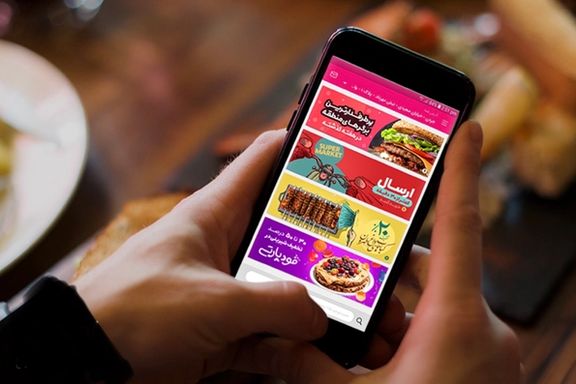
A phone screen showing Iranian online applications

Iran’s ministry of communications has backtracked, possibly temporarily, from a plan to provide unrestricted internet access to foreign visitors to encourage tourism.

In an interview Thursday with Miras-e Arya, a government-run news website dedicated to cultural heritage and tourism news, the communications minister, Isa Zare’i, said blocking of WhatsApp and Instagram in Iran has created “a little difficulty” for foreign tourists and that his ministry was planning to design special sim cards for them to use to be able to have better and easier access to such platforms.

Many on social media reacted angrily to the minister’s remarks and said the Iranian people had an equal right to have free access to social media platforms and websites that they wish to use.

“It’s true that a tourist, anywhere in the world, must be shown respect by the host country but it is racial discrimination and apartheid if special sim cards are provided to tourist to have specially tailored internet access when the people of that country are deprived of it,” one of the critics tweeted.

Another tweeter user pointed out that issuing such sim cards would encourage a black market.

In a statement Friday, the ministry said the reason for the plan was that foreigners visiting Iran for a short time must be allowed to connect with family and friends through their favored platforms, which are banned in Iran by law, and claimed Iranians are increasingly immigrating to unfiltered domestically-developed platforms.

The ministry went on to say there had been requests to provide limited-time tourist sim cards, which would expire when they leave the country, to provide them with access to certain filtered platforms to resolve their communications problems. “[Issuing] tourist sim cards is only a proposal and no decision has been taken about it yet,” the statement said.

The Twitter account of the government portal, PadDolat, has now removed the tweet which quoted the minister’s original remarks.

Iran has been censoring the internet and blocked most major social media platforms such as Facebook, Twitter, and YouTube for years. Amid recent protests, Instagram, the only freely accessible application which millions including small businesses and farmers used to promote and sell their commodities, was also blocked.

Social media users in Iran have largely shunned domestically developed social media applications such as Wisgoon and Nazdika, designed to replace Instagram, and Rubika, a messaging application, for various reasons including their quality and lack of privacy.

Experts have warned that domestic apps are very vulnerable to government intrusion and there are serious safety and privacy concerns including the fear that security services could be able to spy on people through them.

For years, many in Iran have relied on VPNs and anti-filtering software to navigate through government censorship and blocked social media and websites. The use of VPNs surged drastically following the recent nationwide protests. Farhikhtegan newspaper recently reported that based on a survey, 42 percent of all Iranians regularly use Telegram, and 38 percent WhatsApp and Instagram. All these platforms are only accessible if users install anti-filtering software or VPNs on their phones and computers for which they need to pay subscription fees of up to 2 million rials (around $4) per month.

Former Communications Minister Mohammad-Javad Azari-Jahromi has estimated that the market for VPNs is worth around 160,000 billion rials a year.

Iran has also been struggling with the mass cancellation of previously planned visits to Iran since protest erupted across the country in September following the death in custody of the 22-year-old Mahsa Amini who was arrested for not wearing her hijab “properly”. In November, the head of the Hoteliers Association, Jamshid Hamzehzadeh, said as much as 85 percent of all tours to Iran had been cancelled.

Most Viewed

US blockade enters murky phase as tankers spoof signals and buyers hesitate
1
ANALYSIS

US blockade enters murky phase as tankers spoof signals and buyers hesitate

2
INSIGHT

Ideology may be fading in Iran, but not in Kashmir's ‘Mini Iran'

3
INSIGHT

Hardliners push Hormuz ‘red line’ as US blockade tests Iran’s leverage

4
VOICES FROM IRAN

Hope and anger in Iran as fragile ceasefire persists

5

US sanctions oil network tied to Iranian tycoon Shamkhani

Banner
Banner

Spotlight

  • Hardliners push Hormuz ‘red line’ as US blockade tests Iran’s leverage
    INSIGHT

    Hardliners push Hormuz ‘red line’ as US blockade tests Iran’s leverage

  • Ideology may be fading in Iran, but not in Kashmir's ‘Mini Iran'
    INSIGHT

    Ideology may be fading in Iran, but not in Kashmir's ‘Mini Iran'

  • War damage amounts to $3,000 per Iranian, with blockade set to add to losses
    INSIGHT

    War damage amounts to $3,000 per Iranian, with blockade set to add to losses

  • Why the $100 billion Hormuz toll revenue is a myth
    ANALYSIS

    Why the $100 billion Hormuz toll revenue is a myth

  • US blockade targets Iran oil boom amid regional disruption
    ANALYSIS

    US blockade targets Iran oil boom amid regional disruption

  • Iran's digital economy battered by prolonged blackout
    INSIGHT

    Iran's digital economy battered by prolonged blackout

•
•
•

More Stories

Canada Censures Iranian Regime For Threatening Journalists

Feb 25, 2023, 15:42 GMT+0

Canada has strongly condemned threats by the Iran's regime against journalists inside and outside the country, stressing that it supports the right to freedom of expression.

The foreign ministry told Iran International in a statement on Friday that “Ottawa stands for the right of everyone to hold opinions without interference and the right to freedom of expression and peaceful assembly, as enshrined in the Universal Declaration of Human Rights and the International Covenant on Civil and Political Rights.”

It also slammed the Iranian regime's gross and systematic violations of human rights and intimidation of its own people.

“We stand with the people of Iran, who call for change based on equality, respect and justice.”

The statement stressed that journalists, activists and media workers are the cornerstone of fair, strong and vibrant societies and must be free to do their work without fear of reprisals, political interference or intimidation.

“Any violence and intimidation against journalists or activists is completely unacceptable and must be condemned.”

Iran International was warned by British authorities in November that its journalists were under threat from Iranian agents and London’s Metropolitan Police took measures to strengthen security around the network’s office in the area.

On February 18, the network announced that following the advice of UK anti-terrorism officials it decided to temporarily move its studio operations to the US.

The decision solicited worldwide condemnations of Iran’s malign activities and specially threats against journalists.

Issue Of Education In Minority Languages In Iran Creates Controversy

Feb 25, 2023, 13:28 GMT+0
•
Maryam Sinaiee

Demands for education to be taught not only in Persian but also in the mother tongue of the many communities within Iran, has gone viral on social media.

Sparked by International Mother Language Day, February 21, some speakers of Iran’s many languages including Turki, Kurdish, Balochi and Arabic, are demanding access to education in their native languages.

Heated discussions have flooded social media, especially among the opposition, with allegations of separatism for the government's policy to enforce only Persian language education.

Proponents of education in mother language argue that teaching only in Persian is detrimental to the development of many children whose mother language is different. Some suggest it can cause psychological pressures on young children when they begin their education, hindering their progress.

Asma Balouch is a Baluchi activist
100%
Asma Balouch is a Baluchi activist

In a paper presented to the Second Development and Educational Equality Conference in 2016, prominent economist Mohsen Renani said over 65 percent of the children who had to repeat the first and second years of school were from nine provinces where the first language is not Persian.

“By forcing education in Persian, we reduce the speed of mental and personal development of around half of the country’s population and deprive them of opportunities in favor of Persian-speaking children,” Renani wrote. In the absence of any official data, Renani estimated the total population of non-Persian speakers between 42 to 49 percent of all Iranians.

Article 15 of the Constitution of the Islamic Republic recognizes Persian as the “official language and script of Iran, the lingua franca of its people.” However, it also recognizes the the use of “regional and tribal languages in the press and mass media, as well as for teaching of their literature in schools.”

Some of the programs of the state broadcaster’s local stations are broadcast in other languages including Turki and Kurdish, Arabic and Gilaki but none of the many languages of Iran are allowed to be taught in schools, whether public or private, despite the Constitution. Learning classical Arabic, however, is compulsory after primary education on religious grounds.

Authorities often shut down cultural and literary societies formed to promote other languages and teachers such as Zahra Mohammadi, a Kurdish language teacher, are often prosecuted on charges of acting against national security. Mohammadi who was serving a five-year sentence was recently released from prison.

The regime is particularly strict about the teaching of languages that are spoken in peripheral areas of the country such as Kurdish and Turki and accuses those who promote these languages of separatism.

Restrictions do not only affect teaching of other languages and publication in those languages. Names can only be chosen from a list of approved Persian and Arabic (religious) names. Mahsa Amini, whose death in custody sparked the recent months of unrest, was named Jina by her family but her birth certificate had to be issued as Mahsa.

A survey by Gamaan Institute a year ago found that 85% of respondents considered Farsi (Persian) as the most appropriate official or common language for Iran and 65% agree that schools should teach native languages in addition to Farsi while 19% of respondents disapproved of this option. On the other hand, 61% disagreed with the statement “I prefer my child to receive higher education in their native language rather than in Farsi”, while 18% agreed.

The survey was carried out between February 17-27, 2022. Over 20,000 respondents over the age of 19 participated in this study. The final sample used in the report consisted of 16,850 Iranians living inside Iran.

IRGC Commander Repeats Threat To Kill Trump, Pompeo

Feb 25, 2023, 09:58 GMT+0
•
Iran International Newsroom

Iran has developed a cruise missile with a range of 1,650 km a top IRGC commander claimed Friday, as he threatened to kill former US President Donald Trump.

Separately, Amirali Hajizadeh, the head of the Revolutionary Guards aerospace force, also spoke of Iran's often repeated threat to avenge the US killing of Qassem Soleimani, Tehran’s top military and intelligence operator in the Middle East, saying "We are looking to kill (former US President Donald) Trump."

The IRGC’s provocative statements come at a time when Western powers are imposing new sanctions on the Islamic Republic and Iran’s economy is in a downward spiral.

On Saturday, the currency, rial, hit another all-time low of 565,000 against the US dollar, an almost 100-percent depreciation since September when nuclear talks with the United States, United Kingdom, France and Germany reached a deadlock.

"Our cruise missile with a range of 1,650 km has been added to the missile arsenal of the Islamic Republic of Iran," Hajizadeh, told state TV.

The television broadcast what it said was the first footage showing the new Paveh cruise missile.

The four Western powers have adopted a tougher stance against Tehran since Russia started to use Iranian-supplied kamikaze drones against Ukraine in early October. At the same time, the Islamic Republic’s bloody crackdown on popular protests and the killing of more than 500 civilians raised outrage in Europe and North America.

Hajizadeh said Iran did not intend to kill "poor soldiers" when it launched a ballistic missile attack on US-led forces in Iraq days after Iranian military commander Soleimani was killed in a US drone strike on January 3, 2020 in Baghdad.

"God willing, we are looking to kill Trump. (Former Secretary of State Mike) Pompeo ... and military commanders who issued the order (to kill Soleimani) should be killed," Hajizadeh said in the television interview.

Iranian leaders have often vowed to avenge Soleimani in strong terms.

Iran has expanded its missile program, particularly its ballistic missiles, in defiance of opposition from the United States and expressions of concern by European and regional countries. Tehran says the program is purely defensive and of a deterrent nature.

At the same time, the spokesman of Iran’s foreign ministry, Nasser Kanaani told Russia’s Sputnik website that Tehran is ready to resume the nuclear talks. He also claimed that whatever weapons it supplied Russia were before the war in Ukraine – a claim previously made by the foreign minister.

Iran has said it had supplied Moscow with drones before the war in Ukraine. Russia has used the drones to target power stations and civilian infrastructure. But multiple reports point to continues supply of drones, and Western powers have voiced concern of Iran supplying missiles to Russia, which has used most of its precision, long-range arsenal.

In November, the Pentagon said the United States was skeptical of reports quoting Hajizadeh as saying Iran had developed a hypersonic ballistic missile.

Iranian officials often make exaggerated claims about their military and intelligence prowess that cannot be verified independently.

Iranians Have Lost Trust In Their Government, Says Sociologist

Feb 25, 2023, 02:11 GMT+0
•
Iran International Newsroom

An Iranian reformist cleric says two hardliner factions in Iran control the whole political system and prevent a dialogue to make changes or revise the constitution.

Ahmad Mazani, who was also a lawmaker, likened one group of hardliners to the Islamic State militant group. However, he said that both hardliner factions are reactionaries.

Speaking at the congress of the pro-reform Mardomsalari (Democracy) Party, on Thursday, Mazani said one of the two poles consists of political dwarves. He was presumably referring to the Raisi administration. Also, in an apparent reference to ultraconservatives who challenge the government from within, he called one faction an ISIS-like pole that has deprived Iranians from their right to run "an ordinary life".

Iranian reformist cleric Ahmad Mazani (file photo)
100%
Iranian reformist cleric Ahmad Mazani

Meanwhile, in an interview with the website of Iranian Sociologists’ Association, prominent academic Mohammad Fazeli said that the current situation in Iran is marked by people’s deep distrust of the government.

Fazeli argued that "in the absence of trust in the government people do not have any long-term plans. In an economy with a double-digit inflation rate and under economic sanctions, political pressures, and the government's intervention in the citizen's private lives, those who have the financial resources will not invest in a factory. They will instead purchase gold and foreign currencies for short-term profit."

Opportunism and short-term planning will become a characteristic of a society in which the people do not trust the government. Such a situation does not leave too many choices for citizens, he said. “

“When the house is on fire, you have only two choices, jumping out of the window or taking the fire exit to make it to safety," he said, adding that "In a society under pressure you cannot expect individuals to consider a series of options. Even if there are really some other options, people tend to choose the ones that help them save themselves as soon as possible."

Iranian sociologist Mohammad Fazeli  (file photo)
100%
Iranian sociologist Mohammad Fazeli

Asked if Iran's future is going to be as horrible as some analysts portray, Fazeli said, "I cannot say for sure, but I can only say it can well end up that way. We have seen other countries in similar situations in the Middle East, the Balkans and Africa. Whether the same thing will happen in Iran depends on other factors," but did not elaborate.

Fazeli said, "The Iranian state television, for instance, has said that as a media outlet that has to convey the government's messages, it has been losing audience during the past years. This is an example of loss of social capital. So, the state television in Iran is no longer a media outlet for the people of Iran. It is a radio and television organization that broadcasts to a small group of people and likes to convince them, not the nation as a whole."

He added, "I believe the only thing on the Iranian state television that is meant for everyone is football. Because it lacks any ideological content and advertisers are happy to pay for commercials." Fazeli added that state TV officials have deliberately decided not to run a television station for all the people.

In the current Iranian crisis, there are also elements who advocate destruction, the sociologist maintained. They believe nothing will be made right before everything goes wrong. In fact, in a situation marked by distrust anything goes.

The academic reiterated that lost social trust cannot be restored easily. "The government needs to take the first step for confidence building by engaging in symbolic acts. It should offer gestures to the society that indicate there is a will in the government to make things right."

Iran’s Rial Hits Another Historic Low Against Major Currencies

Feb 24, 2023, 20:35 GMT+0

Iran’s currency rial kept hitting new lows on Friday and broke another resistance point, dropping to 540,000 to the US dollar and 570,000 to the euro. 

The new record low was recorded in unofficial trading on Friday, which is weekend in Iran and many people are waiting to see the trade rate Saturday morning.

Last Monday, the country experienced a shock when the rial fell to more than 500,000 against the US dollar from 460,000 only a week earlier and 300,000 in late August.

The cash-strapped regime is trying all the tricks to stop the devaluation of its currency but to no avail as the inflation rate is rising and people are desperate as they cannot afford basic foods. 

If the rapid slide continues in the coming days, it will make daily living almost impossible for ordinary Iranians, who already cannot afford higher-priced meat, dairy and other necessities.

An informed Iraqi source told Iran International on Thursday that the recent trip by Iran’s Foreign Minister Hossein Amir-Abdollahian to Baghdad was focused on ways to retain the flow of foreign currency from the neighboring country. 

Earlier in the month, Iran International obtained information that the Islamic Republic is suffering from heavy financial losses because a huge amount of its money is blocked in Iraq because of US sanctions. 

Washington has imposed new restrictions on dollar transfers to Iraq as the Arab country’s banking officials believe there is widespread money laundering sending funds to Iran and Syria.