• العربية
  • فارسی
Brand
  • Iran Insight
  • Politics
  • Economy
  • Analysis
  • Special Report
  • Opinion
  • Podcast
  • Iran Insight
  • Politics
  • Economy
  • Analysis
  • Special Report
  • Opinion
  • Podcast
  • Theme
  • Language
    • العربية
    • فارسی
  • Iran Insight
  • Politics
  • Economy
  • Analysis
  • Special Report
  • Opinion
  • Podcast
All rights reserved for Volant Media UK Limited
volant media logo

Wages In Iran Are Half Of Minimum Needed To Avoid Poverty

Maryam Sinaiee
Maryam Sinaiee

Iran International

Mar 24, 2023, 16:03 GMT+0Updated: 18:03 GMT+1
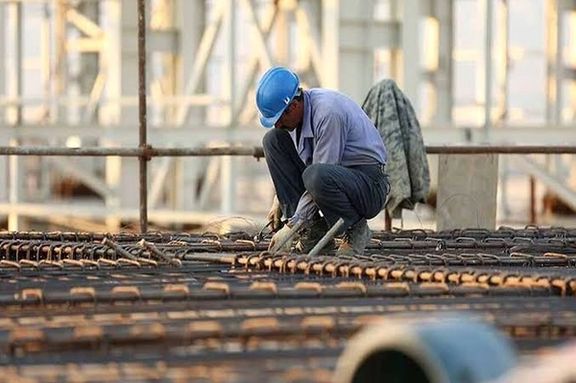
An Iranian construction worker

A petition launched against the meagre minimum wage increase for the new Iranian year violates the labor law by disregarding the inflation rate, critics say.

The petition which was launched on March 20, the last day of the previous Iranian calendar year, has already been signed by almost 15,000 people, despite the petition website having been blocked by the government. The text of the petition calls the 27 percent increase in the minimum wage to 82 million rials per month ($180) for a family of 3.3, including benefits, “unfair”.

The minimum wage in Iran is determined by a council composed of government, business, and government-approved unions, and in fact it sets the income for most wage earners.

The petition alleges that representatives of employers and the government which it calls “the biggest employer” imposed their bidding on the workers’ representatives and demands adjustment in the make-up of the council to allow workers have a bigger say in its decisions.

“This meager increase in the deplorable current economic circumstances and the several-fold increase, even in the basic costs of an ordinary life, is not logical or legal in any way,” the petition said.

Workers and their representatives say the low minimum wage increase was a “shock” to them. “This level of difference between the inflation rate and the minimum wage increase is unprecedented,” Hassan Izadi, an official of Labor House in Gilan Province said while demanding the parliament’s intervention.

Hassan Izadi, an official of Labor House in Gilan Province (undated)
100%
Hassan Izadi, an official of Labor House in Gilan Province

Iran has one of the lowest minimum wages in the world, but salaries were increasing from 2000-2010 when the minimum wage hit a record high of about $275 in 2010. This coincided with the time when the United Nations Security Council began imposing sanctions to force Tehran to roll back its nuclear program.

A few months into the presidency of Ebrahim Raisi last year, when inflation was around 40 percent, the High Council of Labor increased the minimum wage by an unprecedented 57 percent after two consecutive years of very high inflation. At the exchange rate of the time the minimum wage last year almost equaled $220.

Many politicians and commentators have warned that rising prices and declining incomes will lead to more protests in the coming months.

This year’s increase brings the monthly minimum wage (without benefits) down to around $120 although the overall rate of inflation has increased to around 50 percent and to at least 70 percent in the food group while rents have also hugely gone up in most cities.

Authorities keep promising to control inflation. In his New Year speech on March 21, Supreme Leader Ali Khamenei dubbed the new year as “the year of bringing inflation under control”, a promise also repeated by Raisi in his speech, but reminiscent of similar slogans in previous years.

Wages have become a fraction of what workers need to survive during five years of high double-digit inflation and huge devaluation of the national currency, particularly during the past year. The rial has fallen 13-fold since 2018 when the United States withdrew from the 2015 nuclear deal and imposed tough economic sanctions.

Some 60 percent of Iranians have fallen into what government officials describe as poverty and can no longer afford meat and even fruit and vegetables, with consumption dropping by half.

Ali-Asghar Najjari, an official of the Labor House of Zanjan Province (undated)
100%
Ali-Asghar Najjari, an official of the Labor House of Zanjan Province

“How is it that the government that set the poverty line at 145m rials monthly income sets half of this amount as minimum wage for workers,” said Ali-Asghar Najjari, an official of the Labor House of Zanjan Province. He also accused officials of trampling on the Labor Law which requires minimum wage to be proportionate with the inflation rate.

“We must remind [economy minister] that the government and its economic team are sadly not capable to deliver on their promises of lowering inflation,” Najjari said referring to promises to workers.
Most Viewed

US blockade enters murky phase as tankers spoof signals and buyers hesitate
1
ANALYSIS

US blockade enters murky phase as tankers spoof signals and buyers hesitate

2
INSIGHT

Ideology may be fading in Iran, but not in Kashmir's ‘Mini Iran'

3
INSIGHT

Hardliners push Hormuz ‘red line’ as US blockade tests Iran’s leverage

4
VOICES FROM IRAN

Hope and anger in Iran as fragile ceasefire persists

5

US sanctions oil network tied to Iranian tycoon Shamkhani

Banner
Banner

Spotlight

  • Hardliners push Hormuz ‘red line’ as US blockade tests Iran’s leverage
    INSIGHT

    Hardliners push Hormuz ‘red line’ as US blockade tests Iran’s leverage

  • Ideology may be fading in Iran, but not in Kashmir's ‘Mini Iran'
    INSIGHT

    Ideology may be fading in Iran, but not in Kashmir's ‘Mini Iran'

  • War damage amounts to $3,000 per Iranian, with blockade set to add to losses
    INSIGHT

    War damage amounts to $3,000 per Iranian, with blockade set to add to losses

  • Why the $100 billion Hormuz toll revenue is a myth
    ANALYSIS

    Why the $100 billion Hormuz toll revenue is a myth

  • US blockade targets Iran oil boom amid regional disruption
    ANALYSIS

    US blockade targets Iran oil boom amid regional disruption

  • Iran's digital economy battered by prolonged blackout
    INSIGHT

    Iran's digital economy battered by prolonged blackout

•
•
•

More Stories

Police Arrest Three Iranians For Resisting Hijab Enforcers

Mar 24, 2023, 14:57 GMT+0

Amid simmering tensions over the observance of the Iranian regime’s strict Islamic dress code, police arrested three Iranians who confronted hijab enforcers. 

The incident, which happened in one of the tourist hubs of the central city of Yazd on Tuesday, was reported by the Iranian media on Thursday. 

Apparently, hijab enforcers confronted an Iranian woman who reportedly was not covering herself in public, a common sight in society after more than six months of protests ignited by the death of 22-year-old Mahsa Amini in the custody of ‘hijab police’ in September 2022. The woman, along with two of her companions, started quarreling with the hijab enforcer leading to a scuffle and the arrest of citizens. 

State media claim that the hijab enforcer was beaten by the protesting people, but such allegations have often turned out to be inaccurate by officials to justify its crackdown on protesters. 

Such confrontations have become more frequent in recent months as people are outraged by the regime’s brutal acts to enforce mandatory rules. Citizens are also emboldened by widespread public defiance. The country’s parliament is planning draft new repressive measures to further crackdowns on those defying mandatory hijab, including increased surveillance and cutting access to social services.

As the Holy Month of Ramadan starts, Iran's police warned Wednesday that there will be strict punishments for those caught eating in public during fasting hours. Every year police enforce a national plan to deal with those who break Ramadan rules in public, and transgressors are sometimes sentenced to months of detention and lashes. 

Pro-Iran Forces Launch Second Attack On US Forces In Syria

Mar 24, 2023, 14:26 GMT+0

Tehran-linked groups targeted US forces in Syria for a second day in a row Friday, after the United States conducted an air strike against their bases following a drone strike Thursday.

White House National Security Council spokesman John Kirby said no American personnel were hurt in the new attack in northeast Syria, calling the incident an initial reaction to US retaliatory strikes on Iran-aligned groups in the area.

"It is not uncommon, when we take a retaliatory strike like this, for them to answer right back with some ineffective rocket fire. And these were largely, completely ineffective," Kirby told MSNBC. "Nobody was hurt, no US casualties at all."

The attack on Thursday with a suicide drone killed a US contractor and injured several servicemen. The US immediately retaliated with air strikes.

The US intelligence community assessed that the one-way attack drone was Iranian in origin, the Pentagon said, a conclusion that could further aggravate already strained relations between Washington and Tehran.

The new rocket attack by Iran-linked forces targeted a US base near the Al-Omar oil field. Lebanese pro-Iranian TV channel Al Mayadeen was first to report the attack.

The attacks by Iranian-led groups come just two weeks after Tehran signed a deal with Saudi Arabia to restore relations, a move seen by analysts as potentially beneficial for stability in the region.

At Least Eight Iran-Backed Forces In Syria Killed In US Strikes

Mar 24, 2023, 13:53 GMT+0

A war monitor says the US airstrikes on positions of Iran-backed militias in eastern Syrian city of Deir ez-Zur (Deyrizor) have killed eights militiamen, after a deadly drone strike targeted American forces in the area.

The Britain-based Syrian Observatory for Human Rights said the attacks were carried out in the early hours of Friday local time by US fighter jets and drones, targeting positions of the Iranian Revolutionary Guards (IRGC) in Al-Bokamal desert, as well as other positions on the southern outskirts of Al-Mayadeen city and an ammunition warehouse opposite the “Officers Residences” in Harabesh neighborhood in Deir ez-Zur city.

The airstrikes left at least eight Iranian-backed militiamen dead: six in the warehouse in Harabesh and two in the position on the outskirts of Al-Mayadeen. According to the observatory, the number of fatalities is expected to rise as the strikes left several other militiamen injured, some seriously. The strikes also caused heavy material damage.

Also Friday morning -- at around 11 a.m. local time (0800 GMT) -- Iran-backed forces stationed in a base near Ain Ali shrine in Al-Mayadeen countryside fired several missiles towards Al-Omar oilfield which hosts the US-led International Coalition’s largest base in Syria. 

The Pentagon said earlier in the day that the US military carried out the attack against militia groups who it blamed for a drone attack on Thursday that killed an American contractor, injured another, and wounded five US troops. 

The US intelligence community assessed that the one-way attack drone was Iranian in origin, the military said, a conclusion that could further aggravate already strained tensions between Washington and Tehran.

Amid Armenia-Azerbaijan Tensions, IRGC Commander Visits Border Regions

Mar 24, 2023, 13:01 GMT+0

Iran’s Revolutionary Guard Ground Force commander visited border regions in the northwest near Armenia and Azerbaijan where tensions between the two Transcaucasian countries have spiked. 

Brigadier-General Mohammad Pakpour visited an area under control of IRGC’s Ashura camp located around the common borders of Armenia and Azerbaijan, where a resumption of military conflict is feared. The two countries fought a war in 2020 over disputed territories and Yerevan has accused Baku of recent border incursions.

Although the Islamic Republic says it is neutral in the conflict but it has warned it would not tolerate changes to international borders.

Iranian media have reported in recent weeks that Azerbaijan is preparing for a potential attack on Armenia, without elaborating on the details. Earlier in the week, Aftab News, a website believed to be close to former President Hassan Rouhani and the Moderation and Development Party, quoted Baku’s Ambassador to Iran Ali Alizada as criticizing “smuggling of military supplies into Khankendi by Armenian separatists.” The area is called Stepanakert in Armenia. “Time to act,” he urged. 

Earlier in the month, Foreign Ministry of Azerbaijan summoned the Iranian ambassador in Baku to protest the flight of an Iranian warplane on the border of the two countries. Ambassador Abbas Mousavi was told that the warplane continuously flew near the Azerbaijani border for more than 40 minutes at a distance of 3-5 kilometers on March 11.

After a gunman assaulted Azerbaijan’s embassy in capital Tehran, Baku says it is evacuating staff and family members from the country. The incident came amid increased tensions between the neighboring countries triggered by territorial conflict between Azerbaijan and Armenia and Yerevan as well as over Baku's decision this month to appoint its first ever ambassador to Israel. 

Iran is dangerously implicated in regional tensions centered on Azerbaijan-Armenia that are exacerbated by fall-out from Russia’s war in Ukraine.

Iran And Allies Respond With Polemic To Critical UN Rights Report

Mar 24, 2023, 11:50 GMT+0
•
Adam Baillie

The Nowruz holidays weren’t the happiest of days for Iran’s diplomats at the UN in Geneva, coinciding as it did with a highly critical report by the UN’s Special Rapporteur Javaid Rehman.

Almost six months to the day since the death of Gina Mahsa Amini, the 47-member states of the Human Right Council delivered their opinions on the Report in two meetings of the so-called Interactive Dialogue with the Special Rapporteur on the situation of human rights in Iran. The Council will vote on the report on either the 3rd or 4th April, at the close of its 52nd Session, which began on 27 February.

The 20-page Report, published in February, details the evidence of serious violations of human rights, including murder, imprisonment and forced disappearances, torture, rape and sexual violence and persecution in the context of protests that began last September. Professor Rehman says, “these were part of a systematic, widespread and state instigated policy…the scale of gravity of these crimes points to the possible commission of crimes against humanity.”

This was the Report’s first council outing for comment from member States. The majority of the Council members, some thirty countries, voiced overwhelming support for Rehman’s Report and its conclusions. Iran’s isolation on the world stage was on physical display in the huge, white, brightly lit circular Council chamber as ambassadors from country after country spoke in favor of Prof. Rehman’s findings and conclusions.

The sheer size of the Council chamber concentrates attention on what is being said: despite its size, it is a quiet space as all communication is through microphone and interpreter. Diplomats, press, delegates from dozens of NGOs and other organizations all listen with an earpiece.

UN Human Rights Council in session (file photo)
100%
UN Human Rights Council in session (file photo)

There was a tension waiting to see how Iran, as ‘country of concern’ in UN language with right of first reply, would respond to Rehman’s summary.

Iran’s response in the Council was to go on the attack. Ambassador Ali Bahreini, head of the Iranian delegation at the UN in Geneva, sat stony-faced through Rehman’s summary of his Report at the beginning of the first session. Speaking in English, Bahreini called on “the spirit of spring and Nowruz (to) bring dignity, honesty and justice to our world” before moving on to say that Rahman was “in total disregard of his duties under Resolution 5/2, which emphasizes the impartiality of the special rapporteurs”. Bahreini said that Rehman “plays the role of the opposition. In all his writings and statements, he uses biased languages and violates the code of conduct of the special mandate holders.”

The Special Rapporteur maintained his characteristic imperturbability while the Ambassador described the Report as reading like a “tragic novel…allegations made by Mr. Javaid Rehman…have been repeated by a number of Western governments and their media outlets and terrorist groups stationed in their countries in the past months. They tried to portray their imagination as the reality of human rights situation in Iran.”

But beyond this, Mr Bahreini did not expand on what he understood to be the reality of the human rights situation in Iran. And the Ambassador left: no further appearance, no press conference.

While most of the Council members backed Rehman’s Report, there were dissenters: Russia, Syria, China, and Belarus were among the seven states who gave a negative response to the report (joined by Zimbabwe, Cuba and Laos).

Their statements did not dispute the facts in the Report but were a more general complaint about the “politicization” of human rights issues by Western countries and a resistance to the idea of scrutiny outside state control.

Professor Rehman’s very lawyer-like insistence on accountability might also have played a part, carrying the possibility of international arrest warrants being issued against state actors incriminated in human rights violations - Rehman gave the example of Hamid Nouri’s arrest and trial and the ongoing case of Flight PS752 in the International Criminal Court. News of the international arrest warrant issued against President Vladimir Putin was fresh in everyone’s mind.

We didn’t hear from Ambassador Bahraini again, but Professor Rehman seemed to be everywhere. As well as the two sessions in the Council itself, Javaid Rehman gave a press conference and spoke at several side events organized by bodies such as Article 19, Iran Human Rights, the Ensemble center la Seine de mort, International Federation of Journalists and others.

The mild-mannered, softly spoken Special Rapporteur has over the past few months been increasingly outspoken about human rights in Iran. Prof. Rehman has had the mandate since 2018 and has consistently called upon Iran to allow him into the country and to engage with his mandate, which Iran does not recognize. As for Iran’s criticism of his findings, Rehman says his report is based on fact and is not subjective and calls for Iran to give him substantive replies - and to let him in and engage with him.

“I should be reporting to you from Tehran,” he says.