• العربية
  • فارسی
Brand
  • Iran Insight
  • Politics
  • Economy
  • Analysis
  • Special Report
  • Opinion
  • Podcast
  • Iran Insight
  • Politics
  • Economy
  • Analysis
  • Special Report
  • Opinion
  • Podcast
  • Theme
  • Language
    • العربية
    • فارسی
  • Iran Insight
  • Politics
  • Economy
  • Analysis
  • Special Report
  • Opinion
  • Podcast
All rights reserved for Volant Media UK Limited
volant media logo

Former Minister Warns Of ‘Low Satisfaction’ Among Iranians
Jul 30, 2023, 10:11 GMT+1Updated: 00:26 GMT+1
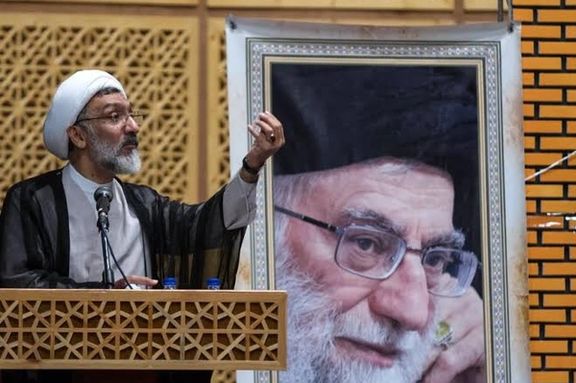
Mostafa Pourmohammadi, a former deputy intelligence minister of Iran

Iran’s former deputy intelligence minister, a conservative cleric, has told a hardliner website in Tehran that the people are dissatisfied, and this could lead to voter apathy.

Mostafa Pourmohammadi, who served as interior minister and justice minister in two different administrations, expressed his concern on Saturday regarding the upcoming March 2024 parliamentary elections. Speaking to Javan newspaper, an outlet affiliated with Iran's Revolutionary Guard, Pourmohammadi highlighted the issue of "low satisfaction" among the people, which he believes could lead to voter apathy.

Iranian conservatives have been grudgingly acknowledging that the economic crisis gripping Iran for the past five years has worsened under hardliner president Ebrahim Raisi and as a result the regime’s legitimacy might suffer.

The country witnessed significant anti-government protests between September 2022 and early 2023, reflecting a surge of anger at both political repression and escalating poverty. Even Supreme Leader Ali Khamenei faced derogatory slogans from protesters on the streets and university campuses, indicating the widespread discontent. 

“People themselves should be interested to participate in the elections, and this depends on the level of their satisfaction…We must analyze the situation realistically. Today, popular satisfaction has declined, and many government entities are responsible,” Pourmohammadi stated. However, he only singled out the Raisi administration and did not mention other centers of power.

The former intelligence minister also warned that “The young generation has distanced itself from us.” He underlined that “Low [election] turnout is a defeat for all of us,” referring to groups and individuals who support the Islamic Republic.

Security forces killed more than 500 civilians in the 2022-2023 protests and arrested more than 20,000. Hundreds received permanent injuries, including young people who lost one or both eyes to shotgun pellets fired by security forces. The harsh government reaction further eroded the public’s tolerance toward the regime.

Most Viewed

US blockade enters murky phase as tankers spoof signals and buyers hesitate
1
ANALYSIS

US blockade enters murky phase as tankers spoof signals and buyers hesitate

2
INSIGHT

Ideology may be fading in Iran, but not in Kashmir's ‘Mini Iran'

3
INSIGHT

Hardliners push Hormuz ‘red line’ as US blockade tests Iran’s leverage

4
VOICES FROM IRAN

Hope and anger in Iran as fragile ceasefire persists

5

US sanctions oil network tied to Iranian tycoon Shamkhani

Banner
Banner

Spotlight

  • Hardliners push Hormuz ‘red line’ as US blockade tests Iran’s leverage
    INSIGHT

    Hardliners push Hormuz ‘red line’ as US blockade tests Iran’s leverage

  • Ideology may be fading in Iran, but not in Kashmir's ‘Mini Iran'
    INSIGHT

    Ideology may be fading in Iran, but not in Kashmir's ‘Mini Iran'

  • War damage amounts to $3,000 per Iranian, with blockade set to add to losses
    INSIGHT

    War damage amounts to $3,000 per Iranian, with blockade set to add to losses

  • Why the $100 billion Hormuz toll revenue is a myth
    ANALYSIS

    Why the $100 billion Hormuz toll revenue is a myth

  • US blockade targets Iran oil boom amid regional disruption
    ANALYSIS

    US blockade targets Iran oil boom amid regional disruption

  • Iran's digital economy battered by prolonged blackout
    INSIGHT

    Iran's digital economy battered by prolonged blackout

•
•
•

More Stories

Directive Linking Medical Care To Hijab Sparks Backlash In Iran

Jul 29, 2023, 19:15 GMT+1
•
Iran International Newsroom

The circulation of a letter to hospitals requiring strict hijab for medical services in northern Iran has sparked strong public reactions.

The letter, signed by Mohammad Taqi Najafzadeh, Director of the health and treatment network in Lahijan city to the heads of local hospitals, has ignited a significant reaction on social media platforms.

In the directive, Najafzadeh unequivocally states that medical centers and health workers must abide by the hijab regulations set forth by the authorities. The letter, however, leaves the crucial question unanswered regarding the medical service protocol in emergency situations, where immediate care may be required irrespective of the patient's observance of hijab.

The publication of this directive has garnered diverse reactions, with notable figures and netizens expressing their concerns. Abbas Abdi, a political activist closely associated with the reformist movement, held both the government and the Ministry of Health accountable for endorsing such a measure. In a tweet, he remarked, "That doctor, being a government administrator, and the ministry, endorsing such an anti-human violation, amid the government's silence, should be held accountable."

Drawing historical analogies, another user likened the directive to the "darkest days of church supremacy" during the Middle Ages when religious decrees were imposed on societal matters.

Critics on Twitter also viewed this directive as a breach of the “medical oath," emphasizing the importance of providing medical services without discrimination or coercion.

Saeed Maliki, a journalist, went a step further and compared the authorities' action to that of ISIS, drawing parallels between the enforcement of hijab observance and the tactics used by the extremist group to force people to abide by its strict interpretation of Sharia law.

It is important to note that this is not the first instance where the issue of observing the hijab has affected medical services in Iran. Following the Women, Life, Freedom protests and the advent of women's movements, reports have emerged of medical centers and hospitals postponing care unless hijab regulations are strictly adhered to.

Earlier this month, an Iranian female medical staff member was subjected to a series of punishments, including performing "cleaning services," for not complying with the mandatory hijab. The US-based Human Rights Activists News Agency (HRANA) reported on July 14 that the judicial authority of the Islamic Republic sentenced her to a ban on employment and cleaning services due to her alleged failure to observe hijab while driving.

Amidst the challenges, a segment of the medical community sought to voice civil protests against these governmental pressures. In March, following an institution's order for compulsory black veiling for women in pharmacies, some pharmacist doctors and male technicians showed their anger by wearing black veils.

The Iranian government employs such punishments with the aim of suppressing opponents of the mandatory hijab. However, reports suggest that these punitive measures have not succeeded in quelling protests, and studies indicate an increase in the emigration of Iranian doctors and nurses in recent months.

Iranian MP Faces Backlash After Criticizing Journalist's Exile

Jul 29, 2023, 18:48 GMT+1

A member of the Iranian parliament says the country’s hardliners are “the most worthless creatures” that ever existed in the world.

Jalil Rahimi Jahanabadi’s comments come following harsh criticism from regime supporters after he criticized the internal exile sentence against journalist Marzieh Mahmoudi to Torbat-e Jam, a city in the northeast.

Jahanabadi, representing the people of Torbat-e Jam in parliament, spoke out against the decision and expressed his disdain for those who filed the complaint that led to her sentencing.

After the ultraconservatives attacked him, Jahanabadi tweeted on Saturday that "You hardliners are the most useless creatures in the world, and people do not even give a damn about you."

Hamid Rasaei a hardline cleric had complained to the court against the journalist. In another tweet, Jahanabadi expressed surprise at the ruling and criticized the basis of the complaint, stating, "A strange ruling was announced in the news, and a female journalist was sentenced to be exiled to Torbat-e Jam due to a complaint by a cleric…We prefer to be in exile for the rest of our lives but not to agree with the likes of Rasaei."

However, his remarks subjected him to verbal attacks from supporters of the regime on social media platforms.

The initial dispute arose when Rasaei, former member of Parliament, made highly offensive remarks about protesters. Marzieh Mahmoudi, in response, criticized him in a post on her own social media page, which subsequently led to Rasaei’s complaint against her.

Iranian Officials Clash Over Food Consumption Decline

Jul 29, 2023, 17:04 GMT+1

Amid the ongoing economic crisis in Iran, politicians and officials are making contradictory statements regarding the reported decrease in food consumption.

While some have expressed concerns over people’s reduced purchasing power, the vice president rejected these claims as “baseless”.
Ayub Fasahat, CEO of the Fruit and Vegetable Markets of Tehran Municipality, revealed on Friday the profound impact of the government decision in May 2022 to slash food import subsidies. Fasahat stated, "People's purchasing power has decreased drastically, and the consumption of dairy products in the country has declined between 28 to 30 percent."

However, Mohammad Hosseini, the parliamentary liaison of President Ebrahim Raisi, challenged such statements, highlighting the need for evidence-based claims. Hosseini remarked, "Some time ago, one of the MPs said that thousands of people are killed on the roads every day, or some say that inflation is 120%. What is the basis?"

Supporting Fasahat's concerns, the Ecoiran website quoted a Central Bank source in April saying that the annual inflation rate surged to 68.7 percent.

The depreciation of the Iranian rial, which halved in value in the past year, further exacerbates inflationary pressures. One year ago, the rial was trading at around 300,000 per US dollar, while currently it stands at 490,000. This depreciation tells the story of the impact of inflation on Iran's economy, as imports become more expensive.

The economic crisis has exacerbated social discontent, particularly among the younger generation. While large-scale anti-regime protests in 2022 were primarily driven by social and political oppression, the current economic challenges are contributing to mounting popular frustration.

Iran Considering Plans For More Intrusion Into People's Privacy

Jul 29, 2023, 15:06 GMT+1
•
Iran International Newsroom

As the Iranian parliament reviews the 7th development plan, lawmakers and legal experts say the plan further enables the government to invade people's privacy.

Khabar Online website has quoted Iranian lawyer Omid Salimi-Bani as saying that the text of one ambiguous article shows the government is planning to monitor people's lifestyle to make sure that they adhere to its Islamic standards.

The lawyer said it is up to every individual to be or not be religious. But it seems the government even wants to monitor people's shopping and travel. He likened the plan to the Big Brother in George Orwell's novel 1984. He added that some of what the government is planning to do has been branded as "crime" in the Law Against Computer Crimes.

Salimi-Bani further said that the plan violates several articles of the Iranian Constitutional Law about citizens' privacy.

Meanwhile, Khabar Online also quoted lawmaker Jalal Rashidi Koochaki as saying "Why the government should want to know whether the people are spiritual? What is it good for? Why the government wants to monitor people's lifestyle?"

Iranian lawmaker Jalal Rashidi Koochaki
100%
Iranian lawmaker Jalal Rashidi Koochaki

He criticized the plan's security approach where it says that "The Ministry of Culture and Islamic Guidance should continuously monitor cultural aspects of people's life and their lifestyles in order to pave the way for research." Koochaki reiterated that this part of the plan is an elaborate violation of people's privacy.

Another Iranian lawyer, Hamid Reza Aghababaeian told Khabar Online, "No individual or organization is allowed to invade people's privacy with the pretext of collecting information for research." He added that it violates articles 22 to 25 of the Human Rights Charter. He also said that collecting such data without permission from the court and the police and security forces is illegal.

He reminded that, based on the Iranian Penal Code, only judges are allowed to request the monitoring of people's private data.

In another development, Iran's Intelligence Minister Esmail Khatib told reporters that his ministry is considering to intervene several judiciary cases about the people's "mental or psychological security on social media.,” probably referring to a recent trend to label dissidents a threat to people’s mental wellbeing.

Iran's Intelligence Minister Esmail Khatib. Undated
100%
Iran's Intelligence Minister Esmail Khatib

Asked if he did monitor social media, Khatib said: "If I do not monitor social media, then I cannot be the Minister of Intelligence." Responding to the question whether he would allow his children and grandchildren to be active in social media on their smart phones, the minister said: "We have agreed with my children that they should only use Iranian social media platforms."

Iranian social media applications are notorious for collecting and abusing people's private data, both for commercial and government intelligence purposes.

The Islamic Republic has banned all foreign social media applications, because it is afraid of the free flow of information and the likelihood of people organizing opposition using Facebook or Twitter.

Reports this week quoted hardliner commentator Mohammad Sadeq Kooshki as saying that "Instagram has become a venue to recruit terrorists." Kooshki added: "Unfortunately, social media platform including Instagram are not lawful in Iran. Terrorists can contact and recruit people on social media, so, Israeli and European intelligence agents do not need to meet people face to face for recruitment."

The government has banned foreign social media platforms in Iran, however, millions of Iranians use them by circumventing government restrictions by VPN (Virtual Private Networks) also known in Iran as filter breakers.

Iran Aims To Submit Funds Frozen In South Korea To Arbitration

Jul 29, 2023, 12:11 GMT+1

Iran’s government has submitted a bill to parliament to approve sending the case of $7 billion frozen by South Korean banks to arbitration.

Media in Tehran published a letter by President Ebrahim Raisi sent to parliament speaker Mohammad Bagher Ghalibaf on Saturday.

The funds were frozen at two Seoul banks after the United States withdrew from the 2015 JCPOA nuclear accord and imposed sanctions on Iran, including its banking sector. South Korea owed the money for oil imports before full US sanctions kicked in in May 2019.

It is not clear why the Iranian government needs a parliamentary vote for sending the dispute to arbitration, except to try to build a stronger case. The letter also does not mention what kind of arbitration Tehran has in mind.

The frozen funds have been the subject of long negotiations between Tehran, Seoul and Washington over the past two years, as the Biden administration launched talks with Iran in April 2021 to revive the JCPOA. Many reports and statements point to possible release of the funds in exchange for several US citizens held hostage in Iran.

Both the nuclear talks and the prisoner release talks have not succeeded in making meaningful progress. However, US officials say that efforts to secure the release of four Americans continue. Apparently, one US condition is to set up a mechanism for the disbursement of the funds for purchasing only non-sanctionable goods by Iran such as food and medicine.

There are similar frozen assets in Iraq, Japan and elsewhere that Iran desperately needs amid a serious economic crisis and continuing sanctions.