• العربية
  • فارسی
Brand
  • Iran Insight
  • Politics
  • Economy
  • Analysis
  • Special Report
  • Opinion
  • Podcast
  • Iran Insight
  • Politics
  • Economy
  • Analysis
  • Special Report
  • Opinion
  • Podcast
  • Theme
  • Language
    • العربية
    • فارسی
  • Iran Insight
  • Politics
  • Economy
  • Analysis
  • Special Report
  • Opinion
  • Podcast
All rights reserved for Volant Media UK Limited
volant media logo

World Bank Study Says Iran Facing Serious Economic Risks
Iran International Newsroom
Aug 27, 2023, 11:46 GMT+1Updated: 17:39 GMT+1
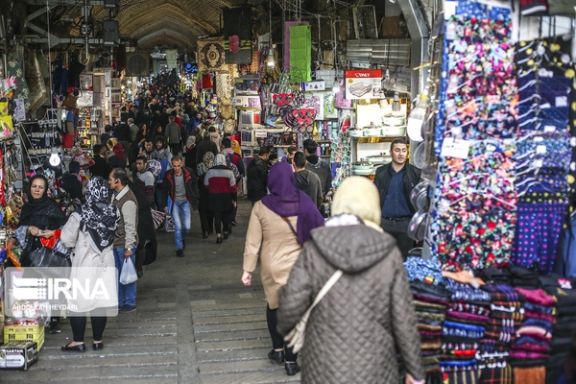
 Iranians walking through Tehran Bazaar
Iranians walking through Tehran Bazaar

Iran’s economy is facing significant medium-term internal and external risks, the World Bank’s Iran Economic Monitor (IEM) said in its latest report this month.

While domestically, “there is a risk of escalating social tensions and strikes in manufacturing,” externally, Iran faces “the possibility of an even weaker global demand for oil, a sharper decline in oil prices, and the intensification of US sanctions.”

The chances for more US sanctions, however, are low, as the Biden administration this month agreed to release around $9 billion of Iran’s frozen funds in Iraq and South Korea in a hostage release deal. The administration has not announced any new sanctions in the past 80 days, despite no change in Tehran’s foreign policy and regional behavior.

The IEM report says that less sanctions enforcement is one of the factors that can lower the mid-term risks to Iran’s economy, coupled with higher oil prices and more trade with China, which is its main oil customer.

“On the upside, a partial waiver of sanctions, or stronger ties with neighboring countries and China, could provide a boost to oil and non-oil growth,” the World Bank group said.

An atrium is seen at the World Bank headquarters in Washington, October 14, 2017.
100%
An atrium is seen at the World Bank headquarters in Washington, October 14, 2017.

This assessment by the IEM was reflected in what the head of Iran’s Budget and Planning Organization, Davoud Manzour, stated on Sunday. “The difficult conditions imposed by sanctions as an external factor have cast a shadow over Iran’s economy,” he conceded.

“Ongoing economic sanctions, slowing global demand, and energy shortages drive the economic outlook. GDP growth is projected to remain modest in the medium term, with both oil and non-oil GDP underperforming due to ongoing sanctions and years of underinvestment,” the World Bank study pinpointed.

Although international organizations collect most of their data on Iran from government sources, which are often contradictory and less than reliable, but the IEM report overall did capture the serious weaknesses in the country’s governing and economic management systems.

Iran must undertake significant reforms to deal with multiple crises it faces, the IEM argued. “To ensure a sustainable growth rate in the face of multiple crises, significant reforms are necessary, including those on the fiscal side and the banking sector,” the report covering the spring and summer period concluded.

The report emphasized that the Islamic Republic needs structural fiscal reforms to balance expenditures with government revenues, specially amid continuing sanctions that directly impact the oil-dependent economy.

While the centralized and mostly government-controlled economy has muddled through with oil-export revenues for four decades, but structural issues have added up and made matters worse when in the past decade oil sanctions have reduced the government’s leeway to stay afloat.

The report, addressing these structural issues also mentioned the fragile banking system, mostly controlled by the government. “The banking system faces multiple and longstanding challenges including negative capital adequacy ratio and high non-performing loans.”

Iran International reported August 22, that Iran’s central bank has decided to dissolve several non-liable banks and savings and loan institutions. These institutions present an extra risk for a government that already relies on printing money to pay its bills. But dissolving a few banks or merging them with others does not solve the structural problems in the banking system, including political interference and opaque operations.

“Addressing these challenges requires enhanced bank supervision, the implementation of international regulations and best practices for asset classification, liquidity management, and internal controls,” the IEM added.
Most Viewed

US blockade enters murky phase as tankers spoof signals and buyers hesitate
1
ANALYSIS

US blockade enters murky phase as tankers spoof signals and buyers hesitate

2
INSIGHT

Ideology may be fading in Iran, but not in Kashmir's ‘Mini Iran'

3
INSIGHT

Hardliners push Hormuz ‘red line’ as US blockade tests Iran’s leverage

4
VOICES FROM IRAN

Hope and anger in Iran as fragile ceasefire persists

5

US sanctions oil network tied to Iranian tycoon Shamkhani

Banner
Banner

Spotlight

  • Hardliners push Hormuz ‘red line’ as US blockade tests Iran’s leverage
    INSIGHT

    Hardliners push Hormuz ‘red line’ as US blockade tests Iran’s leverage

  • Ideology may be fading in Iran, but not in Kashmir's ‘Mini Iran'
    INSIGHT

    Ideology may be fading in Iran, but not in Kashmir's ‘Mini Iran'

  • War damage amounts to $3,000 per Iranian, with blockade set to add to losses
    INSIGHT

    War damage amounts to $3,000 per Iranian, with blockade set to add to losses

  • Why the $100 billion Hormuz toll revenue is a myth
    ANALYSIS

    Why the $100 billion Hormuz toll revenue is a myth

  • US blockade targets Iran oil boom amid regional disruption
    ANALYSIS

    US blockade targets Iran oil boom amid regional disruption

  • Iran's digital economy battered by prolonged blackout
    INSIGHT

    Iran's digital economy battered by prolonged blackout

•
•
•

More Stories

Teachers' Association Raises Alarm Over Low Teacher Salaries In Iran

Aug 27, 2023, 11:29 GMT+1

Iran's Teachers' Association says that a third of the country's educators earn less than $200 a month and has brought attention to their financial challenges.

The Association revealed that 32% of teachers in Iran earn less than $200 in monthly salary, contradicting minister Education Minister Reza Morad Sahraie's claim that no teacher receives a salary below this amount.

Citing salary slips from a comprehensive sample of three thousand teachers, the Teachers' Association highlighted the significant number of educators struggling with inadequate compensation. The data indicates that nearly one-third of teachers across the nation receive less than 100 million rials, which is equivalent to approximately $200.

Furthermore, the survey shed light on the broader spectrum of teacher salaries. A substantial 81% of educators reported earnings ranging from $110 to $300.

In response to the Minister's claims, the Teachers' Association voiced skepticism, stating, "It is plausible that the Minister's assertions are either untrue or indicative of a lack of control over the domain he oversees."

It is worth noting that Hossein Rasouli, an official from the Workers’ House, recently emphasized that the monthly minimum wage of less than $200 merely covers "nine days of a family's life." Rasouli further elaborated that the minimum monthly wage for workers in Iran falls short of eighty million rials (approximately $150 USD), emphasizing the ongoing economic challenges.

The issue of inadequate salaries is not new to Iran. Real incomes have struggled to keep pace with inflation since the establishment of the Islamic Republic in 1979. Earlier reports from mid-2022 highlighted a staggering 300% increase in rents in Tehran over the span of three years, further underscoring the economic pressures faced by citizens.

Two Flights Make Emergency Landings In Iran Due To Technical Problems

Aug 26, 2023, 23:12 GMT+1

Two Iranian flights from Tehran and Mashhad to neighboring countries made emergency landings due to "technical issues," local media reports.

Tasnim News Agency reported that an Airbus flight operated by Qeshm Air, scheduled from Tehran to Istanbul on Saturday, was redirected back to the capital's international airport due to technical complications.

The Chief of Public Relations at Qeshm Air affirmed that the affected flight was re-schduled using a "backup aircraft" and assured Tasnim that "all passengers are safe and sound."

Tasnim, which is affiliated to the Revolutionary Guards, also disclosed that a Sepehran Airlines flight from Mashhad to Najaf, Iraq executed an emergency landing at the Hashemi Nejad Airport on Saturday.

Decades-long sanctions have inhibited Iran's ability to procure passenger aircraft and related equipment from international markets, leading to an aging national aviation fleet. Mohammad Mohammadi-Bakhsh, the Head of the Iranian Civil Aviation Organization, earlier revealed that among Iran's 330 registered planes, 139 are currently grounded. Some of these aircraft have been deemed unsuitable for return to service, raising concerns about accurately assessing the magnitude of the aviation crisis facing the country.

Iran's civilian airlines have grappled with shortages since the 1990s, often resorting to leasing older planes or acquiring spare parts through intermediaries. Over time, the technical condition of their fleet has deteriorated, culminating in the present situation that has now reached a critical juncture.


Crew-7 Group Led By Iranian-Born Reaches The Intl. Space Station

Aug 26, 2023, 22:05 GMT+1

SpaceX Falcon 9 rocket was launched to the ISS with a diverse crew of four astronauts, including Iranian-American Commander Yasmin Moghbeli.

The launch marks the initiation of the Crew-7 mission, anticipated to extend beyond six months.

The multinational crew, hailing from distinct space agencies across the globe, was seated aboard the SpaceX Crew Dragon Endurance capsule.

The capsule gracefully soared atop the Falcon 9 rocket from NASA's Kennedy Space Center in Florida on Saturday.

Comprising the mission team are NASA's Jasmin Moghbeli, who assumes the role of mission commander; Danish astronaut Andreas Mogensen, representing the European Space Agency; Satoshi Furukawa from the Japan Aerospace Exploration Agency (JAXA); and Russian cosmonaut Konstantin Borisov of Roscosmos.

Following a successful launch, Commander Jasmin Moghbeli communicated her admiration for the team's performance, addressing SpaceX mission control from within the Crew Dragon capsule. "Space travel is difficult, but you make it look easy," she conveyed, acknowledging the collaborative spirit of the crew. "We're a united team with a common mission," she continued. "Go Crew-7. Awesome ride."

Celebrating the diversity inherent in the Crew-7 team, Commander Moghbeli highlighted the symbolic significance of their diverse nationalities. "We are extremely proud — and I know I personally am humbled — to be a member of this incredible crew, where if you look at our four patches you’ll see a different nation’s flag on each one," she emphasized.

Other projects involve analyzing the variations in sleeping patterns in microgravity, investigating the formation of biofilms in wastewater for enhanced water recycling methods, and contributing to the ongoing understanding of living and working in the unique environment of space.


Former Iranian President Tells The Regime 'Change Or Perish'

Aug 26, 2023, 18:05 GMT+1
•
Iran International Newsroom

Former President and reform leader Mohammad Khatami says the Iranian regime should acknowledge its mistakes and rectify them; otherwise, it will face destruction.

According to Rouydad24, Khatami made this assertion during a meeting with former Islamist political prisoners. He added that "with this system of government, Islam, Iran and the Iranian people are likely to sustain irreparable losses."

Khatami advised Iran's reformists to "stand by the people and try to understand their problems and simultaneously convey to the government that it is treating the people poorly."

Praising the Iranian middle class as the driving force of the country, Khatami noted that the current government has pushed the middle class into the underprivileged strata of the society. He further mentioned that a portion of the Iranian middle class has emigrated, while those who remain are grappling with various issues.

Khatami with Supreme Leader Ali Khamenei. circa 2000
100%
Khatami with Supreme Leader Ali Khamenei. circa 2000

Expressing his frustration, Khatami stated, "The people are not slaves. Entrust political power to someone capable of addressing people's needs and responding to their demands. And if you plan to exert force openly, do not do so in the name of Islam." This marks one of Khatami's harshest criticisms of the system's inefficiency.

Khatami also remarked that the Islamic Revolution aimed to establish a republic akin to those in the rest of the world, aiming to eliminate backwardness, exploitation, and colonialism. These were the people's demands since the 1906 constitutional revolution, he noted. Khatami further added that the people would not have voted for the Islamic Republic in 1979 had they known this system would reject their vote, rule, and parliament.

Regarding the Iranian rulers' interpretation of Islam, Khatami stated it is incompatible with democracy and has led to various inefficiencies. He elaborated, "The Assembly of Experts was designed to appoint and dismiss the Supreme Leader and oversee their performance, and the Guardian Council was established to safeguard against misuse of people's votes. However, they were not meant to make decisions for the people."

Reformist politician Behzad Nabavi
100%
Reformist politician Behzad Nabavi

Khatami clarified that he is not against the Islamic Revolution or the Islamic Republic but reiterated that the latter should rectify itself to become a government that promotes welfare and justice. He underscored that Iran currently lacks "good governance."

Meanwhile, in an interview with Agahi Now magazine, the former leader of Iran's Reform Front Behzad Nabavi also expressed his support for the regime by stating "We do not intend to destroy the structure of the regime. He added that Khatami speaks about politics based on contemporary requirements, while noting, "I expressed different views and faced harsh criticism from the public." He mentioned that during last year's protests, people no longer even listened to former Prime Minister Mir Hossein Mousavi, who was once revered.

Millions of disgruntled Iranians who protest in the streets or form “the silent majority” have lost trust in the regime as a whole, including reformists who are still loyal to the system after trying for more than a quarter of a century to make it more rational and democratic.

Although the interview was also published by several online media outlets, portions that were missed or deliberately overlooked by Iranian websites emerged on social media. According to some social media accounts, Nabavi criticized the election of Azar Mansouri, a woman, as the leader of the Reform Front stating, "Electing a woman to this position is unlikely to attract young Iranians to the reform camp.”

Referring to the impact of the 2022 protests on reformists, Nabavi said, "During the protests, some reformists concluded that the situation was evolving and attempted to prepare themselves for the next step by critiquing the system. However, he noted, "No one listens to reformists anymore, even those who have novel ideas."

Former Iranian Official Says Countries Reluctant To Buy Iranian Oil

Aug 26, 2023, 17:13 GMT+1

A former Iranian Oil Company official stressed Tehran's dependence on China's oil market citing global reluctance due to US sanction to import energy from Iran.

Mohsen Qamsari, during an exclusive interview with the Iranian Labour News Agency (ILNA), shed light on Iran's plans to bolster its oil production and exports in light of the declining trajectory of Saudi Arabia's oil exports.

He underscored the aspiration to achieve a daily production level of 3.4 million barrels, although he lamented the limited export opportunities beyond the Chinese market. Qamsari stated that Saudi Arabia's export reduction is insufficient to create a substantive opening for Iran's oil exports. He also argued that Saudi shipments fluctuate seasonally.

In the context of Iran's oil market dynamics, Qamsari illuminated Russia's perception of Iran as a competitor, exemplified by its decade-long actions aimed at diminishing Iran's presence in the oil markets. This competitive environment also endures regarding China. The proximity of Russia to China, fortified by a pipeline facilitating Russian oil exports to China, further exacerbates the challenge for Iran in the Chinese market.

Iran's oil minister recently announced a projection of reaching a daily crude oil output of 3.4 million barrels by the end of September, despite ongoing US sanctions.

TankerTrackers.com has reported that in the initial 20 days of August, Iran dispatched an average of over two million barrels of oil daily, marking a more than 30-percent surge compared to the past few months.

The renewed growth in production and exports coincides with an agreement permitting the release of $6 billion of Iranian funds frozen in South Korean banks, potentially indicative of broader diplomatic dealings beyond the public eye.