• العربية
  • فارسی
Brand
  • Iran Insight
  • Politics
  • Economy
  • Analysis
  • Special Report
  • Opinion
  • Podcast
  • Live TV
  • Iran Insight
  • Politics
  • Economy
  • Analysis
  • Special Report
  • Opinion
  • Podcast
  • Live TV
  • Theme
  • Language
    • العربية
    • فارسی
  • Iran Insight
  • Politics
  • Economy
  • Analysis
  • Special Report
  • Opinion
  • Podcast
  • Live TV
All rights reserved for Volant Media UK Limited
volant media logo

Iran receives chemical key for missile fuel production from China - CNN

Feb 14, 2025, 13:00 GMT+0
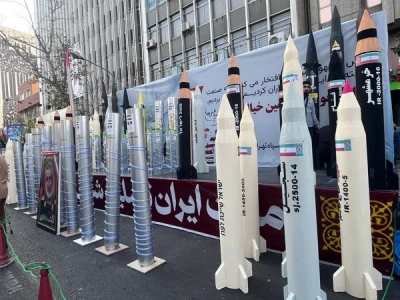
Different types of Iranian missiles

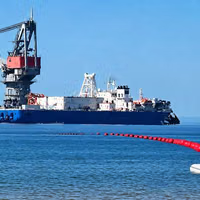
One of two Iranian cargo vessels carrying a chemical from China which is used in missile fuel production has anchored outside the Iranian port of Bandar Abbas, CNN reported Thursday, signaling a potential resurgence of Iran’s missile production capabilities.

The shipment of 1,000 tons of sodium perchlorate was transported from China aboard the Golbon, which departed from Taicang port on January 21. The second vessel, the Jairan, has yet to depart, according to ship tracking data and intelligence sources cited by CNN.

Iran’s missile production infrastructure was severely damaged by Israeli strikes on Oct. 26 2024, which some experts believed would set back its solid propellant production by a year. However, the arrival of this shipment suggests that Iran could be resuming production sooner than anticipated.

Sodium perchlorate is a key precursor for ammonium perchlorate, an essential component in solid rocket propellant used in mid-range ballistic missiles.

Western intelligence sources cited by CNN estimate that the shipment could enable Iran to produce enough solid propellant for up to 260 Kheibar Shekan or 200 Haj Qasem missiles—both capable of reaching targets up to approximately 1,450 kilometers away.

100%
Range of different Iranian missiles

The delivery was purchased for the Self-Sufficiency Jihad Organization (SSJO), a division of the Islamic Revolutionary Guard Corps (IRGC) responsible for missile development, according to CNN’s intelligence sources.

The Golbon and Jairan are operated by the US-sanctioned Islamic Republic of Iran Shipping Lines (IRISL), which Washington and London accuse of facilitating military-related transfers for Tehran.

Iran, lacking an effective air force, has heavily relied on developing short- and medium-range missiles, including a variety of ballistic delivery systems.

The United States and its European allies have long pushed for limits on Tehran's missile program, citing concerns that some missiles could eventually carry nuclear warheads.

Last year, Iran launched ballistic missile attacks on Israel twice, prompting the US and allied air defenses to intercept and shoot down most of the projectiles.

The Financial Times first reported on the shipment in January, citing Western security officials who estimated that the 1,000 tons of sodium perchlorate could yield 960 tons of ammonium perchlorate, producing approximately 1,300 tons of solid propellant—enough to power hundreds of mid-range missiles.

This shipment comes as Iran faces growing regional challenges, including the fall of its ally Bashar al-Assad in Syria and Hezbollah’s setbacks in Lebanon.

Most Viewed

Canada deports former Iranian official linked to 2019 protest crackdown
1

Canada deports former Iranian official linked to 2019 protest crackdown

2

Iran weighs attacks on military targets in Europe – FT

3
OPINION

For Iranian journalists, exile can last a lifetime

4
INSIGHT

Forced to serve in the IRGC, now fighting to stay in Canada

5
ANALYSIS

The 60-day deadline is over. Now what does Trump do with Iran?

Banner
Banner
Banner

Spotlight

  • Luxury Tehran property asking prices surpass Munich and Sydney

    Luxury Tehran property asking prices surpass Munich and Sydney

  • For Iranian journalists, exile can last a lifetime
    OPINION

    For Iranian journalists, exile can last a lifetime

  • Seven months on, January protests still shape Iranians’ lives
    VOICES FROM IRAN

    Seven months on, January protests still shape Iranians’ lives

  • Forced to serve in the IRGC, now fighting to stay in Canada
    INSIGHT

    Forced to serve in the IRGC, now fighting to stay in Canada

  • Iran’s ‘infiltration’ bill sparks backlash over sweeping reach

    Iran’s ‘infiltration’ bill sparks backlash over sweeping reach

  • To survive maximum pressure, Iran kept pumping and broke its oil company
    ANALYSIS

    To survive maximum pressure, Iran kept pumping and broke its oil company