• العربية
  • فارسی
Brand
  • Iran Insight
  • Politics
  • Economy
  • Analysis
  • Special Report
  • Opinion
  • Podcast
  • Iran Insight
  • Politics
  • Economy
  • Analysis
  • Special Report
  • Opinion
  • Podcast
  • Theme
  • Language
    • العربية
    • فارسی
  • Iran Insight
  • Politics
  • Economy
  • Analysis
  • Special Report
  • Opinion
  • Podcast
All rights reserved for Volant Media UK Limited
volant media logo

Iran seizes tanker in Gulf of Oman, detains 17 foreign crew members

Aug 11, 2025, 10:11 GMT+1
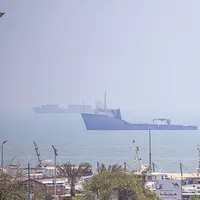
Photo published by Iran's state media of the seized tanker, Phoenix

Iranian border guards, in coordination with the navy, have seized a tanker carrying more than 2 million liters of what authorities described as smuggled diesel fuel in the Gulf of Oman, state media reported on Monday.

The vessel, identified as Phoenix and sailing under the flag of a third country --Cook Islands -- was intercepted in Iran’s exclusive waters near Jask, said Ahmadali Goudarzi, commander of the border guards.

He said the operation was carried out following aerial surveillance and electronic monitoring that indicated an alleged large-scale smuggling attempt.

Authorities said 17 foreign nationals on board were detained and transferred to Jask for legal proceedings.

The cargo’s value was estimated at 759 billion rials (about $840,000), according to state media.

Iran has stepped up maritime enforcement in recent months, especially in waters near the Strait of Hormuz and the Persian Gulf, where fuel smuggling remains a persistent issue due to price differences with neighboring countries.

In April, Iran’s Revolutionary Guard Corps (IRGC) Navy said it had seized a tanker carrying 100,000 liters of smuggled fuel and detained six people, according to Fars News Agency. That followed a separate operation in which two tankers allegedly transporting more than 3 million liters of diesel were intercepted and taken to the port of Bushehr.

The IRGC regularly announces such seizures as part of what it calls efforts to curb fuel trafficking in the region, a key route for global oil shipments. Iran has also seized tankers over maritime disputes or in response to international sanctions enforcement.

Most Viewed

US blockade enters murky phase as tankers spoof signals and buyers hesitate
1
ANALYSIS

US blockade enters murky phase as tankers spoof signals and buyers hesitate

2
INSIGHT

Ideology may be fading in Iran, but not in Kashmir's ‘Mini Iran'

3
INSIGHT

Hardliners push Hormuz ‘red line’ as US blockade tests Iran’s leverage

4
VOICES FROM IRAN

Hope and anger in Iran as fragile ceasefire persists

5

US sanctions oil network tied to Iranian tycoon Shamkhani

Banner
Banner

Spotlight

  • Hardliners push Hormuz ‘red line’ as US blockade tests Iran’s leverage
    INSIGHT

    Hardliners push Hormuz ‘red line’ as US blockade tests Iran’s leverage

  • Ideology may be fading in Iran, but not in Kashmir's ‘Mini Iran'
    INSIGHT

    Ideology may be fading in Iran, but not in Kashmir's ‘Mini Iran'

  • War damage amounts to $3,000 per Iranian, with blockade set to add to losses
    INSIGHT

    War damage amounts to $3,000 per Iranian, with blockade set to add to losses

  • Why the $100 billion Hormuz toll revenue is a myth
    ANALYSIS

    Why the $100 billion Hormuz toll revenue is a myth

  • US blockade targets Iran oil boom amid regional disruption
    ANALYSIS

    US blockade targets Iran oil boom amid regional disruption

  • Iran's digital economy battered by prolonged blackout
    INSIGHT

    Iran's digital economy battered by prolonged blackout

•
•
•

More Stories

Israel can strike Iran again if it sees chance of success, Guards commander warns

Aug 11, 2025, 09:34 GMT+1

A senior Iranian Revolutionary Guards commander said Israel could launch another attack on the Islamic Republic if it believed it could succeed, but insisted Tehran’s forces remained fully prepared to respond.

“It is natural that the struggle between right and wrong has existed from the beginning, exists now, and will continue until the end,” said Ali Fadavi, deputy commander of Iran’s Islamic Revolutionary Guard Corps (IRGC), when asked if Israel remained a threat.

“This [renewed aggression] depends on whether these malicious ones think they have a chance of success — in that case, they will definitely act,” Fadavi said, according to Iranian media.

He added that Israel had “suffered a major blow” in its recent confrontation with Iran, saying that “the whole corrupt world” was on Israel’s side, while Iran stood alone before its adversary until it called for an end to the fighting.

The 12-day war between Iran and Israel began on June 13, when Israel launched a surprise military campaign targeting military and nuclear sites, killing hundreds of Iranians, including civilians, military personnel, and nuclear scientists, as well as assassinating senior commanders.

Iran retaliated with missile strikes that killed 32 people, including 31 civilians and one off-duty soldier.

On June 22, US President Donald Trump ordered airstrikes on Iran’s nuclear facilities at Isfahan, Natanz, and Fordow, before brokering a ceasefire that was announced on June 24, two days after Tehran struck a US airbase in Qatar.

Khamenei-linked newspaper criticizes Iran president's stance on US talks

Aug 11, 2025, 08:47 GMT+1

Kayhan newspaper, overseen by Iran's Supreme Leader, on Monday criticized President Masoud Pezeshkian’s recent comments on negotiations with the United States, accusing him of promoting a narrative in which both dialogue and conflict amount to surrender.

“The other meaning of the president’s view is that either through negotiation we must bow to America’s demands or, in the course of war, give in to them,” the Ali Khamenei-linked paper wrote in a commentary.

“In this view, resistance has the least place—both sides of this dichotomy are submission.” Kayhan asked, “Is the opposite of negotiation war? If we refuse to talk with a country, must we necessarily enter into war with it?”

Kayhan further challenged the president to explain “when America has ever honored its commitments” and what basis exists for talks if Washington has already set the terms in advance.

Speaking in Tehran on Sunday, Pezeshkian dismissed what he called emotional approaches to confrontation and pressed his critics to offer concrete alternatives to engagement.

“No one has said that if I talk (negotiate), it means I’m surrendering… Surrendering is not in our nature at all… I don’t talk, then what do you want to do? Do you want to go to war? Fine, he [Trump] came and struck. Now we go and fix it again, and he will come and strike again. Someone should tell us what we’re supposed to do? These are not issues we should deal with emotionally,” he said.

Pezeshkian said any foreign policy step would be taken only with the approval of Khamenei.

“We will not do anything without the consent and coordination of the Supreme Leader, even if it goes against my own opinion, because I believe in this,” he said. “And once this coordination has been made, it is better that others do not criticize the action. Without coordination, we will not take any action.”

Tasnim, the Islamic Revolutionary Guards Corp-linked news agency, also attacked the president’s framing on Sunday, saying that while his declaration of loyalty to the Supreme Leader’s strategic direction was a positive point, the tone of his remarks risked sending the wrong message to the country's adversaries.

“An enemy hearing these sentences can form no perception other than weakness,” Tasnim wrote.

Portraying dialogue as the only path—and suggesting that without it the other side will come and strike—undermines even the negotiations Pezeshkian supports, the agency argued.

“In such a situation, if the enemy does negotiate, it is doing us a great favor—let alone offering concessions at the table,” Tasnim wrote.

Both outlets stressed that presidential statements are heard abroad before they echo at home, saying that language perceived as hesitant could shape foreign decision-making to Iran’s detriment.

Political prisoners say Iran used brute violence in postwar inmate transfer

Aug 10, 2025, 22:00 GMT+1

Iranian authorities resorted to violence against political prisoners who refused physical restraints during their transfer back to Evin Prison 45 days after the Israeli attack, 14 inmates said on Sunday, accusing the judiciary of attempting a cover-up.

The prisoners had been moved to Greater Tehran Central Penitentiary as part of a broader reshuffling of inmates following Israeli strikes in June that damaged parts of Evin prison.

“On the night of August 6, 2025, we were told that at 4 a.m. we would be transferred back to Evin prison, to pack our belongings and be ready,” the statement read. “We had already announced that we would not wear handcuffs or leg shackles. The last time we complied was during the bombing of Evin prison. This time, conditions are normal, and we will not repeat it.”

They said officials initially agreed to no restraints, but police later tried to force handcuffs on them.

“Mehdi Mahmoudian, Matlab Ahmadian, Mohammad-Bagher Bakhtiar, Khashayar Safidi, Hossein Shanbehzadeh, Morteza Parvin, Saeed Ahmadi, and Ehsan Ravazjian were beaten,” the letter said, adding that Abolfazl Ghadiani, 80, injured his hand and Mostafa Tajzadeh was thrown onto the asphalt and handcuffed.

Other prisoners protested by chanting slogans. The statement also accused officials of insulting and assaulting inmates on death row before taking them to an undisclosed location.

An earlier statement by the Judiciary said that the transfer was “calm and uneventful.” However, the prisoners rejected the statement and asked why violence was used only to be denied later.

They said about 40 inmates were kept in the bus for six hours without access to water or food for a trip of at most two hours, with sick prisoners left without medication or proper facilities.

Green Movement leader denounces treatment of inmates

Earlier in the day, Zahra Rahnavard, a leader of Iran’s Green Movement who has been under house arrest since 2011, condemned the incident and what she described as the authorities’ escalating repression of political prisoners following the war with Israel.

“The ugly face of despotism and violence still dominates this system, and it is the first and last word,” Rahnavard wrote in a statement published Sunday on Kalameh website.

Rahnavard, an Iranian academic and politician, has been under house arrest along with her husband, former prime minister Mir-Hossein Mousavi, since February 2011, more than a year after the 2009 Green Movement protests.

She said that after the 12-day war with Israel, the nation had hoped the government would respond with introspection and meaningful reforms—releasing political prisoners and lifting censorship—but instead, repression has escalated, marked by executions, beatings, and the harsh transfer of detainees.

“Alas, the rulers added to the violence...dragging political prisoners in shackles, beating them, moving these proud free people from one prison to another, splattering blood on their noble faces and wounding their hands and feet," she wrote.

Rahnavard called on the authorities to apologize, release all political prisoners, and choose solidarity over stubbornness with the Iranian people.

Iran's Lake Urmia may completely dry up next month, official warns

Aug 10, 2025, 20:05 GMT+1

Lake Urmia in northwestern Iran, once the Middle East’s largest, will completely dry up by the end of summer if current conditions persist, a senior Iranian environment official warned on Sunday.

“The lake's water level on August 1, 2025, was 1,269.74 meters, its area had shrunk to 581 square kilometers, and its volume was down to about half a billion cubic meters,” said Ahmadreza Lahijanzadeh, deputy for marine and wetland affairs at Iran’s Department of Environment.

This indicates "a sharp and unprecedented decline from last year," he said in an interview with the IRGC-affiliated Tasnim News.

The official said the lack of water inflow means the situation will not improve in autumn and that while the lake could be revived, it would not return to its ideal conditions of 1995, when it held 32 billion cubic meters of water.

Despite repeated government pledges over two decades, the lake’s revival plans have faltered due to chronic underfunding, bureaucratic turf wars, and weak enforcement.

Lahijanzadeh said drought was one of the important factors behind the lake's current crisis, alongside drinking water shortages in some cities.

Last week, head of the Water Institute at the University of Tehran warned the lake may have reached a “point of no return” and could never be preserved in its current form, blaming the expansion of farmland beyond the watershed’s capacity.

Last September, the lake dried up completely for the second time after briefly refilling in the spring.

Over 90 percent of the country is experiencing some level of drought, with rainfall plummeting and water reserves dwindling.

The drying of major water bodies like Lake Urmia and the Zayandeh Rud River has intensified Iran’s overlapping economic and ecological crises, as decades of mismanagement catches up with the theocratic establishment.

Holocaust survivor dies from Iran attacks, raising Israel death toll to 32

Aug 10, 2025, 16:05 GMT+1

A 91-year-old Holocaust survivor who was seriously injured during Iran’s missile attacks on Israel in June died at her home in the central Israeli city of Rehovot on Saturday, raising death toll from Tehran's attacks to 32, Hebrew media reported.

Olga Weissberg collapsed in her home late Saturday and was pronounced dead at the scene by Magen David Adom medics.

She had been wounded on June 15 in an Iranian missile strike during the 12-day war, but was later discharged from hospital. Israeli media reports said her health had deteriorated in recent days.

Weissberg is the second Holocaust survivor whose death has been linked to the June attacks. Ivette Shmilovitz, 95, was killed in a missile strike on Petah Tikva, a city east of Tel Aviv, on June 17.

Iran and Israel fought a 12-day conflict in June that included US strikes on Iranian nuclear facilities at Isfahan, Natanz and Fordow, and Israeli strikes that destroyed critical infrastructure, killing several senior military and scientific figures as well as hundreds of civilians.

Iran responded with missile strikes that killed 31 civilians and one off-duty soldier, according to official figures published by the Israeli government.

The Islamic Republic says 1,062 people were also killed by Israel during the 12-day conflict, including 786 military personnel and 276 civilians.