• العربية
  • فارسی
Brand
  • Iran Insight
  • Politics
  • Economy
  • Analysis
  • Special Report
  • Opinion
  • Podcast
  • Iran Insight
  • Politics
  • Economy
  • Analysis
  • Special Report
  • Opinion
  • Podcast
  • Theme
  • Language
    • العربية
    • فارسی
  • Iran Insight
  • Politics
  • Economy
  • Analysis
  • Special Report
  • Opinion
  • Podcast
All rights reserved for Volant Media UK Limited
volant media logo

Iran cites wartime-like conditions, ties IAEA inspections to new safeguards

Sep 18, 2025, 07:24 GMT+1Updated: 00:39 GMT+0
IAEA inspectors
IAEA inspectors

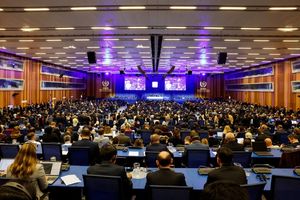
The country faces conditions similar to wartime following Israeli and US airstrikes on its nuclear facilities, Iran’s nuclear chief said on Wednesday, warning that inspections by the International Atomic Energy Agency would not fully resume without new safeguards.

“This is the first time in history that safeguarded nuclear facilities have come under military attack,” Mohammad Eslami, head of the Atomic Energy Organization of Iran, said in an interview by Japan’s Kyodo News.

“Special precautions must be taken before inspections can return to normal.”

Israeli strikes on June 13 killed senior Iranian military commanders and dozens of nuclear scientists, and US air raids days later targeted three major sites at Fordow, Natanz and Isfahan. The attacks led parliament to approve a law to suspend cooperation with the UN nuclear watchdog, forcing most inspectors to leave.

Iran and the agency reached a September 9 accord to establish new procedures under what Tehran calls “postwar conditions,” but implementation has been slow. Inspectors returned briefly to oversee a fuel swap at the Bushehr power plant before departing again without access to Fordow or Natanz.

Eslami accused the IAEA of failing to defend the integrity of confidential information and said its silence over the attacks was “an unforgivable mistake that will go down in history.”

While insisting Iran’s nuclear program is for peaceful purposes under the Nuclear Non-Proliferation Treaty, Eslami said inspection obligations must be balanced with national security.

“The threats from our enemies persist, and no country places any issue above its sovereignty and national security,” he said.

The standoff comes as Western governments push the IAEA to continue strict monitoring of enriched uranium stockpiles despite the heavy damage to Iranian sites.

Most Viewed

US blockade enters murky phase as tankers spoof signals and buyers hesitate
1
ANALYSIS

US blockade enters murky phase as tankers spoof signals and buyers hesitate

2
INSIGHT

Ideology may be fading in Iran, but not in Kashmir's ‘Mini Iran'

3
INSIGHT

Hardliners push Hormuz ‘red line’ as US blockade tests Iran’s leverage

4
VOICES FROM IRAN

Hope and anger in Iran as fragile ceasefire persists

5

US sanctions oil network tied to Iranian tycoon Shamkhani

Banner
Banner

Spotlight

  • Hardliners push Hormuz ‘red line’ as US blockade tests Iran’s leverage
    INSIGHT

    Hardliners push Hormuz ‘red line’ as US blockade tests Iran’s leverage

  • Ideology may be fading in Iran, but not in Kashmir's ‘Mini Iran'
    INSIGHT

    Ideology may be fading in Iran, but not in Kashmir's ‘Mini Iran'

  • War damage amounts to $3,000 per Iranian, with blockade set to add to losses
    INSIGHT

    War damage amounts to $3,000 per Iranian, with blockade set to add to losses

  • Why the $100 billion Hormuz toll revenue is a myth
    ANALYSIS

    Why the $100 billion Hormuz toll revenue is a myth

  • US blockade targets Iran oil boom amid regional disruption
    ANALYSIS

    US blockade targets Iran oil boom amid regional disruption

  • Iran's digital economy battered by prolonged blackout
    INSIGHT

    Iran's digital economy battered by prolonged blackout

•
•
•

More Stories

US Republicans push E3 to enforce return of UN sanctions on Iran

Sep 17, 2025, 14:16 GMT+1

Fifty Senate Republicans wrote to the foreign ministers of the UK, France and Germany, urging them to press ahead with the reinstatement of United Nations sanctions on Iran, Jewish Insider reported on Wednesday.

“While we back diplomatic efforts to restore Iran’s compliance with its International Atomic Energy Agency (IAEA) commitments, the international community should not allow hollow gestures and cynical threats from Tehran to stop the snapback process,” the lawmakers wrote.

“Sanctions relief should only be negotiated after snapback is fully implemented.”

The letter, led by Senate Foreign Relations Committee Chairman Jim Risch, said that dismantling Iran’s nuclear program, restoring full IAEA inspections and halting Tehran’s support for proxy groups and ballistic missiles should be the “minimum” bar for any relief.

The senators called for the closure of Iranian banks in Europe and tougher action against oil sales to China, arguing that “closing off the regime’s financial pathways will curb the regime’s aggression.” They thanked the E3 for their “leadership” in triggering the mechanism.

The appeal comes after EU foreign policy chief Kaja Kallas warned Wednesday that “the window for finding a diplomatic solution” was closing fast. Germany also said Tehran has yet to take the “reasonable and precise actions necessary” to extend the UN resolution underpinning the 2015 nuclear deal.

Under the process, UN sanctions on Iran will automatically return by late September unless the Security Council votes otherwise.

US designates four Iran-backed militias as terrorist groups

Sep 17, 2025, 13:45 GMT+1

The United States on Wednesday designated four Iran-aligned militias as foreign terrorist organizations, a statement by Secretary of State Marco Rubio said.

The groups are Harakat al-Nujaba, Kataib Sayyid al-Shuhada, Harakat Ansar Allah al-Awfiya, and Kataib al-Imam Ali.

“These militias have conducted attacks on the US Embassy in Baghdad and on bases hosting US and coalition forces, typically using front names or proxy groups to obfuscate their involvement,” Rubio said in a statement. He said the designations support President Donald Trump’s directive to impose maximum pressure on Iran and cut off revenue to its regional proxies.

Sanctions target oil and crypto networks

The move followed fresh Treasury sanctions on Tuesday against four Iranian nationals and more than a dozen companies and individuals in Hong Kong and the United Arab Emirates, accused of moving funds for Iran’s military through oil sales and cryptocurrency.

“Iranian entities rely on shadow banking networks to evade sanctions and move millions through the international financial system,” Under Secretary for Terrorism and Financial Intelligence John Hurley said. “Under President Trump’s leadership, we will continue to disrupt these key financial streams that fund Iran’s weapons programs and malign activities in the Middle East and beyond.”

Treasury said the networks laundered hundreds of millions of dollars through front companies and digital assets to finance Iran’s ballistic missile and drone programs and to support allied groups including Hezbollah.

Separately, the State Department said it revoked a sanctions waiver for Afghanistan-related projects at Iran’s Chabahar Port, effective September 29. The exemption, in place since 2018, was meant to facilitate trade and reconstruction projects for Afghanistan but will now end, exposing operators and investors to penalties under the Iran Freedom and Counter-Proliferation Act.

Regional security deal with Iraq

The measures come as Iran has sought to expand its regional influence through new security understandings. Last month, Ali Larijani, Secretary of Iran’s Supreme National Security Council, said a new memorandum with Iraq was meant to “preserve stability” and prevent foreign powers from destabilizing the region.

The agreement commits both sides to prevent individuals or third countries from using one another’s territory to threaten security, Larijani said, linking it to lessons from the June war with Israel. Iraq later described the arrangement as a border protocol rather than a broader pact, while Washington warned it risked undermining Iraqi sovereignty.

Iran-backed groups have also been in the spotlight after the release of Israeli-Russian academic Elizabeth Tsurkov in Baghdad earlier this month.

Tasnim, an outlet linked to Iran’s Revolutionary Guards, reported her freedom came in a prisoner exchange for two members of the “resistance,” a term used in Tehran to refer to allied armed groups.

Tsurkov, a Princeton University student abducted in 2023, was believed to have been held by Kataib Hezbollah, one of the groups long accused of attacks on US and Israeli targets in Iraq. US President Donald Trump confirmed her release on Tuesday, saying she had been tortured during her captivity.

Europe presses Iran to act on nuclear deal as snapback sanctions loom

Sep 17, 2025, 13:14 GMT+1

European foreign ministers on Wednesday urged Iran to resume nuclear talks, allow inspections of sensitive sites and curb its stockpile of highly enriched uranium, warning that sanctions suspended under the 2015 deal would be reimposed if Tehran fails to act in the coming days.

“Iran has yet to take the reasonable and precise actions necessary to reach an extension of resolution 2231,” the German Foreign Office said on social media after a call between the E3 – Britain, France and Germany – the EU’s foreign policy chief and Iran’s foreign minister.

Iranian foreign ministry spokesman Esmaeil Baghaei confirmed that the call was scheduled for Wednesday afternoon but warned that Tehran could take reciprocal measures if pressured.

“If other parties fail to fulfill their commitments or seek to pressure Iran through coercive means, naturally no one can claim that Iran must remain committed to the agreement,” he told reporters in Tehran.

  • Iran rules out US talks on missile program

    Iran rules out US talks on missile program

Baghaei also rejected US criticism of Iran’s missile program, saying Washington had no authority to dictate the country’s defense policy. “The Islamic Republic of Iran is determined to preserve its independence at any cost and firmly resist the excessive demands of foreign powers -- including the United States and Israel,” he said.

US Secretary of State Marco Rubio, speaking in Jerusalem earlier this week alongside Israeli Prime Minister Benjamin Netanyahu, said Iran’s missile ambitions already threaten Persian Gulf states and Europe.

“A nuclear Iran governed by a radical Shia cleric that possesses not just nuclear weapons potentially, but the missiles that could deliver those weapons far away is an unacceptable risk,” Rubio said, vowing continued “maximum economic pressure” until Tehran changes course.

Iran, Saudi Arabia discuss defense ties as US and Riyadh stage counter-drone drills

Sep 17, 2025, 12:36 GMT+1

Iran’s top security official said on Wednesday that Tehran and Riyadh had held discussions on defense cooperation during talks in the Saudi capital, while the United States and Saudi Arabia concluded their largest-ever counter-drone exercise in the region.

Ali Larijani, secretary of Iran’s Supreme National Security Council, met Crown Prince Mohammed bin Salman and other senior Saudi officials in Riyadh.

Iranian media quoted Larijani as saying Saudi officials had already viewed regional security with concern before Israel’s strike on Qatar this month, and “now saw the situation much more clearly.”

“Countries in the region feel that what Iran has long said -- that an adventurous actor prevents stability -- has now taken a more concrete shape,” Larijani said, in comments seen as a veiled reference to Israel. He added the talks could pave the way for “greater understanding to counter shared threats and strengthen regional stability.”

  • Iran security chief visits Saudi leadership for rare meeting

    Iran security chief visits Saudi leadership for rare meeting

Larijani’s visit to Riyadh, followed by a regional tour that also included Baghdad and Beirut in August, came just days after an Israeli strike in Doha killed Hamas leaders on September 9. Qatar and other Arab states, including Saudi Arabia, condemned the attack as a violation of sovereignty.

The meetings marked the latest high-level contact since the two countries restored diplomatic ties in 2023 after years of rupture. In April, Saudi Defense Minister Khalid bin Salman made a rare trip to Tehran, where he was received by Supreme Leader Ali Khamenei.

  • Trump visit highlights delicate but evolving Saudi-Iran relationship

    Trump visit highlights delicate but evolving Saudi-Iran relationship

  • What is drawing Tehran and Riyadh together?

    What is drawing Tehran and Riyadh together?

US-Saudi counter-drone exercise

The Iran–Saudi meetings coincided with the conclusion of Red Sands 2025, a large-scale US-Saudi exercise focused on countering drones, held from September 7 to 14 at the Shamal-2 range in northeastern Saudi Arabia.

US Central Command described it as the biggest live-fire counter-drone exercise ever conducted in the Middle East, involving more than 600 personnel and 20 advanced systems.

The drills tested radar, electro-optical and acoustic sensors, as well as electronic warfare platforms designed to detect, jam or disable drones.

Ground-based systems such as Skyguard and Shikra were paired with the Mobile Low, Slow, Small Unmanned Aircraft Integrated Defeat System (MLIDS) to counter simulated swarms. A final defensive layer involved shotgun-fired “drone defeat rounds” to stop low-flying aircraft.

US and Saudi commanders said the exercise directly addressed threats posed by armed drones used in conflicts from Yemen to Ukraine, expressing their shared commitment to regional air defense.

Defense officials said the Red Sands series, launched in 2023, is now central to planning for integrated air and missile defense across the Persian Gulf and may expand to include other regional partners.

Iran rules out US talks on missile program

Sep 17, 2025, 08:56 GMT+1

Iran’s foreign ministry spokesman on Wednesday said Washington had no right to criticize Tehran’s missile program, accusing the United States of blocking prospects for nuclear negotiations by insisting on restrictions that Iran calls non-negotiable.

"The United States is in no position to make decisions about Iran’s national defence capabilities. The Islamic Republic of Iran is determined to preserve its independence at any cost, stand on its own feet, and firmly resist the excessive demands, aggression, and acts of hostility by foreign powers -- including the United States and the Zionist regime (Israel)."

His remarks echoed those of Ali Larijani, secretary of Iran’s Supreme National Security Council, who earlier this month said that US demands for missile curbs “set a path that negates any talks.”

A sixth round of indirect US-Iran talks was suspended in June after Israel and the United States struck Iranian nuclear facilities, prompting waves of Iranian missile retaliation against Israel.

Iran insists its nuclear program is for civilian use and denies developing missiles capable of carrying nuclear warheads. It argues that defense capabilities, including long-range missiles, cannot be part of any nuclear negotiations.

The United States has repeatedly said Iran’s ballistic missile program poses a threat to regional and global security and has sought to tie limits on missiles to any future nuclear diplomacy.

A June Congressional Research Service report said Western governments fear Iran’s enrichment activity could be paired with long-range delivery systems, and US lawmakers have mandated sanctions across multiple defense and foreign policy bills targeting missile development.

The State Department has imposed waves of sanctions on Iranian and Chinese entities accused of supplying materials for missile propellants and other components.

Under the Iran Freedom and Counter-Proliferation Act, the US has identified 10 strategic materials -- including alloys, magnesium and specialized aluminum -- as controlled inputs for nuclear and missile programs.

The US has paired these restrictions with measures against Iran’s missile and drone proliferation. In December 2024, it sanctioned an IRGC Aerospace Force commander and two Iran-based companies supporting the production of Shahed-136 drones and ballistic missiles, accusing Tehran of enabling Russia’s war in Ukraine and destabilizing the Middle East.

US Secretary of State Marco Rubio, speaking in Jerusalem earlier this week alongside Israeli Prime Minister Benjamin Netanyahu, said Iran’s missile ambitions already threaten Persian Gulf states and Europe.

“A nuclear Iran governed by a radical Shia cleric that possesses not just nuclear weapons potentially, but the missiles that could deliver those weapons far away is an unacceptable risk,” Rubio said, vowing continued “maximum economic pressure” until Tehran changes course.

  • Khamenei's office rejects calls to halt uranium enrichment, missile program

    Khamenei's office rejects calls to halt uranium enrichment, missile program

  • US issues new sanctions on individuals, firms funding Iran's military

    US issues new sanctions on individuals, firms funding Iran's military

In recent weeks, senior Iranian officials have issued increasingly direct warnings. A member of parliament’s National Security Committee, Amir Hayat-Moghaddam, said Iranian missiles can already reach all European countries and could target US cities if launched from naval vessels positioned offshore.

“We can move our ships to within 2,000 km of the US and from there target Washington, New York, and other cities,” he said.

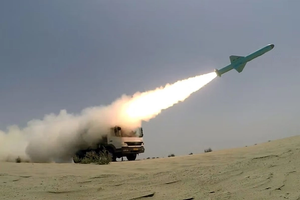
Iran’s defense ministry has also announced that new generations of missiles with “far greater capabilities” than those used during June’s 12-day war with Israel are now ready for deployment.

“If the Zionist enemy embarks on the adventure again, we will undoubtedly use them,” Defense Minister Aziz Nassirzadeh said last month.

Also on Wednesday, Major General Abdolrahim Mousavi, chief of staff of Iran’s armed forces, said that Tehran’s defensive preparations had deterred enemies from launching a fresh assault.

  • Lawmaker says Iran's missiles can target US cities and Europe

    Lawmaker says Iran's missiles can target US cities and Europe

  • Iran says defensive readiness deters renewed attack after June strikes

    Iran says defensive readiness deters renewed attack after June strikes

  • US urges Iran to cease war rhetoric, address people's needs

    US urges Iran to cease war rhetoric, address people's needs

Snapback sanctions

Baghaei said Iran would fight until the last moment to prevent the restoration of UN sanctions under the so-called snapback mechanism, triggered last month by Britain, France and Germany.

He denounced the move as unjust and illegal, warning that if sanctions were reimposed, Tehran would end its recent understanding with the International Atomic Energy Agency (IAEA) signed in Cairo earlier in the month.

“Iran has never turned its back on diplomacy. But if hostile action is taken against us, any understanding with the IAEA will be considered terminated,” he said. “It is Iran’s right that if the other side fails to meet its commitments and seeks blackmail, no one can claim that Iran must remain bound by this understanding."

Baghaei added that Foreign Minister Abbas Araghchi will speak with his British, French and German counterparts on Wednesday.

A French diplomatic source told Reuters that the call aims to discuss the impending reimposition of sanctions and to reaffirm conditions they had set to Tehran that would enable that decision to be delayed.

  • UN chief urges diplomacy to avert snapback of Iran sanctions

    UN chief urges diplomacy to avert snapback of Iran sanctions

  • Iran, allies submit draft IAEA resolution to ban attacks on nuclear sites

    Iran, allies submit draft IAEA resolution to ban attacks on nuclear sites

Restrictions on Iranian delegation

The spokesman criticized what he called “unprecedented” US restrictions on visas for Iranian officials attending the United Nations General Assembly in New York, saying such measures violated America’s obligations as host country of UN headquarters.

“Some visas have been issued, but the process has been slow and irregular. Such behavior questions the credibility of the United States,” Baghaei said.

  • Washington mulls new restrictions on Iran delegation during UN meeting - AP

    Washington mulls new restrictions on Iran delegation during UN meeting - AP

Relations with Syria

On Syria, Baghaei said Iran was not rushing to restore full diplomatic relations but maintained its friendship with the Syrian people. He condemned Israeli air strikes inside Syria and stressed Tehran’s support for the country’s territorial integrity.

“The severance of relations between two Muslim countries is not eternal. Whenever it is determined that renewed ties with Iran are in the interest of the Syrian people, reciprocal readiness will exist,” he said.

  • Israel says Syria raids detained Revolutionary Guards-backed militants

    Israel says Syria raids detained Revolutionary Guards-backed militants

  • Iran does not rule out normalization of ties with Syria, Larijani says

    Iran does not rule out normalization of ties with Syria, Larijani says

Baghaei accused Israel of threatening regional and global security through military actions in multiple countries and said Iran was working with regional neighbors to build “collective security without reliance on outside powers.”

Baghaei added that Tehran values regional efforts to ease dialogue with Washington but stressed that no state has been designated as a formal mediator.

He added that Iran would continue to engage in indirect talks based on its own national interests while rejecting speculation that outside powers were steering the process.

He added that European states should respond positively to Iran’s cooperative stance with the IAEA and resist US and Israeli pressure. “Any escalation would benefit no one,” he warned.

  • Iran says US talks depend on Washington’s will, not mediators

    Iran says US talks depend on Washington’s will, not mediators