• العربية
  • فارسی
Brand
  • Iran Insight
  • Politics
  • Economy
  • Analysis
  • Special Report
  • Opinion
  • Podcast
  • Iran Insight
  • Politics
  • Economy
  • Analysis
  • Special Report
  • Opinion
  • Podcast
  • Theme
  • Language
    • العربية
    • فارسی
  • Iran Insight
  • Politics
  • Economy
  • Analysis
  • Special Report
  • Opinion
  • Podcast
All rights reserved for Volant Media UK Limited
volant media logo

Iran ‘youth population’ law linked to rise in Down syndrome births - daily

Sep 30, 2025, 08:16 GMT+1Updated: 00:33 GMT+0
An Iranian woman sits in a cafe after the launching of the "Hamdam" dating app, in Tehran, Iran, July 17, 2021. Picture taken July 17, 2021

Curbs to prenatal screenings and abortions in Iran’s 2021 Youth Population law have contributed to the doubling of Down syndrome births, according to a report by Shargh newspaper.

The current rate is about one in 700 births, compared to one in 1,000 in developed countries, it reported, and Down syndrome rates in Iran have risen from 1.2% to 2.9%.

The law, officially titled the Youthful Population and Family Support Act, was ratified in late 2021 and implemented in 2022. It seeks to raise fertility rates to 2.5 children per woman amid declining population growth, which currently stands at about 0.7%.

The law restricts abortions, prenatal screenings and contraceptives while offering incentives for marriage and childbearing.

Midwives in health centers are barred from requesting or discussing prenatal screenings, and legal obstacles have made voluntary pregnancy terminations nearly impossible, the report said.

Abortion now requires both a medical commission and judicial approval even in cases of confirmed fetal abnormalities under the justification of “intolerable hardship.”

These restrictions have pared back screening visits, with a 20–30% decline in Tehran and a 50% decline in less-privileged provinces, contributing to more chromosomal disorder births, according to Shargh.

“There are an estimated 120,000 individuals with Down syndrome currently living in Iran,” said Pourandokht Bonyadi, head of the Iran Down Syndrome Charity Foundation.

Underground abortion market

While the law has failed to significantly raise birth rates, it has fueled an underground abortion market.

Iran’s judiciary announced last week that a person in Hormozgan province had been sentenced to death for performing 140 illegal abortions. The case is under Supreme Court review.

“Out of 12,000 annual forensic medicine referrals for pregnancy termination, 8,000 involve fetal abnormalities, but 2,000 are rejected due to procedural issues or late referrals,” said Mohammad Akrami, president of the Iranian Medical Genetics Association.

Experts warn the law’s restrictive measures could have long-term social and healthcare consequences, urging policymakers to reconsider the legislation to curb rising disability rates and the spread of illegal abortions.

Incentives but limited results

Alongside restrictions, the law provides incentives to encourage fertility, including marriage loans, child allowances, housing loans for young couples, tax breaks for parents, employment priority for families and expanded health and transportation subsidies.

Despite these measures, the law has not produced the intended rise in fertility. According to official media, the rate of population decline has slowed by about 20% over the past seven years, but fertility has only stabilized at 1.6 children per woman, far below the 2.5 target.

Most Viewed

US blockade enters murky phase as tankers spoof signals and buyers hesitate
1
ANALYSIS

US blockade enters murky phase as tankers spoof signals and buyers hesitate

2
INSIGHT

Ideology may be fading in Iran, but not in Kashmir's ‘Mini Iran'

3
INSIGHT

Hardliners push Hormuz ‘red line’ as US blockade tests Iran’s leverage

4
VOICES FROM IRAN

Hope and anger in Iran as fragile ceasefire persists

5

US sanctions oil network tied to Iranian tycoon Shamkhani

Banner
Banner

Spotlight

  • Hardliners push Hormuz ‘red line’ as US blockade tests Iran’s leverage
    INSIGHT

    Hardliners push Hormuz ‘red line’ as US blockade tests Iran’s leverage

  • Ideology may be fading in Iran, but not in Kashmir's ‘Mini Iran'
    INSIGHT

    Ideology may be fading in Iran, but not in Kashmir's ‘Mini Iran'

  • War damage amounts to $3,000 per Iranian, with blockade set to add to losses
    INSIGHT

    War damage amounts to $3,000 per Iranian, with blockade set to add to losses

  • Why the $100 billion Hormuz toll revenue is a myth
    ANALYSIS

    Why the $100 billion Hormuz toll revenue is a myth

  • US blockade targets Iran oil boom amid regional disruption
    ANALYSIS

    US blockade targets Iran oil boom amid regional disruption

  • Iran's digital economy battered by prolonged blackout
    INSIGHT

    Iran's digital economy battered by prolonged blackout

•
•
•

More Stories

US deports over 100 Iranians in rare deal with Tehran - NYT

Sep 30, 2025, 07:15 GMT+1

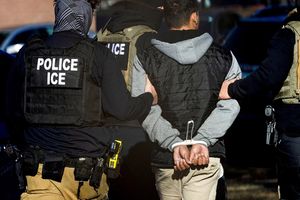
The United States deported a planeload of over 100 Iranians to Tehran in one of the Trump administration’s starkest migrant returns to a country with severe rights concerns, marking a rare act of cooperation with Iran after months of talks, the New York Times reported on Tuesday.

Citing two senior Iranian officials involved in the negotiations and a US official with knowledge of the plans, the report said a US-chartered flight took off from Louisiana on Monday night and was scheduled to arrive in Iran via Qatar on Tuesday.

The deportees, including men and women -- some couples -- were either long in detention or had asylum requests denied, Iranian officials told the Times. Some had volunteered to leave after months in US custody, while others had not yet appeared before a judge.

The deportation marked one of the most direct efforts yet by the Trump administration to remove migrants even to countries with severe human rights conditions, the Times said.

The Times described the deportation as a rare moment of cooperation between Washington and Tehran, after months of negotiations.

Iranian officials said the country’s foreign ministry was coordinating the deportees’ return and that they had been assured of their safety. Still, they said, many were disappointed and some frightened.

Iran confirms 120 nationals deported

Later on Tuesday, Iran’s Foreign Ministry confirmed that 120 Iranian migrants are being deported from the United States and will return home in the coming days, saying they will receive full consular support.

Hossein Noushabadi, the ministry’s parliamentary director, told Tasnim news agency that US immigration authorities had decided to expel about 400 Iranians, mostly those who entered the country illegally, “with the first 120 to be deported soon, most of them having crossed through Mexico.”

“Some of those now returning even had residency permits, but the US authorities decided to include them in the list,” he said. “Their consent for repatriation has been obtained.”

Noushabadi said Iran had lodged diplomatic notes via the US Interests Sections in Tehran and Washington, urging Washington to respect the rights of Iranian migrants.

“We asked the US government to ensure Iranian migrants are not deprived of consular services, fair trial rights, and protections under international law,” he said.

He stressed that Tehran would support returnees. “Iran will definitely host its nationals who migrated for any reason,” Noushabadi said. “These people are Iranians, they left Iran legally, and there is no obstacle to their return.”

He added that if other Iranians on the US list are deported, they will also be accepted, and that the first group will arrive via Qatar within one to two days.

  • Deported by US, Iranian Christian convert stranded in Panama jungle camp

    Deported by US, Iranian Christian convert stranded in Panama jungle camp

  • Tehran slams US deportation of Iranian illegal migrants

    Tehran slams US deportation of Iranian illegal migrants

  • Over 130 Iranian nationals arrested in US amid security sweep — Fox News

    Over 130 Iranian nationals arrested in US amid security sweep — Fox News

Earlier this year, groups of Iranians, including converts to Christianity who face possible persecution at home, were flown to Costa Rica and Panama. Advocates have challenged the flights in court.

For decades, the United States has provided refuge to Iranians fleeing persecution, including women’s rights activists, dissidents, journalists, lawyers, religious minorities and members of the LGBTQ community.

The Times added that the US has historically struggled to carry out deportations to Iran due to a lack of diplomatic ties and travel documents, deporting only about two dozen Iranians in 2024.

“Iran is the homeland of all Iranians, and our compatriots can freely return to their homeland and travel,” Iran’s Foreign Ministry spokesperson Esmail Baghaei said in February in response to earlier deportations, calling US treatment of migrants “harsh and inhumane.”

The deportations follow a broader crackdown. In June, Fox News reported that more than 130 Iranian nationals were arrested across the United States in a nationwide enforcement operation, citing federal sources.

Officials said those detained included individuals with suspected ties to the Islamic Revolutionary Guard Corps (IRGC) and Hezbollah, as well as people with criminal records for drugs, weapons, and domestic violence.

One former Iranian army sniper was arrested in Alabama, while another man in Minnesota admitted past ties to Hezbollah, Fox News said.

The deportation also comes amid Iran’s worsening domestic crisis, with the economy battered by inflation, currency depreciation, and power and water shortages. The reimposition of United Nations Security Council sanctions on Saturday is expected to intensify pressure.

Iran behind botched attempt to contact Ben-Gvir's daughter, Shin Bet says

Sep 30, 2025, 01:23 GMT+1

Iranian operatives posing as the manager of an Israeli rapper attempted to lure the 17-year-old daughter of firebrand National Security Minister Itamar Ben-Gvir into an online meeting, Israel's security agency said.

According to Israeli media, the operatives contacted Hallel Ben-Gvir through WhatsApp, using the name of the manager of Israeli rapper Yoav Eliasi, known as The Shadow, and offering her an opportunity to collaborate with well-known Israeli musicians.

They sent her a video link that repeatedly failed, leading her to abandon the attempt.

The Shin Bet later determined the approach was orchestrated by Iranian operatives. The agency briefed Ben-Gvir and his staff, warning that Tehran was focusing on him and his family.

Ben-Gvir, who is under heavy security, has been the target of multiple threats. Earlier this month, the Shin Bet also revealed it had thwarted a Hamas plot to assassinate him using explosive drones.

Last week, Israeli authorities indicted Yaakov Perl, an American-Israeli, for allegedly passing information on Israeli figures, including Ben-Gvir, to Iranian agents.

Iran’s intelligence minister Esmail Khatib last week claimed his ministry had obtained “millions of pages” of classified Israeli documents related to nuclear projects and Western collaborations.

However, the announcement was quickly mocked by both dissidents and hardline loyalists of the Islamic Republic, as the so-called secret documents largely consisted of publicly available images and materials related to Israeli officials.

Itamar Ben-Gvir is an Israeli lawyer far-right politician. He is the leader of the Otzma Yehudit (“Jewish Power”) party, which has roots in Kahanism, an extremist movement banned in Israel founded by deceased ideologue Meir Kahane.

Ben-Gvir is known for his hardline views on Palestinians, Jewish settlement expansion in the West Bank and controversial rhetoric that has drawn both some domestic support and international criticism.

Kin of Oct. 7 victims accuse Iran of genocide in ICC complaint

Sep 29, 2025, 21:48 GMT+1

A relative of Shiri Bibas and her two young sons - Israelis abducted by Tehran-backed Hamas militants on October 7 2023 and eventually killed - filed a complaint at the International Criminal Court (ICC) accusing Iran of genocide for its alleged role.

The complaint, submitted in The Hague earlier this month on behalf of the Bibas family, charges Tehran with crimes against humanity, war crimes and genocide.

Iran has denied any foreknowledge of the attacks but officialdom has cited with pride its support of what it describes as resistance groups in the region.

The two young red-headed boys Arial and Kfir became emblems of Israel's agony over the lingering hostage standoff with militants in Gaza amid an Israeli incursion that has devastated the coastal enclave and killed tens of thousands of Palestinians.

Hamas says the family was killed in an Israeli air strike while Israel counters that their captors murdered them. The father, Yarden, was also captured and released as part of an earlier prisoner swap.

The complaint alleges Iran’s leadership, including Supreme Leader Ayatollah Ali Khamenei and Islamic Revolutionary Guard Corps Quds Force commander Esmail Qaani, provided Hamas with weapons, training and coordination used in the assault.

The filing demands ICC prosecutors open a formal investigation and issue arrest warrants for both men. It argues Iran acted knowingly and intentionally in supporting Hamas, which left Bibas, her two young sons and other family members dead.

“The IRGC, at the direction of the Iranian regime and specifically Khamenei and Qaani, knowingly and intentionally provided weapons to Hamas for the purpose of killing Jews, Israelis and other affiliated members of a protected group,” the filing says.

The Bibas family tragedy resonated across Israel. For their surviving relatives, the complaint marks an attempt to hold Tehran accountable at the highest level.

The filing, submitted by former US Justice Department war-crimes prosecutor Eli Rosenbaum and human-rights lawyer Elliot Malin, argues Iran’s support for Hamas constitutes complicity in crimes against humanity, war crimes and genocide.

It cites what it calls Hamas’s own statements acknowledging Iranian backing, as well as evidence from US investigations into Tehran’s financing of regional armed groups.

Though Iran is not a party to the ICC, prosecutors have previously asserted jurisdiction over Gaza, opening the possibility of probes into outside actors. The court has not yet said whether it will act on the complaint.

Canadian immigration agency blocks deportation of former Iranian official

Sep 29, 2025, 19:48 GMT+1
•
Mahsa Mortazavi

A Canadian move to deport a former Iranian roads official working as an Uber driver over his previous work has been rejected an immigration review body for his lack of seniority in Tehran's ruling apparatus.

The Immigration and Refugee Board of Canada (IRB) ruled on August 12, 2025 to reject a Canada Border Services Agency (CBSA) application to deport Afshin Pirnoon.

Documents related to his case, shared with Iran International by Global News, indicate Ottawa's push to deport former Iranian officials faces a high evidentiary bar.

Canada's government barred entry and residency for “senior officials” of the Islamic Republic in 2022 citing accusations Tehran is a state-sponsored terrorism and systematic human rights abuser.

The policy aims also to prevent the risk of so-called transnational repression by Iran or its agents among Canada's sizable Iranian diaspora community. It tasks CBSA with cases of people it deems inadmissible to Canada to the IRB for review.

Pirnoon, worked as a civil engineer and Director-General of the Road Maintenance Office at Iran’s Road Maintenance and Transportation Organization for 22 years.

The IRB found he did not to meet the statutory definition of an Iranian “senior official” or to have “significant influence over the exercise of government power," therefore the legal requirement for his being deemed inadmissible was not met.

Pirnoon came to Canada on a tourist visa in 2022 and was working as an Uber driver when the Canada Border Services Agency launched deportation proceedings.

Three-year track record

Official data indicates that 23 individuals have been identified as suspected senior Iranian officials and 21 cases have been referred to the IRB.

But only three removal orders have been issued, with just one removal carried out to date, though some have departed voluntarily.

Canada has previously referred identified Iranian officials in the country to the IRB to assess their status and determine whether they qualify as “senior officials.”

These include Majid Iranmanesh, a former director-general in the Vice-Presidency for Science and Technology, whom the IRB found to be a senior official and ordered removed on February 2, 2024.

Another was Seyed Salman Samani, former deputy minister and spokesperson of Iran’s Interior Ministry, who received a removal order on March 20, 2024.

By contrast, in several other cases—including Pirnoon’s—the IRB has found that an official position alone, attendance of official ceremonies or routine administrative duties do not prove actual influence over policymaking or the exercise of power.

The record suggests that while the government and security agencies stress threats linked to transnational repression and public-safety imperatives, the evidentiary threshold for proving seniority and influence before the IRB remains high.

Concessions or distractions? Iran's pop culture challenges theocratic rule

Sep 29, 2025, 18:12 GMT+1
•
Maryam Sinaiee

Pop concerts and late summer parties are spreading across Iran as music, as dance and fashion become battlegrounds testing the limits of state control.

Videos on social media show unveiled women dancing and singing freely at these events, some of them open to the public. In Tehran’s Grand Bazaar, models recently walked a red-carpet fashion show with no hijab in sight.

Just a few years ago, such scenes brought swift arrests. Most seem to meet no retaliation, and the fashion show earned only a limp judicial summons.

Some view these as proof of state retreat under social pressure. Others say it’s not real change but fleeting gestures to distract from economic hardship and the anniversary of the 2022–23 Woman, Life, Freedom protests in which hundreds were killed.

Hardliners fight on

Hardliners denounce hijab-free events as a betrayal of revolutionary values, warning that such openings erode ideological control and deepen rifts inside the establishment.

“It’s as if all the cultural officials of the country have perished together,” one conservative commentator posted online.

“Why did we have a revolution, sacrifice our loved ones to the enemy’s blade, and create a cemetery of martyrs? Only to become so like Westerners and allow a civilization … detached from Sharia to dominate us?”

At the Shah’s palace

The clash was visible at a September concert by pop star Sirvan Khosravi on the grounds of the Shah’s former palace, now run by Tehran Municipality. Clips of unveiled women singing and dancing went viral.

Only a year earlier, women were detained at another Khosravi concert for Islamic dress code violations. This time, police stood back. Some described the atmosphere as euphoric.

“Sirvan Khosravi’s concert was more than just a performance; it was walls breaking down,” said Nazanin, a 21-year-old student. “The compulsory hijab has nearly collapsed, and women are reclaiming cultural freedoms one by one.”

On X, a user named Mostafa used the hashtag #retreat: “Did anyone notice? The attendees sang ‘I love my life’ with no interference from enforcers … or police? The Mayor and City Council paid the costs, and police chief (Ahmadreza) Radan was busy protecting the dancers!”

Both officials had long promoted and enforced Islamic dress codes.

Opening or survival instinct?

Some among Tehran’s opposition accuse both artists and fans of playing into the establishment’s hands, saying that such events coincide with families mourning the third anniversary of Mahsa Amini’s killing.

“When certain groups in the government stage free street concerts during the protests’ anniversary, a wise person shouldn’t play on its turf,” one user posted on X. “Whatever the mullahs say and do, the opposite is right.”

Some see this tolerance as a survival tactic rather than real liberalization. Others believe it signals cracks in the Islamic Republic’s cultural order.

Music journalist Bahman Babazadeh argued: “The system has learned its lesson. It has moved beyond the stupidity of canceling concerts. It’s no big deal if a few reactionary zealots get angry by these images. For survival, the system has adapted.”

Filmmaker and academic Ali Azhari suggested the state tolerates “safe” cultural expressions while clamping down on those with social impact.

“The regime has concluded, more or less, that cultural mediocrity is harmless,” he wrote.

“Pop beats, commercial comedies with a few sexual jokes … don’t really pose a threat to the system. But when culture drives real social mobilization, there is no compromise.”