• العربية
  • فارسی
Brand
  • Iran Insight
  • Politics
  • Economy
  • Analysis
  • Special Report
  • Opinion
  • Podcast
  • Iran Insight
  • Politics
  • Economy
  • Analysis
  • Special Report
  • Opinion
  • Podcast
  • Theme
  • Language
    • العربية
    • فارسی
  • Iran Insight
  • Politics
  • Economy
  • Analysis
  • Special Report
  • Opinion
  • Podcast
All rights reserved for Volant Media UK Limited
volant media logo

Israel reportedly operates with impunity in Iran

Jul 31, 2024, 10:34 GMT+1Updated: 16:16 GMT+0
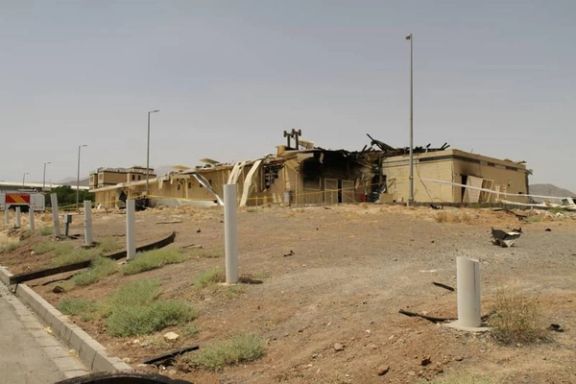
This photo released July 2, 2020, by the Atomic Energy Organization of Iran, shows a building after it was damaged by a fire, at the Natanz uranium enrichment facility some 200 miles (322 kilometers) south of the capital Tehran, Iran.

Since at least 2010, Israel has allegedly conducted dozens of attacks inside Iran, targeting sensitive nuclear and military installations and carrying out assassinations of individuals deemed a threat.

These attacks became more frequent after July 2020, when a massive explosion occurred at the Natanz uranium enrichment site in central Iran, destroying one of the buildings. In November of that year, Mohsen Fakhrizadeh, a key figure in Iran’s nuclear program, was assassinated in a roadside attack near Tehran. Western and Israeli intelligence had long suspected Fakhrizadeh of being the architect of Iran’s covert nuclear weapons program.

Fakhrizadeh’s elimination rattled most echelons of the Iranian government, with different agencies subtly blaming one another for shortcomings that had led to the incident. It strengthened existing concerns that Israel had a strong network within Iran capable of using sophisticated weapons, having detailed information about the movement of key targets, and could pull off a complicated assassination and disappear without a trace.

However, spectacular attacks did not end with the killing of the top nuclear operative.

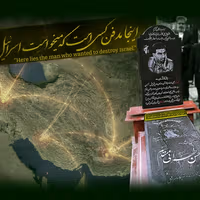
Mohsen Fakhrizadeh and the road where he was assassinated in November 2020
100%
Mohsen Fakhrizadeh and the road where he was assassinated in November 2020

Since Fakhrizadeh’s assassination, which reportedly involved a high-tech, remote-operated machine gun, numerous small and large-scale attacks have continued to target various sites. While Israel has never acknowledged its involvement, it is widely believed that many incidents at military and industrial sites were the result of Israeli sabotage or drone attacks.

This latest attack occurred days after Iran’s Minister of Intelligence hailed the "dismantling of Mossad's infiltration network" as a pivotal achievement of former president Ebrahim Raisi's administration.

Esmail Khatib remarked last week, "Mossad's infiltration network had been assassinating our scientific figures and sabotaging critical centers. Under the thirteenth administration, this network and its access and capabilities have been eliminated."

Despite the persistent denials by Iranian officials, the series of targeted killings and sabotage reached such a critical point in 2021 that a former Minister of Intelligence, Ali Younesi, had expressed grave concern over the infiltration of Israel's intelligence agency, Mossad, into various sectors of the country, warning that officials should be "worried for their lives."

A former Iranian Intelligence Minister Ali Younesi. Undated
100%
A former Iranian Intelligence Minister Ali Younesi. Undated

Younesi stated in 2021 that over the past "10, 15, or 20 years," while the country has been purged of all groups he labeled as "terrorist," there has been a significant failure in addressing the infiltration by foreign intelligence services, particularly those of Israel.

He emphasized that in the "last ten years, Mossad's infiltration into various sectors of the country is so extensive that all officials of the Islamic Republic should be worried for their lives."

In April 2021, another explosion at Natanz, this time in an underground part of the sprawling installation, hit the power supply for centrifuges and caused extensive damage that reportedly needed months of repairs. Some reports said that thousands of uranium enriching machines, called centrifuges, were destroyed.

Coupled with physical attacks, Israel allegedly launched many cyberattacks that created massive disruptions in Iran. In October 2021 a cyberattack knocked out a government database that issues fuel subsidized fuel cards to the population.

In May 2022, Revolutionary Guard intelligence operative Colonel Hassan Khodaei was shot five times outside of his home in Tehran. In May and June, following the assassination, two scientists reportedly died from poison in their food. Ayoub Entezari, an aerospace engineer, worked on missile turbines for a military research center in Yazd, central Iran.

Suicide drones were used to attack a military facility in Isfahan on January 28, 2023. Senior intelligence sources told Western media and that Israel’s Mossad was involved in the attack. It was reported that the site was an advanced weapon-production facility.

What is embarrassing and dangerous for the Iranian regime is the apparent extensive infiltration of Israeli networks in Iran. Ismail Haniyeh’s targeted killing on July 31 will go down in history as one of the most remarkable military-intelligence coups by Israel in the past eight decades.

Most Viewed

US blockade enters murky phase as tankers spoof signals and buyers hesitate
1
ANALYSIS

US blockade enters murky phase as tankers spoof signals and buyers hesitate

2

US tightens financial squeeze on Iran, warns banks over oil money flows

3
INSIGHT

Ideology may be fading in Iran, but not in Kashmir's ‘Mini Iran'

4
INSIGHT

Hardliners push Hormuz ‘red line’ as US blockade tests Iran’s leverage

5
VOICES FROM IRAN

Hope and anger in Iran as fragile ceasefire persists

Banner
Banner

Spotlight

  • Hardliners push Hormuz ‘red line’ as US blockade tests Iran’s leverage
    INSIGHT

    Hardliners push Hormuz ‘red line’ as US blockade tests Iran’s leverage

  • Ideology may be fading in Iran, but not in Kashmir's ‘Mini Iran'
    INSIGHT

    Ideology may be fading in Iran, but not in Kashmir's ‘Mini Iran'

  • War damage amounts to $3,000 per Iranian, with blockade set to add to losses
    INSIGHT

    War damage amounts to $3,000 per Iranian, with blockade set to add to losses

  • Why the $100 billion Hormuz toll revenue is a myth
    ANALYSIS

    Why the $100 billion Hormuz toll revenue is a myth

  • US blockade targets Iran oil boom amid regional disruption
    ANALYSIS

    US blockade targets Iran oil boom amid regional disruption

  • Iran's digital economy battered by prolonged blackout
    INSIGHT

    Iran's digital economy battered by prolonged blackout

•
•
•

More Stories

Haniyeh's killing spurs global reactions as US says 'not involved'

Jul 31, 2024, 09:57 GMT+1

As world leaders respond to the reported assassination of Hamas leader Ismail Haniyeh in Tehran—widely attributed to Israel—US officials have stated that they were neither involved in nor aware of the attack.

Though details remain scarce, the Islamic Revolutionary Guards (IRGC) early on confirmed that Haniyeh, the chief political leader of the terror group, was targeted at a residence in the capital, along with an Iranian bodyguard. Hamas has corroborated the killing, denouncing it as a “treacherous Zionist raid”.

US Secretary of State Antony Blinken said the United States was neither involved in nor made aware of the assassination of the Hamas leader, refusing to respond directly to the news.

Blinken emphasized the urgent need for a ceasefire in the Gaza war, noting its critical importance for the hostages and Palestinian civilians suffering. He stressed the broader regional implications of the conflict and reaffirmed Washington’s efforts to stabilize Gaza and prevent further escalation.

Secretary of State Antony Blinken and Secretary of Defense Lloyd Austin with President Joe Biden
100%
Secretary of State Antony Blinken and Secretary of Defense Lloyd Austin with President Joe Biden

European Union foreign policy chief Josep Borrell also refrained from commenting directly on the reported assassination, but instead emphasized the urgent need to de-escalate tensions to prevent a wider conflict that could impact the entire region and beyond.

The comments follow Israel's claim on Tuesday of having eliminated a Hezbollah commander allegedly responsible for a deadly attack in the Israeli-occupied Golan Heights. Israel has not officially confirmed its role in the assassination of the Hamas leader.

Israeli .....

Condemnations were quickly issued by Iran's allies Russia and China. Moscow has urged all parties to avoid actions that could escalate into a major conflict, while Beijing's foreign ministry warned that the incident might lead to further regional instability.

As Iran vowed to retaliate against Israel over the killing, some politicians in the Western world rejoiced over the death of the Hamas leader.

British Conservative parliamentarian Tom Tugendhat responded to a social media post from Iranian Supreme Leader Ali Khamenei, who vowed revenge for the killing. Tugendhat condemned Tehran as an "evil regime" that "murders hundreds of thousands of innocents at home and abroad and mourns only when their executioners are killed."

Far-right Dutch politician Geert Wilders openly welcomed the assassination, posting on X, “Good riddance!!” In a separate message, he warned Iranian Supreme Leader Ali Khamenei and Hezbollah’s Hassan Nasrallah, stating, “They will not be too happy now and probably not sleep too well either.”

Regional nations condemn, blame Israel

Numerous Middle Eastern nations have responded to the reported assassination, with many attributing the attack to Israel and warning of heightened regional tensions.

Turkish President Erdogan with Haniyeh. File Photo
100%
Turkish President Erdogan with Haniyeh. File Photo

Turkish President Recep Tayyip Erdogan condemned the assassination as a “despicable act” intended to undermine the Palestinian cause. He stated that “Zionist cruelty will never accomplish its objectives” and reiterated Turkey’s support for a sovereign Palestinian state based on the 1967 borders with East Jerusalem as its capital. Haniyeh was reportedly scheduled to address Turkey’s parliament in August.

Pakistan’s Foreign Ministry, blaming Israel for the attack, characterized it as a dangerous escalation that jeopardizes peace efforts in an already volatile region.

Israel had previously vowed to target Haniyeh and other Hamas leaders in response to the terror group's October 7 attack on Israel, which resulted in 1,200 deaths and approximately 250 hostages.

Qatar also condemned the assassination as a “heinous crime and serious escalation,” with its foreign ministry warning that it, along with “Israel’s reckless behavior,” will lead to regional chaos and “undermine peace prospects.” Qatar, which had hosted Haniyeh and plays a crucial role in cease-fire talks between Israel and Hamas over the war in Gaza, criticized the act for its potential destabilizing effects.

Haniyeh, who had led Hamas politically since 2017, had been living in exile in Qatar.

Experts say Iran's security vulnerabilities exploited by Israel

The widely believed Israeli operation would not be the first of its kind. As news of Haniyeh’s death circulated, experts and observers commented on the nature and sophistication of the operation on Iranian soil, offering analysis about how Iran’s security apparatus was so weak that this was able to happen.

Former Australian hostage Kylie Moore-Gilbert, who had been held in Iran for over two years, recently penned an article, arguing that Iranian security agencies have struggled to counter Israeli activities within their country. She attributed this difficulty to the authoritarian nature of the state, which she says values loyalty over skill, resulting in less effective counterintelligence and making it easier for external actors to operate within Iran.

Israel, Moore-Gilbert wrote, has leveraged Tehran’s governance failures and economic issues by likely offering financial rewards or residency to collaborators – with Iran’s internal weaknesses having turned into a major vulnerability.

“Having shown itself over the decades to be impervious to ideological moderation or reform from within, it has become so hated that its own people—its biggest victims—are willing to embrace the possibility that the enemy of their enemy is their friend," she wrote.

Iran expert Karim Sadjadpour took to X, citing Moore-Gilbert’s article, asserting that “Israel has managed to conduct numerous high-level assassinations inside Iran in part due to the Islamic Republic's profound unpopularity and incompetence.”

This is a developing story. Check back for updates.

EU faces backlash over presence at Iranian inauguration

Jul 31, 2024, 05:16 GMT+1

The European Union's decision to send a representative to the swearing-in ceremony of Iran's new President, Masoud Pezeshkian, has sparked outrage among several members of the European Parliament and human rights activists.

In a letter to Josep Borrell, the EU's foreign affairs chief, Polish MEP Adam Bielan from the European Conservatives and Reformists group, lambasted the decision as "not appropriate."

He argued that the EU's presence at the event would inadvertently "legitimize the Iranian regime", currently sanctioned for human rights abuses, its nuclear program and support of Russia's war on Ukraine.

"This decision is not only misguided but stands in direct contradiction to the values and principles that the European Union purports to uphold," Bielan stated.

He further condemned Iran’s ongoing support for terrorist activities, which poses a "direct threat to global security", including Iran's Houthi militia's blockade of commercial shipping in the Red Sea region. Last year, the US declared Iran the world's number one state sponsor of terror.

The letter, signed by several MEPs, also stressed that Iran's involvement in regional conflicts and its record on human rights are fundamentally at odds with the EU's commitment to promoting democracy and human rights globally.

"Engaging diplomatically with such a regime at this juncture is highly inappropriate and dangerous. It undermines the integrity of our foreign policy and sends a message of tacit approval to a government that flagrantly violates human rights and international norms," Bielan added.

While Josep Borrell said he would not personally attend the ceremony, citing the lowest point in EU-Iran relations, his deputy, Enrique Mora, would represent the EU. He was alongside officials from countries including the United Arab Emirates and China.

Mora, who serves as the deputy secretary-general of the European External Action Service (EEAS), was tasked with representing the EU at what officials have insisted is merely a "diplomatic level," not a political endorsement.

However, this distinction has done little to quell the anger. Dutch MEP Bart Groothuis of the Liberal Renew group called the EU's participation "unacceptable."

German Green MEP Hannah Neumann expressed frustration on social media, referencing Josep Borrell's impending departure as EU foreign affairs chief and suggesting a shift in policy under incoming Estonian Prime Minister Kaja Kallas, known for her tougher stance on Iran.

The ceremony was largely boycotted by global powers. Among the most senior to attend was UAE Foreign Minister Abdullah bin Zayed, Tajikistan’s President Emomali Rahmon, and Armenian Prime Minister Nikol Pashinyan.

Most of the ceremony's other foreign guests represented neighboring countries and a few allies from Africa and Latin America. Even Iran's largest consumer of oil and geopolitical ally China, sent a low level delegation.

Iran has continued to garner criticism as a wave of executions last year saw the government order more than 850 in a record high. Additionally, rights activists cite the ongoing imprisonment of dissidents and oppression of minorities as contrary to EU principles.

The European Union also announced on Tuesday that despite removing some names and Iranian institutions, it will maintain the bulk of its targeted sanctions and anti-terrorism measures against entities, organizations, and individuals affiliated with the Islamic Republic.

In the latest update, the name of Brigadier General Mohammad Naderi has been removed from the list.

Ali Mohammad Naderi, head of the Aerospace Industries Organization (AIO) under the Ministry of Defense, was identified by the European Union in the summer of 2007 as an individual connected to sensitive nuclear activities and the proliferation of nuclear weapons in Iran and was placed on the EU sanctions list.

Anis Naccache, a Lebanese national who was implicated in the failed assassination attempt on Shapour Bakhtiar, the last Prime Minister of Iran under the rule of Mohammad Reza Pahlavi, has also been removed from this list. He passed away due to COVID-19 in Syria in the winter of 2021. Naccache was also involved in the attack on the OPEC headquarters and the hostage-taking of OPEC oil ministers in 1975.

The companies Marou Sanat, Samen Industries, Surena, and Faryand Technique have also been removed from the European sanctions list.

Marou Sanat was first placed on the sanctions lists of the US Treasury Department and the European Union in the winter of 2014 for attempting to procure equipment for the Arak heavy water production plant and the IR-40 heavy water reactor, including zirconium silicate.

Samen Industries, a metallurgy company, has been under US, UN, and EU sanctions since 2011.

Faryand Electric was placed on the EU sanctions list in the summer of 2007 in connection with Iran's nuclear activities and the proliferation of nuclear weapons.

Surena, another company removed from the sanctions list, has been on the European sanctions list since the winter of 2011. Surena is a nuclear contractor involved in the construction of nuclear facilities and is active in the Darkhovin Nuclear Power Plant, south of Iran.

On July 15, the European Union extended the sanctions imposed on the Islamic Republic for military support to Russia in the Ukraine war and the Houthi militants in Yemen for another year. The sanctions target nine entities and 12 officials of the Islamic Republic.

On May 31, the EU also imposed new sanctions against several Iranian officials, including Mohammad Reza Ashtiani, the Minister of Defense, Esmail Qaani, the commander of the Quds Force of the Islamic Revolutionary Guard Corps, and Afshin Khajehfard, the Deputy Minister of Defense.
Hamas chief killed in attack on his residence in Tehran, IRGC says

Jul 31, 2024, 03:52 GMT+1

Hamas chief Ismail Haniyeh and one of his bodyguards were killed after his residence was targeted in Tehran, Iran's Islamic Revolutionary Guard Corps (IRGC) confirmed in a statement.

A statement by the IRGC's Public Relations Department said the attack was carried out early Wednesday, adding that a probe is underway to find the cause of the incident.

The statement offered condolences to the people of Palestine, the Muslim world, and the Resistance Front's fighters over the Hamas leader's death.

A statement by Hamas says an "Israeli" raid killed the Palestinian group's leader Ismail Haniyeh in his residence in Tehran.

Mousa Abu Marzook, a member of Hamas political bureau, said the "cowardly" assassination of Ismail Haniyeh "won't go unanswered".

Earlier on Tuesday, Haniyeh had attended the inauguration of Iran's new president and met Iran's Supreme Leader.

The Palestinian leader was assassinated hours after praising Tehran's support for Hamas and Palestine during his meeting with Iran's President Masoud Pezeshkian.

Follows Iran International's Live Blog for the latest updates.

Did the ethnic vote determine Iran’s new President?

Jul 30, 2024, 22:30 GMT+1
•
Ali Afshari

Masoud Pezeshkian is now officially Iran’s president. He was sworn in on Tuesday, having won the election after two rounds, both record-setters for low turnout (39.9% and 49.7% respectively).

In the second round, Pezeshkian’s campaign depicted his hardline rival as an existential threat to the livelihood of the nation. More people turned out for the run-off and Pezeshkian defeated the ultra-conservative Saeed Jalili. But he lost to those who boycotted the election. In the end, many more stayed at home than voted for the ‘reformist’ candidate.

So, the question is: how did Pezeshkian win despite failing to persuade the majority that he could deliver the reforms he promised? The answer, I argue in this piece, is the ethnic vote. (All data featured in this piece comes from official sources, and there are reasons to doubt their veracity. But that would be the subject for another article).

Ethnically, Iran is a highly diverse society. While the official language is Persian, millions of people have different mother tongues, such as Azari, Kurdish, Baluchi, and Arabic. These minorities often lack representation, particularly many Kurds and almost all Baluchis who are Sunnis, whereas most other groups, including the Arabic and Azeri speakers, are Shia.

Pezeshkian seems to come from a Azeri-speaking family, but he was born and raised among Kurds. Most minorities, ethnic and religious, picked him over Jalili, especially the Baluchis and the Kurds. But the focus here is on the Azari-speaking voters. (Note that most Turkish-speaking Iranians are Shia, which helps us single out the ethnic element.)

The figure below illustrates the role of the Azari speakers in Pezeshkian's victory. The horizontal axis represents the ratio of Azari speakers in each province. Azari belongs to the family of Turkic languages, which is also heavily influenced by Persian. Within Iran, people usually call it “Torki”, which means Turkish. The vertical axis represents the vote shares in the run-off, as a percentage of eligible voters in each province.

Vote share for each candidate in each province (2024)
100%

To better understand what seems to be a strong ethnic factor, we can consult the chart below, which shows the Azari or Turkish speaking population in each province.

100%

Pezeshkian secured the highest share of vote in such provinces as East Azerbaijan, West Azerbaijan, Zanjan and Ardabil, where the majority are Azari (Turkish) speakers. In contrast, Jalili had an overall advantage in provinces with the lowest Azari-speaking populations. This does not mean that Jalili is popular among Persian-speaking Iranians. It seems to suggest that he did better than Pezeshkian in provinces with minimal ethnic minority presence.

The quantitative index of the Pearson Correlation Coefficient (PCC) is illuminating in this regard. The PCC index indicates the strength of the linear relationship and dependency between two variables. In the following diagram, each candidate’s vote share (in each province) is the dependent variable, and the relative size of the Turkish-speaking population (in that province) is the independent variable.

The correlation coefficient for Pezeshkian is 0.7 (70%), while for Jalili it is -0.47 ( -47). A positive value indicates that an increase in the independent variable leads to an increase in the dependent variable, whereas a negative value suggests that an increase in one variable results in a decrease in the other. The linear relationship for Pezeshkian's votes is strong and positive, suggesting that his share of vote (in most cases) rises as the Azari speaking population in a province increases. In contrast, the relationship for Jalili is weak and negative. (Same for Kurdish, Baloch, and Turkmen speakers).

One counterargument could be that the data should be interpreted differently: that the Persian-speaking population didn’t like Pezeshkian and voted for Jalili. But the low turnout in such provinces seem to refute this hypothesis. Moreover, in most of these provinces, Pezeshkian gained more in vote share as the turnout rose in the run-off.

Vote share in the run-off by province (2024)
100%

To underline the crucial role of the Azari (Turkish) speaking Iranians in the second round of the election, we can compare the results with that of the 2017 presidential election –where Hassan Rouhani tried to attract the ethnic vote.

Vote share for each candidate in each province (2017)
100%

As seen above, Rouhani’s vote is more homogeneous across provinces, and the ‘Azari variable’ is less pronounced. Rouhani did receive more votes in provinces with majority Azari-speaking populations. But he also did so in the non-ethnic regions (except for Zanjan, where Raisi had more votes.)

The Pearson correlation coefficient for Rouhani is 5%, while for Raisi it is -10%. This indicates that the strength of the linear relationship between the two variables is much weaker. Azari speaking Iranians didn’t like Raisi, but their preference had much less impact on the final result that it did in 2024. It was insignificant statistically.

In the 2024 run-off, if we look at the Azari speaking provinces only, Pezeshkian got 2.8 million more votes than Jalili. That’s almost a million more than their vote difference in the first round. However, if we look at the six provinces where Persian is predominant, Jalili got about 830,000 more votes than Pezeshkian. In the first round, that number was about 275,000. In other words, the increase in the vote margin between Pezeshkian and Jalili in the second round is 3.7 times greater than the change observed in the six other provinces. Jalili’s advantage in Isfahan can be attributed to the low turnout (less than 50%). In Yazd, and Kerman, where official turnout in the run-off was above 50%, the changes may suggest a dramatic decline in the social standing of the reformists. In Khorasan Razavi, Jalili’s success may be due to local connections (he was born there). His lead (551,000 votes) is notably large and unexpected. In 2017, the picture was markedly different. Rouhani's advantage over Raisi in the six provinces mentioned above was 2.2 times greater than that of the four provinces with Azari speaking majorities.

Pezeshkian’s campaign may depict his presidency as a ‘reformist’ triumph. Previous ‘reform’ moments (1997, 2001, 2013, and 2017) were marked by national fervor and high turnout, neither of which transpired in 2024. Pezeshkian may name a few ‘reformists’ to his cabinet, and some may even call his administration a ‘reform government.’ The president himself acknowledges his indebtedness to Supreme Leader Ali Khamenei. However, the real story of Iran’s 2024 elections may very well be the ethnic vote.

Hezbollah leader's 'right-hand man' killed in Israeli airstrike on Beirut

Jul 30, 2024, 20:24 GMT+1

An Israeli airstrike targeted the suburbs of Beirut on Tuesday, killing a senior commander of Iran-backed Hezbollah, the Israeli military said, raising fears of the Israel-Hezbollah conflict escalating into a broader regional war.

The Israeli military carried out the airstrike in retaliation for a Saturday rocket attack on a soccer pitch in Golan Heights, which killed 12 minors. Israel and the US blamed Hezbollah for the attack, though the Shiite group denied responsibility.

The Tuesday airstrike killed Fuad Shukr, the "right-hand man" of Hezbollah Secretary-General Hassan Nasrallah who served as his adviser for planning and directing wartime operations, the Israel Defense Forces (IDF) said.

Three people have been killed and 74 others injured in the Israeli airstrike, Lebanon's Health Ministry announced. However, it did not identify the victims.

Al-Arabiya and Al-Hadath earlier confirmed that Fuad Shukr had been killed in the airstrike, and his body transferred to Beirut's Great Prophet Hospital.

"Fuad Shukr has directed Hezbollah's attacks on the State of Israel since October 8th, and he was the commander responsible for the murder of the 12 children in Majdal Shams in northern Israel on Saturday evening, as well as the killing of numerous Israelis and foreign nationals over the years," the IDF said in a statement.

"As the Head of Hezbollah's Strategic Unit, Fuad was responsible for the majority of Hezbollah's most advanced weaponry, including precise-guided missiles, cruise missiles, anti-ship missiles, long-range rockets, and UAVs. He was responsible for force build-up, planning, and execution of terror attacks against the State of Israel," the statement added.

The White House doubled down on its support for Israel in reaction to the strike that killed Shukr. “Our commitment to Israel’s security is ironclad and unwavering against all Iran-backed threats, including Lebanese Hezbollah,” National Security Council spokesperson Adrienne Watson said in a statement.

Vice-President Kamala Harris also said she “unequivocally” supports Israel’s right to defend itself "against the terrorist organization, which is exactly what Hezbollah is."

Iran's Foreign Ministry spokesman strongly condemned the Israeli airstrike, calling it a "clear violation of Lebanon's sovereignty and territorial integrity and a blatant violation of international rules and the UN Charter."

Iran's UN envoy in a letter to the Security Council said Israel's "cowardly" attack must be "unequivocally and immediately condemned by the Security Council."

"The Security Council must also take immediate action in response to this criminal act to ensure that such aggression, which threatens regional peace and security, is not repeated. Israel must be held accountable for these atrocities and cannot go unpunished," the letter said.

Iran’s newly elected president had earlier warned Israel of serious repercussions if it attacks Lebanon.

The hostilities between Israel and Hezbollah, largely triggered by the war in Gaza, are their worst since the 2006 conflict.

The clashes have largely been confined to the border area, with both sides previously expressing that they do not desire a broader conflict. However, the situation has raised concerns about the potential escalation towards war.

US attack on Iran-backed militants in Iraq

Shortly after the Israeli attack in Lebanon, the US military also carried out an airstrike targeting Tehran-backed combatants in Iraq who were allegedly attempting to launch one-way attack uncrewed aerial systems, Al-Arabiya reported, citing a US official.

“Based on recent attacks it was assessed that the UAS posed a threat to US and Coalition Forces,” the report said.

The US official did not provide further details, but Reuters cited Iraqi police and medical sources as saying that blasts inside a base used by Iran-backed Popular Mobilization Forces (PMF) militants south of Baghdad on Tuesday killed one member and wounded seven others.

The attack came a few days after a US military base in Syria's Conoco gas field was attacked for the second time in 24 hours with more than ten rockets fired from areas controlled by Iran-backed militants.

Over the past ten months, American bases in Iraq and Syria have been frequently attacked by Iran-backed militants, particularly the Islamic Resistance in Iraq, a coalition of Tehran's proxies which includes groups like Kataib Hezbollah, also a member of the Popular Mobilization Forces (PMF).