• العربية
  • فارسی
Brand
  • Iran Insight
  • Politics
  • Economy
  • Analysis
  • Special Report
  • Opinion
  • Podcast
  • Iran Insight
  • Politics
  • Economy
  • Analysis
  • Special Report
  • Opinion
  • Podcast
  • Theme
  • Language
    • العربية
    • فارسی
  • Iran Insight
  • Politics
  • Economy
  • Analysis
  • Special Report
  • Opinion
  • Podcast
All rights reserved for Volant Media UK Limited
volant media logo

Iran sentences former chamber of commerce head for criticizing government
Sep 10, 2024, 06:51 GMT+1Updated: 15:56 GMT+0
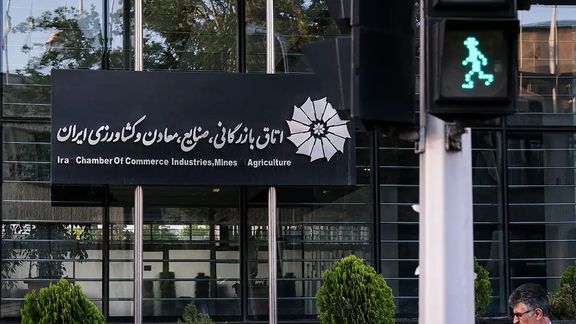
Entrance of the main building of Iran Chamber of Commerce, Industries, Mines and Agriculture

Despite a change in government, Iran's private sector remains under pressure as the judiciary sentenced the former head of the Chamber of Commerce to prison and a fine.

Iran's Chamber of Commerce, Industries, Mines, and Agriculture (ICCIMA) serves as the voice and the representative body for the private sector. However, the government maintains a tight grip on the chamber, often resisting its efforts to operate independently.

After about a year of controversy surrounding Hossein Selahvarzi’s election as head of the chamber, which eventually led to his dismissal late last year, *Mizan News Agency*, linked to Iran's judiciary, reported on Sunday that the Tehran Court of Appeals sentenced him to six months in prison and a fine for "spreading lies." The campaign against Selahvarzi was reportedly orchestrated by figures close to former President Raisi's administration, further intensifying the political nature of his case.

Last year, EcoIran reported that Tehran deputy prosecutor general had issued an order for the indictment and prosecution of Selahvarzi on charges of insulting the founder of the Islamic Republic Ruhollah Khomeini and Supreme Leader Ali Khamenei in the Tehran Revolutionary Court.

He has frequently criticized officials and their policies in his tweets, and it appears that the main reason for this verdict is his tweets criticizing authorities and supporting protesters during the 2022 protests.

Former head of Iran Chamber of Commerce Hossein Selahvarzi (undated)
100%
Former head of Iran Chamber of Commerce Hossein Selahvarzi

Known for his criticism of government’s economic policies, Selahvarzi was elected as the president of the Chamber of Commerce in June 2023. The election immediately sparked reactions from the hardliners and state media. A few days after Selahvarzi’s election, around 30 hardliner lawmakers had urged the government to annul the elections.

IRGC-affiliated Tasnim News Agency published images of his social media posts from the 2022 nationwide protests for "Woman, Life, Freedom," labeling the Chamber of Commerce president as a "dissident. Mehr News Agency also released documents claiming that Selahvarzi had been disqualified by the Ministry of Intelligence before the Chamber of Commerce board election.

On several occasions, the state media announced that Selahvarzi had resigned but he denied the reports himself on social media. Finally in November, Selahvarzi was dismissed by the Minister of Economy.

Over the years, Selahvarzi has held various economic positions, though he is politically aligned with the so-called Reformists. While the election of reform-minded President Masoud Pezeshkian raised hopes for a shift in economic policy, the entrenched influence of the previous administration's hardline economic stance seems to have limited the potential for significant change.

The chairman of the chamber, often referred to as the “private sector’s parliament” with over 400 members, has the role of coordinating between the private sector and government and is sometimes required to participate in meetings with government officials.

Members of the chamber have often criticized regime policies that have led to an economic crisis, including a confrontational foreign policy. The chambers often produce economic reports that the government finds embarrassing, or they criticize proposed budget bills and other plans.

“Chairmanship of the chamber of commerce is not a government position in the Islamic Republic. The chamber is a non-governmental and non-state body and represents the private sector,” Abdolreza Davari, one of former President Mahmoud Ahmadinejad's advisors and confidants, said last year, calling “politically-motivated interference” in chamber of commerce elections by the state “a dangerous phenomenon”. “The affairs of the chamber of commerce should be decided and regulated by the members of the chamber itself,” he added.
Most Viewed

US blockade enters murky phase as tankers spoof signals and buyers hesitate
1
ANALYSIS

US blockade enters murky phase as tankers spoof signals and buyers hesitate

2
INSIGHT

Ideology may be fading in Iran, but not in Kashmir's ‘Mini Iran'

3
INSIGHT

Hardliners push Hormuz ‘red line’ as US blockade tests Iran’s leverage

4
VOICES FROM IRAN

Hope and anger in Iran as fragile ceasefire persists

5

US sanctions oil network tied to Iranian tycoon Shamkhani

Banner
Banner

Spotlight

  • Hardliners push Hormuz ‘red line’ as US blockade tests Iran’s leverage
    INSIGHT

    Hardliners push Hormuz ‘red line’ as US blockade tests Iran’s leverage

  • Ideology may be fading in Iran, but not in Kashmir's ‘Mini Iran'
    INSIGHT

    Ideology may be fading in Iran, but not in Kashmir's ‘Mini Iran'

  • War damage amounts to $3,000 per Iranian, with blockade set to add to losses
    INSIGHT

    War damage amounts to $3,000 per Iranian, with blockade set to add to losses

  • Why the $100 billion Hormuz toll revenue is a myth
    ANALYSIS

    Why the $100 billion Hormuz toll revenue is a myth

  • US blockade targets Iran oil boom amid regional disruption
    ANALYSIS

    US blockade targets Iran oil boom amid regional disruption

  • Iran's digital economy battered by prolonged blackout
    INSIGHT

    Iran's digital economy battered by prolonged blackout

•
•
•

More Stories

Ukraine summons Iran envoy to warn against missile supply to Russia

Sep 10, 2024, 02:08 GMT+1

Ukraine's foreign ministry summoned Iran’s charge d’affaires Monday to warn Tehran against the consequences of ballistic missile shipments to Russia.

A report published last week by The Wall Street Journal suggested that Iran had transferred short-range ballistic missiles to Russia, prompting outrage in Kyiv. At least one Iranian lawmaker confirmed the report Sunday, conflicting a senior Revolutionary Guards commander who had dismissed the claim as “psychological warfare.”

White House national security spokesperson John Kirby added a layer of uncertainty to the situation Monday, when he refused to verify the Wall Street Journal report.

“I cannot confirm the reports that the transfer has happened,” he said in a presser, “but I would point you to what we've said in the past, that any such provision of that kind of technology… could, depending on what the deal, how it's consummated, have equally deleterious effects on the Middle East.”

“An Iran that already has an improving ballistic missile program, we can only assume would want to stand to gain from some sort of partnership with Russia to improve their capabilities in the region,” Kirby added.

Iran is known to have sent Russia drones, but a provision of ballistic missiles would be seen as a serious escalation. So far, no such deal has been officially announced. "No missile was sent to Russia," Brigadier Fazlollah Nozari, a high-ranking IRGC commander said Monday, calling the allegations "psychological warfare".

'Devastating consequences'

On Monday, Kyiv warned Iran that confirmation of such missile deliveries would have "devastating and irreparable consequences" for bilateral relations. Senior Ukrainian official Andrii Yermak further called for Western support, suggesting that his country “must be allowed to destroy warehouses storing these missiles in order to avoid terror."

Iran’s growing support for Russia’s war effort has also been criticized in Tehran. On Sunday, a former Iranian lawmaker who used to chair of the committee on national security and foreign policy slammed Iran's arms sales to Russia as "the dirtiest example of Russophilia", warning that the leaders of the Islamic Republic are “dragging” the country “further into global conflict and sanctions which have led to the country's worst economic crisis” in more than four decades.

Also on Sunday, a sitting Iranian MP seemed to confirm Tehran’s military assistance to Russia, albeit downplaying the threats from Ukraine and its Western allies. Ahmad Bakhshayesh Ardestani justified the arms sales to Russia by saying his country has to subsequently "barter" for its needs, including soybeans and wheat. "Part of the barter involves sending missiles, and another part involves sending military drones to Russia," he said.

When asked whether sending ballistic missiles to Russia might lead to further sanctions or trigger the so-called "snapback" mechanism against Iran, the member of the Parliament's National Security and Foreign Policy Committee replied, "It can't get any worse than it already is. We give missiles to [our proxies] Hezbollah, Hamas, and Hashd al-Shaabi, so why not to Russia?"

Grossi: Iran’s enriched uranium stockpiles continue to grow

Sep 9, 2024, 19:52 GMT+1

Rafael Grossi, the Director General of the International Atomic Energy Agency (IAEA), has raised alarms over the continuous increase in Iran’s stockpile of uranium enriched to 20% and 60%.

Grossi also highlighted the agency's growing concerns over Tehran’s failure to provide critical information about its nuclear program, further escalating international fears of Iran's advancing nuclear capabilities.

"Iran’s stockpile of uranium enriched up to 20% and up to 60% continues to increase, and that Iran has expanded the number of cascades it is using to enrich UF6," said Grossi, in his latest statement on the Iranian nuclear issue.

The diplomatic landscape surrounding Iran’s nuclear program has been tense for years, but recent developments have escalated the situation. Iran halted its implementation of nuclear commitments under the Joint Comprehensive Plan of Action (JCPOA) more than three years ago, and its stockpile of enriched uranium continues to rise. With international inspectors barred from accessing key facilities, the IAEA now finds itself in the dark about Iran’s centrifuge inventory, uranium ore, and heavy water stocks.

"The Agency has lost continuity of knowledge in relation to the production and inventory of centrifuges, rotors and bellows, heavy water and uranium ore concentrate," Grossi explained, underscoring the gaps in oversight created by Tehran’s refusal to cooperate.

Iran's defiance has not been limited to the technical aspects of nuclear verification. Grossi pointed out that Iran has failed to resolve "outstanding safeguards issues," particularly regarding the discovery of uranium particles at undeclared sites, a discovery that contradicts Tehran’s claims of transparency.

As the IAEA calls for renewed cooperation, Iran has instead accelerated its nuclear enrichment efforts. According to the latest reports, the installation of additional centrifuge cascades at the Natanz and Fordow nuclear facilities has intensified, bringing the nation closer to reaching the 90% purity required for a nuclear weapon.

This expansion comes on the heels of repeated IAEA requests for Iran to resume compliance with the JCPOA, an agreement Tehran abandoned following the US withdrawal under the Trump administration. Since then, efforts to reinstate or renegotiate the deal have stalled.

"I call upon Iran to implement the Joint Statement through serious engagement with the Agency’s concrete proposals," Grossi urged, signaling a desire to reestablish dialogue with the newly elected Iranian leadership.

"He (Pezeshkian) agreed to meet with me at an appropriate juncture," Grossi said, referring to an exchange after Pezeshkian's election in July.

"I encourage Iran to facilitate such a meeting in the not-too-distant future so that we can establish a constructive dialogue that leads swiftly to real results," he added.

In July, US Secretary of State Antony Blinken noted that Iran’s nuclear breakout time—the time needed to produce enough 90% enriched uranium for a nuclear weapon—has likely shrunk to "one or two weeks."

Reports indicate that Iran is ramping up efforts in its secretive nuclear weapons program, edging the country closer than ever to the development of a nuclear bomb, a threat that has persisted for over two decades.

Earlier this month, Abbas Araghchi, Iran's newly appointed Foreign Minister, stated that reviving the 2015 JCPOA nuclear agreement with the six major world powers is "untenable in its current form."

Iranian dissident gang-raped in Germany by alleged 'Islamic Republic loyalists'

Sep 9, 2024, 17:00 GMT+1

An Iranian dissident man was gang-raped in Germany by four men who are believed to be Islamic Republic loyalists, in an attack that has shocked the town of Iserlohn in North Rhine-Westphalia, according to German media reports.

The incident, which occurred on Saturday night at an abandoned brewery site, is being investigated as a politically motivated crime with deep ties to Tehran’s repressive government, according to a report by Der Spiegel.

Witnesses, alarmed by the victim’s screams, alerted the authorities, who responded quickly. IKZ reports that emergency services found the victim tied up and severely abused. He was immediately rushed to a hospital, but the full extent of his injuries has not been disclosed.

The attackers fled the scene, but law enforcement, including a helicopter and multiple patrol units, initiated a rapid search and apprehended four suspects—aged 24, 34, 42, and 46—shortly after in a nearby forest. One of the suspects sustained injuries while attempting to evade capture.

Spiegel and WDR report that all four men are believed to be ardent supporters of the Islamic Republic, underlining the political nature of the attack.

According to information obtained by Spiegel, the 30-year-old victim, an Iranian refugee who had fled persecution back home, was targeted due to his outspoken opposition to the Islamic Republic. The alleged perpetrators—four men with alleged loyalty to the Islamic Republic—sought to "sexually humiliate" and silence him, according to German authorities.

'Sexual humiliation'

"Based on the current state of knowledge, the victim should above all be humiliated," said Michael Burggräf, the prosecutor of Hagen in North Rhine-Westphalia, highlighting the intent behind the attack: to silence dissent through sexual violence. "The attack was primarily intended to sexually humiliate the victim."

The German prosecutor's remarks reinforce the suspicion that the assault was more than a mere political dispute and was rather an orchestrated act of brutality meant to break the spirit of a dissident.

This act of violence is being seen as an extension of the Islamic Republic’s long-standing campaign of intimidation and repression against dissidents, even beyond Iran’s borders.

The clerical government has a well-documented history of targeting its critics and defectors, often using extreme measures to silence opposition. The brutal nature of the latest assault echoes the tactics employed by Iran’s intelligence apparatus, which has been linked to various forms of violence and coercion against dissidents in Europe.

Dozens of assassinations have been attempted ever since the 1979 Revolution, often involving non-Iranians that help those who order the attacks deny complicity.

In June, another Iranian dissident escaped an assassination attempt in the Netherlands in what seemed to be yet another sign of Iran’s resolve to silence voices of dissent outside the country. The targeted dissident, Siamak Tadayon Tahmasebi, was singled out in an Iranian intelligence press release last summer, accused of leading a “terrorist” ring inside Iran from exile. On 6 June, Tahmasebi noticed two men attempting to enter his home near Amsterdam. He alerted the police, who arrived in time to arrest the armed intruders.

In May, Israeli and Swedish intelligence agencies revealed that criminal gangs operating on Iran’s behest were behind several terror attacks on Israeli embassies in Europe.

Over the past few years, Iranian journalists working outside Iran have become a prime target for Tehran's campaign of terror and intimidation. Iran International presenter Pouria Zeraati was stabbed outside his home in south London in March but survived with injuries to his leg. Investigations into the crime suggested that the three suspected assailants were recruited in Eastern Europe and flown to the UK to "intimidate" Zeraati. Also in June, another Iran International reporter, Mehran Abbasian, had to be moved to a secure location following threats to his life.

The threats against Iran International staff have become a recurrent issue, stemming back to 2022. The threats reached a climax with the UK's MI5 saying it could no longer protect the team, forcing a temporary relocation to the US.

Two Iranians allegedly tortured to death by security forces

Sep 9, 2024, 14:13 GMT+1

Two young Iranian men have become the latest victims of Iran's security forces after being tortured to death as Iran continues to violate international human rights laws.

Amir Reza Hamedi, a young conscripted soldier, had been enlisted into Iran’s compulsory military service, and was killed at the hands of law enforcement officers in Shaft, Gilan.

Sources told Iran International that Hamedi, who had previously been detained for his participation in the recent nationwide protests, was deeply troubled by conflicts with his superiors and had expressed to his family that he did not wish to continue his mandatory service.

Despite his pleas, his father took him back to his post, where, just hours later, the family received a call saying Hamedi had "committed suicide." However, sources confirmed that the young man’s death was the result of beatings, with visible injuries on his body.

In the other case, Maziar Moaddab, 35, was beaten to death after being tortured in a police detention center in Rasht. He was accused of theft, but instead of facing a fair investigation, was reportedly beaten with batons until he succumbed to his injuries.

His family, unaware of his arrest or the charges against him, was later informed that he died while being transported to the hospital. Fearing the worst, the family has since hired a lawyer, suspecting their son’s death was caused by torture at the hands of the police.

These latest deaths are not isolated incidents, echoing a pattern of abuse in the Islamic Republic’s military barracks and detention centers, where torture, beatings, and suspicious "suicides" have claimed countless lives. For decades, the system has been accused of covering up deaths resulting from violence in custody, using intimidation tactics to silence the families of victims.

Hamedi’s death, in particular, shines a light on the realities of compulsory military service in Iran, where soldiers often find themselves at the mercy of corrupt and abusive superiors. Many young men are subjected to punishments, prolonged detentions, and physical violence, especially if they are suspected of harboring dissenting views.

Last week, Mohammad Mir-Mousavi also succumbed to injuries from severe torture while in custody again in Gilan province.

Mohammad Mir Mousavi, a 36-year-old Iranian, whose death under torture in police custody has sparked outrage.
100%
Mohammad Mir Mousavi, a 36-year-old Iranian, whose death under torture in police custody has sparked outrage.

The Islamic Republic refuses to join the United Nations Convention against Torture. However, despite Article 38 of Iran’s own constitution banning the use of torture, the reality on the ground reveals a government that systematically violates its citizens' most basic rights. Families of victims are often left to seek justice in a system that offers none, their voices silenced by threats from security forces.

Amnesty International reported that between January 2010 and September 2021, at least 72 people died in Iranian prisons and detention centers due to torture or other forms of physical abuse inflicted by intelligence and security agents or prison officials. Iranian authorities have repeatedly denied responsibility for the deaths.

Human Rights Watch has also reported on the common use of torture in Iran. In April, they reported "Iranian security forces’ use of torture and sexual assault against men, women, and children, as well as suspicious deaths in detention". They said that the "authorities did not provide medical treatment or even basic hygiene supplies to those assaulted by security forces, exacerbating their long-term injuries, and have not investigated these cases or held anyone accountable for these serious violations."

Iran’s fuel distribution system hit by similar cyberattacks twice, VP admits

Sep 9, 2024, 13:20 GMT+1

Mohammad Reza Aref, Iran’s First Vice President, revealed that the country's fuel distribution system was hit by two identical cyberattacks within a year, both targeting critical infrastructure without any preventive measures taken.

Speaking at a ceremony on Sunday to introduce new Oil Minister Mohsen Paknejad, Aref referenced the cyberattacks carried out by the hacking group Predatory Sparrow in 2023, which crippled Iran’s fuel supply system.

Aref’s comments highlighted the government's ongoing failure to secure key infrastructure. "It is said once bitten twice shy, but two identical attacks happened within a year," Aref said, directly criticizing the lack of security improvements. He urged Paknejad to prioritize cybersecurity across the oil industry, a sector that continues to face threats under the system's mismanagement.

The remarks come as gas stations in multiple Iranian cities are facing major shortages. Citizens report being stranded as fuel is only available with government-issued ration cards, with no access to gas at market prices, which are double the subsidized rate.

A gas station in Iran (Undated)
100%
A gas station in Iran

The December 18, 2023, attack affected around 70% of Iran’s gas stations. With the fuel distribution system offline, subsidized gasoline purchases were blocked, and fuel was only available at market rates in certain areas.

Following the attack, Gholamreza Jalali, head of the Passive Defense Organization, admitted that a "vulnerability in the payment and receiving network" allowed hackers to breach the system. The Passive Defense Organization later confirmed that malware had caused widespread disruption, warning the Oil Ministry in 2020 about insecure connections in the fuel system—warnings that were ignored.

However, Aref did not specify the exact timing of the second attack within the year, as the only one publicly reported occurred on December 18.

This was not the first time Iran’s fuel network was targeted. In November 2021, just before the second anniversary of the Islamic Republic’s crackdown on the November 2019 protests, hackers once again paralyzed the country’s fuel stations, leaving many without access to fuel for weeks. At the time, 4,300 stations were disrupted, and hackers managed to hijack billboards in Isfahan with slogans like “Khamenei! Where’s our gasoline?” mocking the government's inability to provide basic services.

Congestion at an Iranian gas station (file photo)
100%
Congestion at an Iranian gas station (file photo)

Despite claims from officials that the Islamic Republic’s national internet, or "intranet," would bolster cybersecurity, the country’s critical systems remain vulnerable. Hadi Beigi-Nejad, a member of the parliament, stated in December that "the enemy" had infiltrated Iran’s infrastructure, signaling internal vulnerabilities.

The Passive Defense Organization reported in December that it had identified and thwarted 10 major attacks on national infrastructure in 2022. However, the organization warned that Iran’s fuel system remains at risk, confirming the ongoing inadequacies in the ach to cybersecurity.