• العربية
  • فارسی
Brand
  • Iran Insight
  • Politics
  • Economy
  • Analysis
  • Special Report
  • Opinion
  • Podcast
  • Iran Insight
  • Politics
  • Economy
  • Analysis
  • Special Report
  • Opinion
  • Podcast
  • Theme
  • Language
    • العربية
    • فارسی
  • Iran Insight
  • Politics
  • Economy
  • Analysis
  • Special Report
  • Opinion
  • Podcast
All rights reserved for Volant Media UK Limited
volant media logo

State media slam Araghchi's Hormuz tweet, say it let Trump claim victory

Apr 17, 2026, 17:40 GMT+1
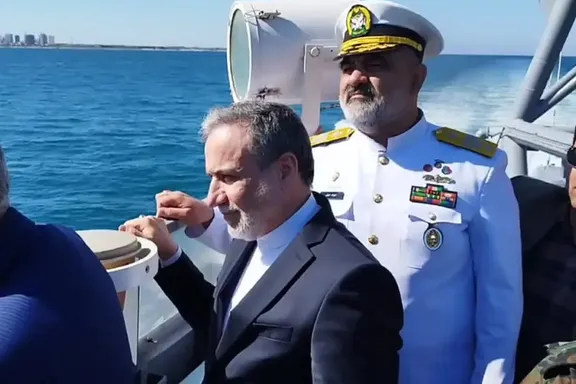
File photo shows Iran's Foreign Minister Abbas Araghchi on an Army warship in the Persian Gulf in December 2024

Iran's state media issued rare and sharply worded criticism of Foreign Minister Abbas Araghchi and the negotiating team after he declared the reopening of Hormuz Strait on X, saying the move created confusion and gave Trump an opening to claim victory.

"In line with the ceasefire in Lebanon, the passage for all commercial vessels through Strait of Hormuz is declared completely open for the remaining period of ceasefire, on the coordinated route as already announced by Ports and Maritime Organisation of the Islamic Rep. of Iran," Araghchi announced in a post on X on Friday.

Minutes later, US President Donald Trump said "Iran has just announced that the Strait of Iran [sic] is fully open and ready for full passage."

Araghchi's post was widely criticized by hardliners and their outlets, including the state-run Mehr News which said Araghchi's tweet "provided the best opportunity for Trump to go beyond reality, declare himself the winner of the war and celebrate victory."

"It is clear that ceasefire-related negotiations are not being handled solely by the Foreign Ministry. Therefore, it is natural that under these circumstances the entire team should collectively explain the decisions that have been made," Mehr News said.

Tasnim News Agency described the post as a “bad and incomplete tweet that created misleading ambiguity about the reopening of the Strait of Hormuz."

The IRGC outlet said the announcement lacked “necessary and sufficient explanations” about the conditions, mechanisms and restrictions governing vessel transit, prompting widespread questions.

Fellow IRGC outlet Fars News Agency earlier quoted an informed source close to the Supreme National Security Council as saying that the Strait's reopening was subject to three conditions:

"Ships must be commercial. The passage of military vessels is prohibited, and neither the ships nor their cargo may be linked to hostile countries. Vessels must pass through routes designated by Iran, and transit must be coordinated with Iranian forces responsible for managing passage."

The source said Iran considers the continuation of a US naval blockade as a violation of the ceasefire and would close the Strait of Hormuz again if the blockade is not lifted.

Tasnim said Araghchi's post on X lacked "any verbal explanation or at least sufficient written clarification” which it said amounted to “complete poor judgment in communication."

The outlet urged either the Foreign Ministry to revise its approach or the Supreme National Security Council to step in and impose a more coherent messaging framework.

The criticism was echoed by Fars News Agency, which addressed authorities directly and questioned their silence.

“Officials, at least explain the reason for your ‘lack of explanation,’” Fars wrote, warning that the absence of clear communication had left the public in a “state of confusion.”

It added that "while citizens trust officials to uphold national red lines, they still expect transparency about why details are being withheld."

Fars also cautioned that without clear messaging, “the narrative of the enemy and hostile media” could fill the gap, adding that “this ‘lack of explanation’ itself needs explanation.”

Most Viewed

Iran International says it won’t be silenced after London arson attack
1

Iran International says it won’t be silenced after London arson attack

2

State media slam Araghchi's Hormuz tweet, say it let Trump claim victory

3
VOICES FROM IRAN

Hope and anger in Iran as fragile ceasefire persists

4
INSIGHT

How Tehran bends its own red lines to boost state rallies

5

Iran halts petrochemical exports to supply domestic market

Banner
Banner
•
•
•

Spotlight

  • Too early to tell who is winning Iran war, experts say
    PODCAST

    Too early to tell who is winning Iran war, experts say

  • How Tehran bends its own red lines to boost state rallies
    INSIGHT

    How Tehran bends its own red lines to boost state rallies

  • Iran blackout cripples freelancer, small business incomes
    VOICES FROM IRAN

    Iran blackout cripples freelancer, small business incomes

  • Ideology may be fading in Iran, but not in Kashmir's ‘Mini Iran'
    INSIGHT

    Ideology may be fading in Iran, but not in Kashmir's ‘Mini Iran'

  • US blockade enters murky phase as tankers spoof signals and buyers hesitate
    ANALYSIS

    US blockade enters murky phase as tankers spoof signals and buyers hesitate

  • Why the $100 billion Hormuz toll revenue is a myth
    ANALYSIS

    Why the $100 billion Hormuz toll revenue is a myth

More Stories

How Tehran bends its own red lines to boost state rallies

Apr 17, 2026, 02:11 GMT+1
•
Maryam Sinaiee

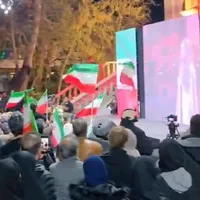
The screening of a concert video by a Lebanese female singer at a pro-government rally in Iran has drawn unusual attention for appearing to cross two of the Islamic Republic’s long-standing cultural taboos: women’s solo singing and compulsory hijab.

The video featured Julia Boutros, a Christian artist widely known across the Arab world for songs supporting Lebanese and Palestinian “resistance” movements.

In the footage shown on a large screen before a mixed-gender audience, she appeared without a headscarf.

For nearly half a century, broadcasting a female singer’s solo voice to male audiences has been prohibited in Iran. Women who have challenged this restriction, even in private concerts or online, have often faced harsh repercussions.

The public screening of Boutros’s performance at an officially sanctioned gathering therefore represents a striking departure from established norms, even if it may have occurred unintentionally.

Events like the rally typically require official permits, suggesting at least tacit approval by local authorities. Yet judicial bodies, which have historically acted quickly against perceived breaches of cultural or religious codes, have so far issued no public criticism of the incident.

Rallies evolving after ceasefire

The episode comes as the character of pro-government gatherings has been changing since the ceasefire that ended weeks of fighting nearly two weeks ago.

Social media posts increasingly depict the rallies as taking on a festival-like atmosphere. Families attend together, and for some participants the events appear to function as social gatherings as much as political demonstrations.

Large banners, video screens and coordinated staging are now common, while mosques and local Basij militia bases often serve as assembly points before crowds move toward central gathering locations.

These developments have also generated complaints from residents about late-night noise and traffic congestion, concerns widely discussed on social media.

Incentives and organization

There are also claims—difficult to independently verify—that participants are being mobilized through local institutions and offered incentives such as food, snacks or other benefits.

Photographs circulating online show numerous tents distributing free food and drinks, a practice consistent with the Shia tradition of nazri, in which charitable offerings are made during religious gatherings.

Images from recent days also showed senior military figure General Habibollah Sayyari helping prepare and distribute food at one such tent, highlighting the visible presence of state institutions at the events.

Pro-government celebrities from the film and sports worlds have also attended, with state media giving extensive coverage to their participation.

Political messaging intensifies

Hardline political groups have used the rallies as platforms for speeches and mobilization, with invited speakers addressing contentious issues such as whether Iran should accept ceasefire terms or pursue negotiations with the United States.

Some speeches have targeted prominent political figures, including former President Hassan Rouhani, former foreign minister Mohammad-Javad Zarif and Parliament Speaker Mohammad-Bagher Ghalibaf, encouraging crowds to chant slogans against them.

In one instance, a live broadcast of a speech by a religious performer was abruptly cut by state television and replaced with pre-recorded programming, suggesting heightened sensitivity to the messages being aired.

The rallies themselves were initially encouraged by senior officials as a demonstration of wartime solidarity. Earlier in the conflict, Ghalibaf called on citizens to take to the streets in support of Iran’s armed forces.

Yet the appearance of Boutros’s unveiled image on a giant screen at a pro-government gathering has underscored the contradictions between Tehran’s cultural restrictions and the messaging it seeks to project.
Hardliners push Hormuz ‘red line’ as US blockade tests Iran’s leverage

Apr 15, 2026, 18:34 GMT+1
•
Maryam Sinaiee

Hardline voices in Tehran are escalating rhetoric around the Strait of Hormuz, calling for transit fees on ships even as a US blockade challenges Iran’s control over the strategic waterway.

They portray control over Hormuz—much like uranium enrichment—as a “red line” that Iranian negotiators must not compromise in any future talks.

Amir-Hossein Sabeti, a member of parliament, recently declared that Iran could soon gain “a third source of income called the Strait of Hormuz.”

Mehdi Mohammadi, a strategic analyst and adviser to the parliament speaker, went further, claiming Iran could earn as much as $800 billion annually from the waterway.

“We have only just discovered this treasure,” he wrote.

Energy analyst Ehsan Hosseini said Iran increasingly sees the strait as its main deterrent—likening it to an “atomic bomb”—and is unwilling to trade this existing leverage for uncertain promises of sanctions relief.

Yet experts and critics say the idea of a “Hormuz toll” is economically unrealistic, legally problematic and potentially damaging to Iran’s long-term interests.

“Some want to take us back, to turn the Strait of Hormuz into a bargaining chip and give it away just to have sanctions lifted,” international affairs expert and university professor Naser Torabi said. “This is a disaster. This means defeat,” he added.

Economic commentator Abdollah Babakhani also warned against inflated expectations.

“Experts have a responsibility to stand against exaggerated narratives—such as claims of $50 to $60 billion in revenue from the Strait of Hormuz—so that unrealistic expectations do not form or persist in society,” he wrote on X.

The United States is enforcing a maritime blockade on vessels entering or leaving Iranian ports, part of a broader effort to pressure Tehran after talks failed to produce a breakthrough.

Shipping data from the firm Kpler shows a sharp drop in traffic through the strait, with only six vessels transiting on April 13 compared with 14 the previous day.

Within Iran, some hardliners initially dismissed the blockade as a bluff. Iran’s top joint military command warned that its armed forces could move to prevent the continuation of trade flows across regional waters if the blockade persists.

Yet more than two days into the blockade, Tehran has yet to take direct military action, as both sides explore diplomatic routes to ending the war.

President Donald Trump said on Wednesday that the Strait of Hormuz would soon be open again to maritime traffic, even as US forces continue enforcing the blockade around Iranian ports.

Some moderates and experts in Tehran have warned that aggressively leveraging the strait could ultimately weaken Iran’s position, especially given that regional producers have invested in pipelines and export routes designed to bypass Hormuz.

Ebrahim Gholamzadeh-Zanganeh, head of the Iran-Kuwait Chamber of Commerce, argued that even if a toll were possible, any financial benefit would pale against the opportunity cost of Iran’s isolation.

“The reality is that our losses from sanctions have been—and continue to be—many times these figures each year,” he said.

Iran negotiators ordered to return after internal rift over Islamabad talks

Apr 14, 2026, 18:57 GMT+1

Sharp disagreements among members of Iran’s negotiating team led them to abandon US talks in Islamabad and return to Tehran on April 11 following an order from Iran's top security official, sources familiar with the deliberations told Iran International.

The sources said that during Friday’s negotiations with the United States, Foreign Minister Abbas Araghchi showed signs of flexibility in some of his positions, particularly regarding reducing or halting financial and military support for the so-called Axis of Resistance, including Lebanon’s Hezbollah.

According to the sources, this approach drew a strong reaction from Mohammad Bagher Zolghadr, the Secretary of the Supreme National Security Council, in Tehran.

The sources said Zolghadr, who was briefed on the talks, submitted a report to the leadership and senior IRGC commanders, which fueled anger at the highest levels. The report reportedly cited “deviation from the delegation’s mandate” and engagement in discussions beyond the leadership’s directives.

Following consultations at the leadership level, and with the involvement of Hossein Taeb, an advisor to the supreme leader, an order was issued on Saturday afternoon for the delegation’s immediate return to Tehran, the sources said.

Reports of similar internal rifts had surfaced earlier. On March 28, accounts emerged of serious disagreements between President Masoud Pezeshkian and IRGC Chief-Commander Ahmad Vahidi.

Informed sources told Iran International that the rifts stemmed from disagreements over the conduct of the war and its impact on livelihoods and the wider economy.

Three days later, reports indicated Pezeshkian was dissatisfied with being in a “complete political deadlock” and had even lost authority over appointing officials killed during the war.

According to those reports, Vahidi had said that due to wartime conditions, all key managerial positions should be directly controlled by the IRGC until further notice.

Despite the diverse composition of Iran’s negotiating delegation in Islamabad, reports suggest representatives aligned with the IRGC held significant influence.

Iran’s insistence on continuing its nuclear program and maintaining control over the Strait of Hormuz ultimately contributed to the failure of the Islamabad talks, according to reports.

Following the breakdown, the United States announced a naval blockade targeting Iran’s southern ports, with US Central Command saying from Monday morning it would prevent ships from entering or leaving Iranian ports. The blockade was implemented as scheduled.

Despite the failure of the first round of talks, Pakistan said on Monday that consultations with both sides were ongoing and another round of talks remained possible.

US President Donald Trump also told the New York Post on Tuesday that talks with Iran “could resume within two days” in Pakistan.

Sources had earlier told Reuters that despite the apparent deadlock, diplomatic channels remain open, with an Iranian embassy official in Pakistan saying the next round of talks could take place later this week or early next week.

Iran’s central bank warns economy may take 12 years to rebuild after war

Apr 14, 2026, 00:30 GMT+1

Iran’s central bank has warned President Masoud Pezeshkian that rebuilding the country’s war-damaged economy could take more than a decade, sources familiar with internal deliberations told Iran International.

In a stark assessment delivered to the president in recent days, senior economic officials said the damage inflicted during the 40-day war with the United States and Israel—combined with Iran’s already fragile economic situation—could take up to 12 years to repair.

Several major airports were damaged during the conflict, while strikes also targeted oil facilities, refineries and petrochemical installations that are central to Iran’s export revenues and industrial supply chains.

Officials involved in the discussions warned that the destruction of production capacity could trigger a sharp surge in inflation in the coming months. According to the assessment presented to the president, inflation could reach as high as 180% if shortages of industrial inputs persist.

The same projections estimate that unemployment could rise by around two million people as factories, service providers and small businesses struggle to resume operations.

According to sources familiar with the discussions, central bank governor Abdolnaser Hemmati has been urging Pezeshkian to take urgent steps to stabilize the economy, including restoring full internet access and pursuing an agreement with the United States.

Tehran and Washington appear to be exploring the possibility of further talks following the one in Pakistan last weekend. Iranian economists have long argued that a diplomatic thaw and easing of sanctions could be the best path toward economic stabilization.

Iran has maintained a nationwide internet shutdown for weeks during the conflict, a move officials say was intended to counter cyber threats but which has also severely disrupted businesses that rely on global connectivity.

Iran’s digital economy accounts for roughly 5–6% of the country’s GDP, and the shutdown has cut off millions of entrepreneurs from customers, payment systems and online platforms.

Small businesses, freelancers and startup founders have been among the hardest hit. Many rely on services such as Instagram, messaging apps and foreign-hosted websites to reach clients.

Economists inside the government warn that prolonged restrictions could deepen the downturn and slow recovery even further.

The bleak economic projections have heightened concerns among members of Pezeshkian’s team, according to the sources.

Some officials fear that if the economic crisis worsens or the state faces financial collapse, powerful figures within the Islamic Revolutionary Guard Corps could seek to shift blame onto the president, they said.

Iran entered the war already under heavy economic strain from years of sanctions, high inflation and currency instability.

Tehran sends tough message but keeps diplomacy door open

Apr 13, 2026, 03:43 GMT+1
•
Maryam Sinaiee

Reactions in Tehran to the collapse of the Islamabad talks suggest Iran’s leadership is settling on a dual message: defiance toward Washington’s pressure while still leaving the door to diplomacy open.

Across Iran’s political spectrum—from senior officials to hardline lawmakers—the failure of the 21-hour negotiations has been framed not as the end of talks but as a moment to test leverage, particularly around the Strait of Hormuz and Washington’s newly announced naval blockade.

Speaker Mohammad-Bagher Ghalibaf, who was part of the Iranian delegation in Islamabad, placed responsibility for the breakdown squarely on Washington while leaving room for further engagement.

In a post on X, he wrote that distrust toward the United States stems from “the experiences of the previous two wars,” adding that Washington failed to convince Tehran while leaving open whether the Americans could “earn our trust.”

President Masoud Pezeshkian struck a softer tone, signaling conditional openness to diplomacy.

“If the American government abandons its totalitarianism and respects the rights of the Iranian nation, ways to reach an agreement will certainly be found,” he wrote on X.

All about Hormuz

The Strait of Hormuz—through which roughly a fifth of global oil flows—has rapidly emerged as both a bargaining chip and a symbolic red line in Tehran’s messaging.

President Donald Trump announced a US naval blockade aimed at preventing vessels from entering or leaving Iranian ports and intercepting ships that pay transit fees to Tehran.

US Central Command said the blockade would begin Monday and apply to vessels of all nations calling at Iranian ports.

Iran’s Islamic Revolutionary Guard Corps Navy warned that any escalation in the waterway could have severe consequences, cautioning that “any miscalculation will trap the enemy in deadly whirlpools in the strait.”

Hardline voices have increasingly framed control of the waterway as a source of revenue and national prestige.

“From now on… we will have a third source of income called the Strait of Hormuz,” lawmaker Amir-Hossein Sabeti said at a pro-government rally.

University professor and commentator Foad Izadi suggested in a post on X that future confrontation could transform the strait into Iran’s “most important source of income,” while hinting that alternative export routes could become targets.

‘Taboo broken’

Some Iranian analysts warn that the US blockade risks pushing both sides closer to military confrontation.

Political analyst Ruhollah Rahimpour described the move as “beating the drums of war,” arguing that Washington is effectively testing Iran’s economic lifeline.

“Iran’s economy is locked into the chokepoint of Hormuz, and now Trump has decided to test this lock with a hammer,” he said. “In such a situation, either the lock opens, or the whole door will be torn off.”

Reformist voices, however, emphasized the historic nature of the talks themselves.

Former lawmaker Mahmoud Sadeghi described the direct engagement as “a major taboo-breaking moment,” noting the significance of Iranian and American officials meeting at such a level after nearly half a century.

Journalist Ahmad Zeidabadi similarly argued that failure in Islamabad “does not mean a definite failure of diplomacy,” warning that a return to full-scale war would produce an “irreversible catastrophe for all parties.”

Former Vice President Mohammad-Ali Abtahi also struck a cautious tone, writing that “47 years of open hostility cannot be resolved in a few hours.